Dragons and the Imaginative Mind of J.R.R. Tolkien

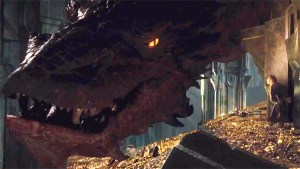
Smaug in Peter Jackson’s Hobbit Trilogy

This article is by Anne Marie Gazzolo.

J. R. R Tolkien had a life-long fascination with dragons.

In his essay “On Fairy-Stories,” he spoke of the stories he liked and disliked as a child.  “The dragon had the trade-mark Of Faërie written plain upon him. In whatever world he had his being it was an Other-world. Fantasy, the making or glimpsing of Other-worlds, was the heart of the desire of Faërie. I desired dragons with a profound desire. Of course, I in my timid body did not wish to have them in the neighborhood . . . . But the world that contained even the imagination of Fáfnir was richer and more beautiful, at whatever cost of peril.”
Read more

The Benefits of Outlining: A Layered Approach

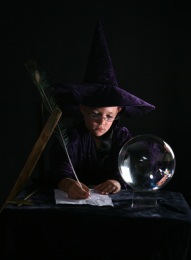
wizard writingThis article is by Steven M. Long.

Everybody outlines. The second a writer imagines one scene following another, that writer is creating an outline, even if the outline is incomplete and only in their head.

Referring to a novel writer as an “outliner” usually indicates someone who feels more comfortable with and sees the benefits of knowing – sometimes in great detail – where their novel is headed.

As you can probably guess, I outline, and over the time I’ve been writing novels (I’ve written four, two of them pretty good) I’ve been told repeatedly that I should just “let it go” and that I’m “ruining my creative process.” As often as not, these comments come from people who’ve never finished a novel.

Read more

Is Plot or Character More Important?

Structuring Your NovelThis article is by K.M. Weiland.

“Plot vs. character”—we hear it all the time, as if the two were mutually exclusive. Either your book is plot-driven or character-driven. Can’t possibly be both, right?

And anytime we run afoul of an either/or conundrum, you gotta know people are going to start believing one or the other is not only the best way, but even the only way to write a book.

Let’s consider this a little more microscopically. What would it take to make one or the other of these combatants “more important” than the other?

Read more

The Fact and the Fantastical – 5 Tips for Creating an Urban Fantasy World

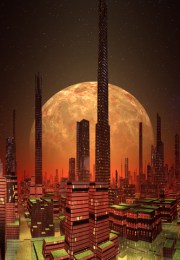
fantasy cityThis article is by Michael Cairns.

Fantasy is an expansive genre in which the reader can be transported to far-off lands. Urban fantasy does something quite different, laying the fantastical world over the one in which we live.

This can be a tricky thing to get right. Too much fantasy and the realism can be lost. Not enough fantasy, and the wonderful sense that anything can happen disappears, and the story becomes humdrum.

Following the writing and copious editing of my Urban Fantasy Trilogy, the Assembly, I’ve identified a few pointers as to what works and what doesn’t. Here are my top five tips to help you blend the real with the fantastical, and create a world your reader will become lost in.

Read more

A Demon Did It: Breakdowns of Consistency in Fantasy Fiction

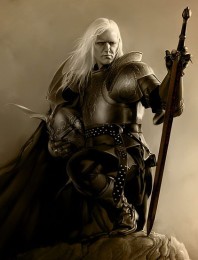
Elric of Melniboné
Elric of Melniboné
Elric of Melniboné

This article is by Stefon Mears.

Years ago, on The Simpsons, Lucy Lawless uttered the now famous line, “A wizard did it.”

In context the line was a broad dismissal of the myriad small errors fans are famous for finding in their favorite shows.

Found an inconsistency? Blame it on a wizard. Ironic, really, because by the end of its run Xena: Warrior Princess had more gods as recurring characters than human beings, but I’m hard pressed to think of a single wizard.

But then, “a god did it” might not have gone over so well with viewers.

Read more

4 Tips for Worldbuilding Success

fantasy worldThis article is by Katie Cross.

It was so hot that summer, I would have preferred vomiting barbed wire to walking outside.

The air was muggy and thick with humidity so high that a permanent haze settled in like a fog. I didn’t see my thermostat go below 80 degrees for far too long, even with air conditioning.

Living in a two-story red brick house in southern Georgia, I had a lot of great story ideas stuck in my head. I was brimming to the point it was paralyzing. There were so many ideas! I started on one tangent, just to start to explore another.

The scene was bitter cold, with snow and frosty windowpanes. Or …. was it supposed to be hot and arid? Wasn’t my character chasing a dragon? Yes, but they got lost on a trail and found a flow. Wait, that pink flower is poisonous. Or was it the one that turned into an umbrella when touched?

Read more

Purple Prose – How to Find It and Fight It

Purple FlowersThis article is by Brendan McNulty.

Wikipedia defines purple prose as “written prose that is so extravagant, ornate, or flowery as to break the flow and draw excessive attention to itself.”

It’s one of those writing styles we’re always told to guard against. The best way to look at it is to see what is a necessary way of expressing something vs. overly flouncy and descriptive passages.

Some people think that this means that your writing has to be exclusively lean and clear, but I would disagree.

You don’t need to forsake complex or intricate writing in order to ward off purple prose.  Instead, the objective is to write in such a manner that you communicate effectively, without your word choice drawing attention to itself.

Read more

Bracketology for Story Plotting?

Tournament bracket

Tournament bracketThis article is written by Ken Hughes.

What do sports brackets have to do with writing a story?

Almost everything.

A plot depends on conflict and contrast between its characters, and on building interest in them over time.

A tournament’s system is about matching opponents together and tracking how that changes.  It’s one of the simplest, purest methods there is for managing the intricacies of a plot, while staying focused on what makes it powerful.

As we’ll see, the bracketing concept needs only a few expansions to fit any kind of plotting into it.

Read more