Focused Ambiguity: Using Metaphor in Fantasy Writing

This article is by Walter Rhein.

Star TrekThere is an inherent paradox in the phrase “focused ambiguity”. Yet the disconnect achieved by putting those two words together approximates the mental state necessary for writing good fantasy.

One of the big mistakes a lot of new writers make in their world building is too much of a focus on practical construction. However, unless the overall theme of your fantasy book is economics, you really don’t need to explain how your “diamond city in the desert” gets enough drinking water to support its population.

An effective novel always has a strong connective thread, and, in fantasy, every character, setting, and action can be molded to function as an integral part of the extended metaphor that supports the novel’s overall theme.
Read more

Transforming a World Into a Setting

Every time I ask other fantasy writers a question about the worlds I create, one of them will inevitably respond, “What does this matter to your story?”

That’s because many new writers, influenced by roleplaying games and the illustrations featured in our favorite fantasy novels, are prone to view worldbuilding as filling in the gaps on a map, cataloging the monsters, or finding new ways to justify fireballs. But these details alone do not create immersion.

Hobbyists build worlds. Authors build settings.

Read more

Extensive vs. Minimal: What is Your World Building Coming To?

World-building is a topic that comes up often in fantasy writing circles. If you’re writing epic fantasy, most often it’s going to be in a world of your own creation. Even if you’re writing in our own world, if you have fantasy elements in your story (e.g., magic, mythical creatures, necromantic hamsters), then you have to do at least a tad bit of word-building.

However, how much world-building is too much? How much is too little?

Some people may be extensive world-builders, laying out ten thousand years worth of history, historical texts, dead languages, extinct races, etc. Others may be minimal world-builders, relying only on a handful of elements to power their story forward. So which method of world-building is better, both for your readers and for your writing?

Read more

Finding Strengths in Your Weaknesses as a Writer

The key to finding your way as a writer is to discover what kind of writer you are.

Are you the type that talks about writing but doesn’t really do it much? Are you the kind that works diligently every day, but always ends up deleting or scrapping the whole manuscript? Are you the perfect planner, but awful at execution? Or vice versa?

Finding your strengths and weaknesses as a writer can help you navigate your way along the path to being the perfect “you.” Sound flaky? Maybe, but the sooner you can chip away at your problems the earlier you can fix them.

I’d like to preface this by saying I’ve fallen into every one of these categories before.  So if any of these describe your current writing situation, I feel your pain.

Read more

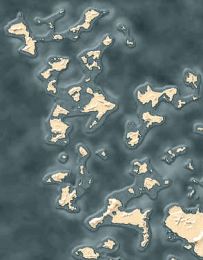
The Mythic Archipelago – A Community Worldbuilding Project

Click to see full map.

The sailors have had a long, hard voyage. Their shipmates have succumbed to sickness, sea monsters, and savages along the way. There are just enough of them left to keep sailing – and they do, for the cargo in their hold will make them all wealthy. As the sun burns the mists away from the sea-cliffs, they catch a glimpse of your isle.

Do they find civilizations to trade with? Do they find a deserted island with naught but trees and animals? Do they find a remote home of horrors, full of monsters that devour passers-by? Do they find pirates and conquerors, or artists and merchants?

Only you can decide.

Read more

Welcome To My Worlds – One Author’s Approach to Building Fantasy Worlds

This article is by S.G. Rogers.

I’m a fantasy author who enjoys building worlds.  Perhaps my interest in world-building stems from the wonderment I feel in the presence of beauty.  Magic exists in the waterfalls of Brevard County, North Carolina, the stunning views at Big Sur, and the Carlsbad Caverns, New Mexico.  Magic radiates from the paintings of Michelangelo, the castles of Europe, and the sculptures of Bruno Torfs in Australia.  When I experience this magic, I feel compelled to communicate my sense of awe in the stories that I write.

I’ve sold eight fantasy manuscripts so far on the strength of my world-building, with two sequels in the works.  Although each project has its own unique challenges, my approach to world building involves a few common principals.

Read more

5 Keys to Writing Craptastic Fantasy

Jjportrait15.jpg
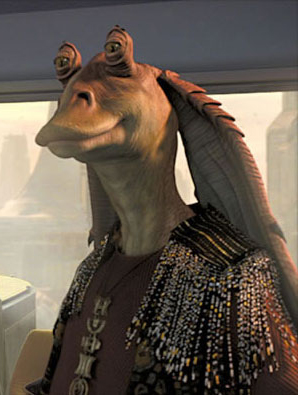
Jar Jar Binks, a Gungan
St. Jar Jar, Patron Saint of Crap

So you want to write a really bad fantasy novel, eh?

You’ve come to the right place. After years of practice, I’ve mastered five ancient techniques for writing shitty fantasy. These methods were pioneered by the elves of the Ethereal Empire during the reign of Xerxian Rhafstorr the Sword-Breaker (in the Twelfth Age), so you know they’re good.

Just read on, and you’ll be writing the Ishtar of fantasy novels in no time.

Read more