‘Soft’ Magic Systems Still Have a Place

This article is by Ashley Capes.

soft magicThe idea that magic in fiction might possess or need a ‘system’ was nonexistent to me when I first read my favourites as a boy in the early 1990s.

Magic was but a component to the awe and wonder within the stories. I didn’t need to know how magic worked, only that magic worked. I never questioned it and certainly wouldn’t have wanted to. Gandalf, for instance, simply wouldn’t have been the same figure of mystery and power if I knew the way his magic functioned.

Read more

Absolutism vs. Ambiguity in Fantasy

This article is by Matthew R. Bishop.

good evilIn a recent article featured on Mythic Scribes, Christian Madera explored the strengths and limitations of “black and white” fantasy, while defending the rise of “grey” fantasy as something that can overcome the drawbacks of black and white.

Let me clarify that I am an author of grey fantasy myself, so I do not take issue with this defense. For the purposes of fully understanding these disparate ways of writing fantasy, however, I want to expand on the strengths and limitations of both, and on the downfall of thinking one is exclusive of another. I hope this effort will lead to a greater appreciation for fantasy of all colors.

Read more

5 Ways to Build Stronger Characters

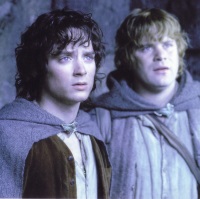
Frodo and Sam

This article is by Anne Marie Gazzolo.

Frodo and SamIt’s possible to build characters who achieve a secondary reality, and become people who live in their own right in our hearts and minds.
It jars me every time someone says Frodo Baggins and Sam Gamgee are ‘characters.’ I want to shout, “They are not characters! They are people!”

J. R. R. Tolkien’s masterful essay “On Fairy-Stories” is must reading for anyone who wishes to practice, as he calls it, the “elvish craft” of sub-creating secondary worlds that achieve a reality of their own. I wish to add some thoughts from my own travels in Middle-earth and a galaxy far, far away, that I hope will help you to build ‘characters’ who are truly more than that.

Read more

Fantasy and How the World Ought To Be

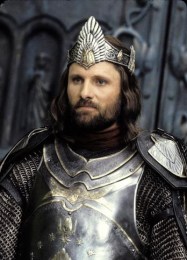
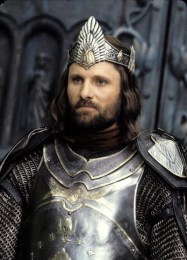
King_Aragorn
Viggo Mortensen as Aragorn

This article is by Christian Madera.

Early Fantasy literature, with its black-and-white morality, was very comfortable making statements about ethics. I’m using ‘ethics’ in a broad sense here: I don’t just mean questions about what a person should do in a difficult situation (though such questions are definitely a mainstay of Fantasy literature and merit discussion), but rather broader questions about how a person should be and how the world should be.

Recently, we’ve seen a backlash against black-and-white morality and a move towards so-called “grey” Fantasy. While I think it is very important to be cognizant of and think critically about the potential pitfalls of black-and-white Fantasy, I would argue that grey Fantasy is not without pitfalls of its own.

Read more

J.R.R. Tolkien: Myths That Never Were and the Worlds That They Become

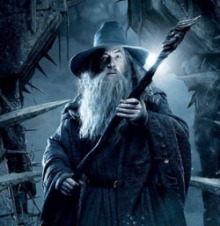
Ian McKellen as Gandalf

This article is by Dan Berger.

It’s strange to imagine today, but there was a time when the publication of J.R.R. Tolkien’s The Lord of the Rings was a matter very much in doubt.

There were two primary reasons for this near tragedy. One was the scarcity of paper that plagued the United Kingdom in the aftermath of World War II. The other was Tolkien’s initial insistence on releasing The Lord of the Rings to his publisher, Allen & Unwin, only on the condition that The Silmarilion be published in concert with it.

The price of printing the full text of a book the size of The Lord of the Rings posed significant challenges in and of itself; adding The Silmarilion to the mix, particularly given its sometimes tenuous connection to The Lord of the Rings’ narrative, was seen as potentially disastrous.

Read more

Dragons and the Imaginative Mind of J.R.R. Tolkien

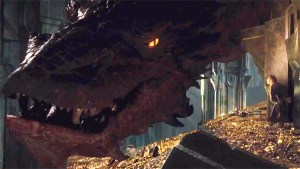
Smaug in Peter Jackson’s Hobbit Trilogy

This article is by Anne Marie Gazzolo.

J. R. R Tolkien had a life-long fascination with dragons.

In his essay “On Fairy-Stories,” he spoke of the stories he liked and disliked as a child.  “The dragon had the trade-mark Of Faërie written plain upon him. In whatever world he had his being it was an Other-world. Fantasy, the making or glimpsing of Other-worlds, was the heart of the desire of Faërie. I desired dragons with a profound desire. Of course, I in my timid body did not wish to have them in the neighborhood . . . . But the world that contained even the imagination of Fáfnir was richer and more beautiful, at whatever cost of peril.”

Read more

The Perilous and Wondrous Realm of Faërie

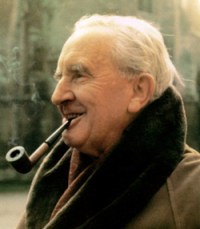
J.R.R. Tolkien
J.R.R. Tolkien
J.R.R. Tolkien

This article is by Anne Marie Gazzolo.

In the essay, “On Fairy-Stories,” J.R.R. Tolkien speaks of a subject close to his heart. He had a life-long interest in and love for the genre, and approaches the topic as an author.

According to Tolkien, fairy-stories allow us as readers and authors to experience what he calls recovery, escape, and consolation. In our broken world, we need all three.

Such affords us the opportunity to profoundly change the way we view ordinary things and life itself.

Read more

Extensive vs. Minimal: What is Your World Building Coming To?

World-building is a topic that comes up often in fantasy writing circles. If you’re writing epic fantasy, most often it’s going to be in a world of your own creation. Even if you’re writing in our own world, if you have fantasy elements in your story (e.g., magic, mythical creatures, necromantic hamsters), then you have to do at least a tad bit of word-building.

However, how much world-building is too much? How much is too little?

Some people may be extensive world-builders, laying out ten thousand years worth of history, historical texts, dead languages, extinct races, etc. Others may be minimal world-builders, relying only on a handful of elements to power their story forward. So which method of world-building is better, both for your readers and for your writing?

Read more