How to Hack the Habit of Creativity

creative mindWriting a good novel demands a number of skills from an author.  You need to have a strong writing voice.  You have to be able to read people and get inside a person’s head.  You should be able to let your characters provide commentary on life and the book’s themes, whether consciously or not.  And you’ve got to be well read, well researched, and reflective so that you will be equipped to think things through.

But sometimes those skills, which require experience and thoughtfulness, can feel at odds with another skill that we need as writers: creativity.
Read more

How To Hook Your Audience

This article is by Craig W. Van Sickle & Steven Long Mitchell.

the-pretenderWhile novels, graphic novels, television or motion picture scripts each present writers with different formats, narrative challenges and audience expectations, they all have one very simple commonality at their heart: telling a great story that hooks, pulls in and holds its consumer.
Simple, right? Well, as they say in novel writing circles, if writing were easy, everyone would be Stephen King.

Truth is, no matter what medium, defining and learning how to hook your audience can actually be very simple if we just break down the elements of storytelling into small, manageable segments.

Read more

What Fantasy Writers Can Learn From Horror

This article is by Martin White.

Horror is by no means an underrated genre, but it’s typically forgotten in discussions of speculative fiction. Much ink is spilled on the differences between science fiction and fantasy, but horror is examined on its own, with few connections to its siblings.

As an advocate of genre-mixing, I’m drawn to horror from the direction of fantasy. One discusses our dreams, and the other our nightmares, but the two sometimes call upon surprisingly similar techniques.

Read more

Writing Character-Driven Fantasy

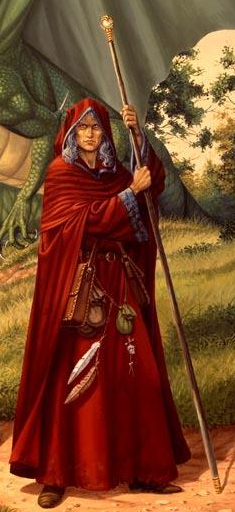
Raistlin1.png
Raistlin Majere
Raistlin Majere

A key element of any successful novel is a cast of vivid, compelling characters.  I recently discussed the topic of character development with author Frank LaVoie, whose debut novel Firesoul has been praised for its colorful characters.  We also chatted about the special importance of characterization in the sub-genre of High Fantasy.

You are an unabashed fan of so-called “epic” or “high” fantasy. Can you elaborate on what sets this sub-genre apart from other forms of fantasy?

High Fantasy serves as the category’s best example in terms of defining the archetype. Typical structures might include the questing hero, a supportive band of allies, fantastical settings, magic as a vehicle for both good and evil, and a vast array of other fictional and far-fetched elements.

Read more

Is Outlining for Hacks?

51EM2V1RX1L._SL300_51.jpg
Cover of "Sometimes the Magic Works: Less...
Brooks vs. King

When I first began writing I would sit in front of the computer for hours, staring at a blank screen.  I hoped that inspiration would strike, but usually it didn’t.  So I would force myself to type something, praying that it would turn out to be half-decent.  Back then writing was a long, tortuous process.

And then I discovered outlining.

When I made a detailed outline in advance, writing became a breeze.  The outline served as a road map, reminding me where I was headed.  Because I knew that the story was going someplace worthwhile, I had the confidence to proceed at a brisk pace.  Writing was no longer painful.

So clearly outlining is a beneficial practice, right?  Stephen King disagrees.

Read more

Beauty in Simplicity

800659391.jpg
Stephen King
Stephen King

What does fantasy writing have in common with the culinary arts?

One of my guilty pleasures is watching BBC’s Kitchen Nightmares with host Gordon Ramsey.  In each episode Chef Ramsey visits a restaurant on the brink of ruin, and attempts to salvage it.  In most cases the restaurant features a chef who is highly trained and talented.  Yet it is this very same chef who is responsible for the restaurant’s failure.

In one episode Chef Ramsey visits a French restaurant in Scotland.  The head chef was a rising star in his native France, where he studied with the masters.  So why was his current restaurant in dire straights?

Because his entrees were far too complex.

Read more