Is Single-Genre Fiction Outdated?

This article is by Michael Cairns.
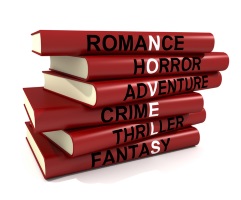
genresFor decades, the publishing industry has worked to ensure that every book that they publish can be marketed within a single genre. This is, up to a point, understandable. Publishing is a business, and the clearer the genre of a book, the easier it is to find the target audience.

However, the rise of self-publishing has changed the way in which people not only sell books, but also write them. Indie’s don’t need to have a big ‘opening weekend’, so as to avoid high returns on print copies. Self-publishers can play the long game, relying on good stories and brave readers to build an audience. They can also take more chances and write outside the long-established boxes.
Read more

Focused Ambiguity: Using Metaphor in Fantasy Writing

This article is by Walter Rhein.

Star TrekThere is an inherent paradox in the phrase “focused ambiguity”. Yet the disconnect achieved by putting those two words together approximates the mental state necessary for writing good fantasy.


One of the big mistakes a lot of new writers make in their world building is too much of a focus on practical construction. However, unless the overall theme of your fantasy book is economics, you really don’t need to explain how your “diamond city in the desert” gets enough drinking water to support its population.

An effective novel always has a strong connective thread, and, in fantasy, every character, setting, and action can be molded to function as an integral part of the extended metaphor that supports the novel’s overall theme.

Read more

5 Essential Publishing Skills

This article is by T.L. Bodine.

ereader and booksSelf-publishing can certainly seem like the easier route to take when it comes to getting your words in front of readers.  After all, there are no gate-keepers – no agents to court, no publishers to approach.

With the click of a button, your book can be released into the ether for anyone to come across.  And if the traditional path to publication seems daunting, it can be comforting to think that going indie will be easy.

Unfortunately, it’s not quite that simple.  There’s a big difference between publishing a book and actually getting people to read it, and many of the things readers are looking for are exactly the things agents and acquisition editors want as well.  As it turns out, most of the key skills needed for landing an agent are very similar to those for hooking readers.

Read more

Is Fantasy Fiction Too Safe?

fantasy booksThe last dozen fantasy books I’ve read would be classified as epic fantasy. Some kind of hero or heroine goes on a quest, or there are world-spanning conflicts between kings and queens.

I guess you’re expecting me to say, “Ugh, I’m so sick of epic fantasy.” Actually, no. I quite enjoy these kinds of stories for the most part, and have done so for around twenty years or more.

However, I found myself in a bit of a quandary recently when I thought, “I’d like to read something a bit different in tone, structure, and scope.” So I started looking through my collection of books.

Read more

The Great Free Book Debate: The Authors

This is the second article in a two-part series by Alexandra Butcher. Part one is here.

One of the most controversial ways to promote a book is to offer it for free. The theory is that readers will take a chance on a free book by an unknown author, and that this will help the author to get her name “out there.”

Why is this controversial? Well, many authors feel offering one’s book for free devalues it, the author herself and thus all indie authors. It is also debatable whether this strategy actually works in a market already full of what some see as “substandard” books. There is also the argument that readers will madly download free books, and never actually spend any money on buying books.

So do authors really see any benefits?

Read more

How to Market Your Self-Published Book

The reality of marketing a self-published book and finding your audience presents a challenge somewhere in-between the faint dream of online success, and the sense of screaming unheard into the web’s dark and angry void.

Traditional publishers target their marketing towards their network of book reviewers and buying agents who, in turn, bring a book to the attention of readers. As a self-publisher, not only do you probably lack this network, but you also face an image deficit when you try to piece one together.

They think you’re trying to sell a story from the slush pile of traditional publishers.

Read more

The Impatient Writer’s Guide to Getting Published

Tired of waiting months, weeks, or even days to hear back about your manuscript? Is that 500,000 word door-stopper just desperate to get immediate feedback? Do you like fast food, Twitter, and teleportation?

For those of you that want feedback from an editor yesterday, this is your guide to immediate success. Until recently, I’d never been published, but it wasn’t because of lack of talent. It was because I didn’t use these steps to woo the editors over. Now that I’ve done so, I finally got my short story collection, “Stories that Start in Inns,” published. Go buy it! Now!

You too can pursue your publishing dreams. Just follow these five easy steps and wait for the money to roll in!

Read more