Absolutism vs. Ambiguity in Fantasy

This article is by Matthew R. Bishop.

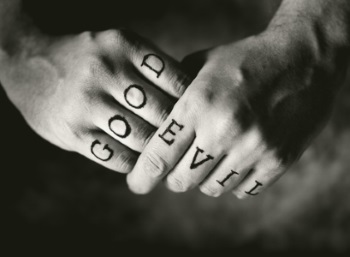
good evilIn a recent article featured on Mythic Scribes, Christian Madera explored the strengths and limitations of “black and white” fantasy, while defending the rise of “grey” fantasy as something that can overcome the drawbacks of black and white.

Let me clarify that I am an author of grey fantasy myself, so I do not take issue with this defense. For the purposes of fully understanding these disparate ways of writing fantasy, however, I want to expand on the strengths and limitations of both, and on the downfall of thinking one is exclusive of another. I hope this effort will lead to a greater appreciation for fantasy of all colors.
Read more

5 Ways to Build Stronger Characters

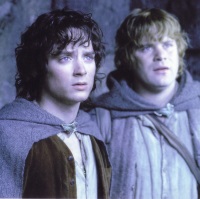
Frodo and Sam

This article is by Anne Marie Gazzolo.

Frodo and SamIt’s possible to build characters who achieve a secondary reality, and become people who live in their own right in our hearts and minds.
It jars me every time someone says Frodo Baggins and Sam Gamgee are ‘characters.’ I want to shout, “They are not characters! They are people!”

J. R. R. Tolkien’s masterful essay “On Fairy-Stories” is must reading for anyone who wishes to practice, as he calls it, the “elvish craft” of sub-creating secondary worlds that achieve a reality of their own. I wish to add some thoughts from my own travels in Middle-earth and a galaxy far, far away, that I hope will help you to build ‘characters’ who are truly more than that.

Read more

Fantasy and How the World Ought To Be

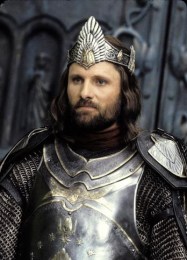
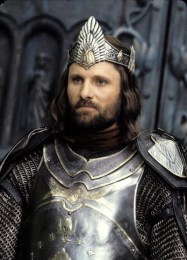
King_Aragorn
Viggo Mortensen as Aragorn

This article is by Christian Madera.

Early Fantasy literature, with its black-and-white morality, was very comfortable making statements about ethics. I’m using ‘ethics’ in a broad sense here: I don’t just mean questions about what a person should do in a difficult situation (though such questions are definitely a mainstay of Fantasy literature and merit discussion), but rather broader questions about how a person should be and how the world should be.

Recently, we’ve seen a backlash against black-and-white morality and a move towards so-called “grey” Fantasy. While I think it is very important to be cognizant of and think critically about the potential pitfalls of black-and-white Fantasy, I would argue that grey Fantasy is not without pitfalls of its own.

Read more

Fan Fiction: An Epiphany

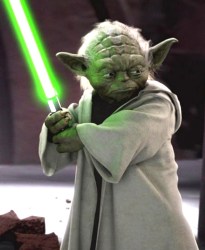
YodaThis article is by A.L.S. Vossler.

Fan fiction is the lowest life form of the writing universe.

If you had asked me what I thought about fan fiction about a year ago, that is what I would have said.

I had not always looked down so fiercely on fan fiction.  I was never a huge proponent of it, but I did not always thumb my nose at it, either.

In college, however, I took a creative writing class.  We talked about “developmental” stages of writing, and the most infantile of those stages was the “writer’s personal fantasy.”  The idea behind this stage was that the writer was living vicariously through the characters and only producing, more or less, self-indulgent tripe.

Read more

Extensive vs. Minimal: What is Your World Building Coming To?

World-building is a topic that comes up often in fantasy writing circles. If you’re writing epic fantasy, most often it’s going to be in a world of your own creation. Even if you’re writing in our own world, if you have fantasy elements in your story (e.g., magic, mythical creatures, necromantic hamsters), then you have to do at least a tad bit of word-building.

However, how much world-building is too much? How much is too little?

Some people may be extensive world-builders, laying out ten thousand years worth of history, historical texts, dead languages, extinct races, etc. Others may be minimal world-builders, relying only on a handful of elements to power their story forward. So which method of world-building is better, both for your readers and for your writing?

Read more

How Tolkien Influences My Writing

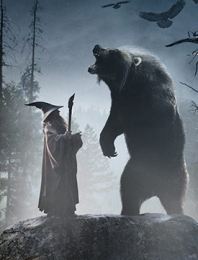
gandalf-and-bearThis article is by Terri Rochenski.

My love affair with the fantasy genre started at an early age when someone bought me and my older brother The Chronicles of Narnia seven book gift set. I read them ‘til they fell apart.

Literally.

I can’t tell you how many times I checked the backs of every closet in our large farm house, totally expecting to find Mr. Tumnus. Oh, the disappointment of finding fantasy is just that—fantasy. Make Believe.

I was introduced to The Hobbit in middle school. The first time I watched the original cartoon released in 1977, I was hooked. I gobbled up the LotR series within the following month. While I may not have understood the underlying moral lessons at that age, re-reads through the years cemented Middle Earth as my favorite daydream land.

Read more

J.R.R. Tolkien, “The Lord of the Rings”, and Free Will

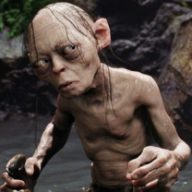
Gollum
Gollum
Gollum

This article is by Darren Andrews.

Generations have been enthralled by Tolkien’s epic fantasy, “The Lord of The Rings”. Its pages have been studied alongside the works of C.S. Lewis in Christian-literature classes, a society exists dedicated to preserving it in the spirit of its author, and back in the 1970s (in England at least) it was ‘unofficial required reading’ to enter the more respected universities – if you wanted to be accepted by your peers!

J.R.R. Tolkien, born 1892, was both a philologist and a student of mythology. He was a down-to-earth man nevertheless, and filled with a remarkable amount of common sense and clarity of thought. That he spent so much of his effort in fiction yet had so great a grasp of reality – both of the seen and unseen – is perhaps one of his most endearing qualities.

Read more