Absolutism vs. Ambiguity in Fantasy

This article is by Matthew R. Bishop.

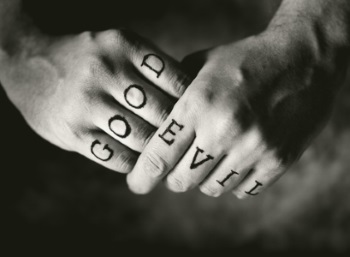
good evilIn a recent article featured on Mythic Scribes, Christian Madera explored the strengths and limitations of “black and white” fantasy, while defending the rise of “grey” fantasy as something that can overcome the drawbacks of black and white.

Let me clarify that I am an author of grey fantasy myself, so I do not take issue with this defense. For the purposes of fully understanding these disparate ways of writing fantasy, however, I want to expand on the strengths and limitations of both, and on the downfall of thinking one is exclusive of another. I hope this effort will lead to a greater appreciation for fantasy of all colors.
Read more

Fantasy and How the World Ought To Be

King_Aragorn
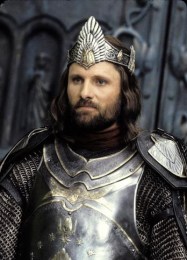
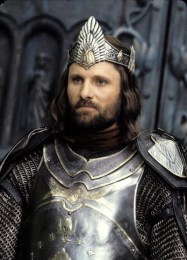
Viggo Mortensen as Aragorn

This article is by Christian Madera.

Early Fantasy literature, with its black-and-white morality, was very comfortable making statements about ethics. I’m using ‘ethics’ in a broad sense here: I don’t just mean questions about what a person should do in a difficult situation (though such questions are definitely a mainstay of Fantasy literature and merit discussion), but rather broader questions about how a person should be and how the world should be.

Recently, we’ve seen a backlash against black-and-white morality and a move towards so-called “grey” Fantasy. While I think it is very important to be cognizant of and think critically about the potential pitfalls of black-and-white Fantasy, I would argue that grey Fantasy is not without pitfalls of its own.

Read more

5 Reasons Why Narration Can Work in Fiction

This article is by Anne Marie Gazzolo.

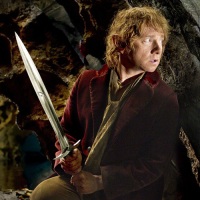
BilboAuthors can use narrators in many different ways to add value to any story. Among them, they can speak directly and indirectly to their audience, inform the readers of things not even the characters inside the story know, give a look into the heart and soul of the heroes and villains, and praise or condemn them for their actions.

Here are five reasons why you should consider using one:

Read more

The Perilous and Wondrous Realm of Faërie

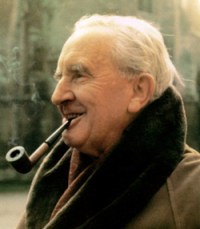
J.R.R. Tolkien
J.R.R. Tolkien
J.R.R. Tolkien

This article is by Anne Marie Gazzolo.

In the essay, “On Fairy-Stories,” J.R.R. Tolkien speaks of a subject close to his heart. He had a life-long interest in and love for the genre, and approaches the topic as an author.

According to Tolkien, fairy-stories allow us as readers and authors to experience what he calls recovery, escape, and consolation. In our broken world, we need all three.

Such affords us the opportunity to profoundly change the way we view ordinary things and life itself.

Read more

How Tolkien Influences My Writing

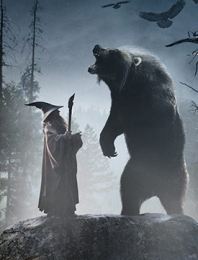
gandalf-and-bearThis article is by Terri Rochenski.

My love affair with the fantasy genre started at an early age when someone bought me and my older brother The Chronicles of Narnia seven book gift set. I read them ‘til they fell apart.

Literally.

I can’t tell you how many times I checked the backs of every closet in our large farm house, totally expecting to find Mr. Tumnus. Oh, the disappointment of finding fantasy is just that—fantasy. Make Believe.

I was introduced to The Hobbit in middle school. The first time I watched the original cartoon released in 1977, I was hooked. I gobbled up the LotR series within the following month. While I may not have understood the underlying moral lessons at that age, re-reads through the years cemented Middle Earth as my favorite daydream land.

Read more

In Defense of Peter Jackson

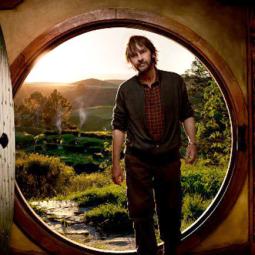
Sir Peter Jackson

Since the announcement that The Hobbit will be a trilogy, the Internet has been abuzz.  The Tolkien fan base has been divided into two camps: those who are elated at the news, and those who believe that it’s a terrible idea.

Those who are apprehensive of the films becoming a trilogy have raised some valid concerns.  For this post, I’ve identified three of the most repeated concerns, and will show why they should be dismissed.

This is About Money

It’s a recent trend to take the final book in a series, and divide it into two films.  Famous examples of this are the finales of the Harry Potter series and the Twilight Saga.  Whether or not this is positive, one thing is for certain: the studio will make more money from two guaranteed hits, as opposed to just one.

Read more

How to Write Battle Scenes

This article is by Ciele Edwards.

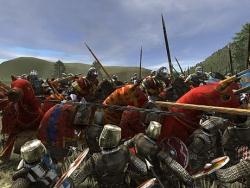
Battle scenes can be just as intense on the page as they are on the screen. Many classic novels, such as The Lord of the Rings and The Last of the Mohicans, contain vivid, well-written battle scenes that are essential to the plot.

Even if you do not have faith in your ability to create one of these scenes, the inevitable conflict present in every tale may eventually leave you with no choice. Once you learn how to properly write a battle scene, you will never again be stuck with a war or fight that you are unable to properly describe.

Read more

J.R.R. Tolkien, “The Lord of the Rings”, and Free Will

Gollum
Gollum
Gollum

This article is by Darren Andrews.

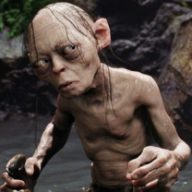
Generations have been enthralled by Tolkien’s epic fantasy, “The Lord of The Rings”. Its pages have been studied alongside the works of C.S. Lewis in Christian-literature classes, a society exists dedicated to preserving it in the spirit of its author, and back in the 1970s (in England at least) it was ‘unofficial required reading’ to enter the more respected universities – if you wanted to be accepted by your peers!

J.R.R. Tolkien, born 1892, was both a philologist and a student of mythology. He was a down-to-earth man nevertheless, and filled with a remarkable amount of common sense and clarity of thought. That he spent so much of his effort in fiction yet had so great a grasp of reality – both of the seen and unseen – is perhaps one of his most endearing qualities.

Read more