How Tolkien Influences My Writing

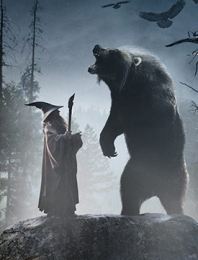
gandalf-and-bearThis article is by Terri Rochenski.

My love affair with the fantasy genre started at an early age when someone bought me and my older brother The Chronicles of Narnia seven book gift set. I read them ‘til they fell apart.

Literally.

I can’t tell you how many times I checked the backs of every closet in our large farm house, totally expecting to find Mr. Tumnus. Oh, the disappointment of finding fantasy is just that—fantasy. Make Believe.

I was introduced to The Hobbit in middle school. The first time I watched the original cartoon released in 1977, I was hooked. I gobbled up the LotR series within the following month. While I may not have understood the underlying moral lessons at that age, re-reads through the years cemented Middle Earth as my favorite daydream land.
Read more

Should Christians Write Fantasy?

Aslan of Narnia

Is it wrong for Christians to write about magic, wizards and otherworldly beings?

Surprisingly, some people believe so.

Over a decade ago a fundamentalist church not far from my home made headlines by having a Harry Potter bonfire.  Christians from the surrounding area were invited to bring their Harry Potter books to a public burning.  The fact that this event conjured images of Nazi Germany didn’t deter the organizers, as they were determined to rid the world (or at least the greater Pittsburgh area) of the influence of J.K. Rowling and her supposed promotion of witchcraft.

Recently this question has arisen in our writing forums, and this has led to a thought-provoking discussion.  One of our members eloquently expressed the crux of the issue:

Read more

In Defense of Peter Jackson

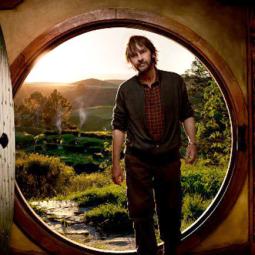
Sir Peter Jackson

Since the announcement that The Hobbit will be a trilogy, the Internet has been abuzz.  The Tolkien fan base has been divided into two camps: those who are elated at the news, and those who believe that it’s a terrible idea.

Those who are apprehensive of the films becoming a trilogy have raised some valid concerns.  For this post, I’ve identified three of the most repeated concerns, and will show why they should be dismissed.

This is About Money

It’s a recent trend to take the final book in a series, and divide it into two films.  Famous examples of this are the finales of the Harry Potter series and the Twilight Saga.  Whether or not this is positive, one thing is for certain: the studio will make more money from two guaranteed hits, as opposed to just one.

Read more

J.R.R. Tolkien, “The Lord of the Rings”, and Free Will

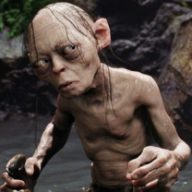
Gollum
Gollum
Gollum

This article is by Darren Andrews.

Generations have been enthralled by Tolkien’s epic fantasy, “The Lord of The Rings”. Its pages have been studied alongside the works of C.S. Lewis in Christian-literature classes, a society exists dedicated to preserving it in the spirit of its author, and back in the 1970s (in England at least) it was ‘unofficial required reading’ to enter the more respected universities – if you wanted to be accepted by your peers!

J.R.R. Tolkien, born 1892, was both a philologist and a student of mythology. He was a down-to-earth man nevertheless, and filled with a remarkable amount of common sense and clarity of thought. That he spent so much of his effort in fiction yet had so great a grasp of reality – both of the seen and unseen – is perhaps one of his most endearing qualities.

Read more

The Real Power of Fantasy Writing

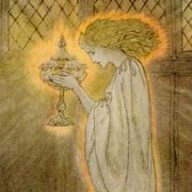
The Holy Grail

This article is by Darren Andrews.

Fantasy can be a potent form of writing if you understand how to use symbolism and maintain the inner consistency of reality.

J.R.R. Tolkien, perhaps the greatest of all fantasy writers, observed that “the realm of fairy-story is wide and deep and high and filled with many things…” (“On Fairy- Stories”, Tree and Leaf, p. 9).

Fantasy literature is purposely imaginative. The author of fantasy has the ability to engage the reader’s imagination more powerfully than the author of another genre – if it is done correctly. High fantasy has a very clear purpose in doing this: it is to take the reader on a journey to reaffirm certain principles of good and evil, of morals, of the spiritual and unseen. Fantasy breaks free of any attachment to political correctness or populist thought.

Read more

Writing Character-Driven Fantasy

Raistlin1.png
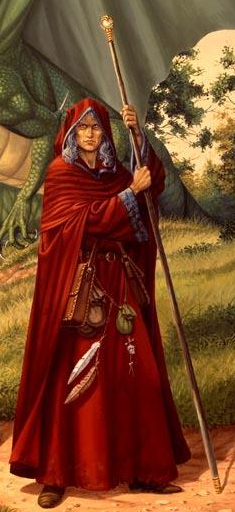
Raistlin Majere
Raistlin Majere

A key element of any successful novel is a cast of vivid, compelling characters.  I recently discussed the topic of character development with author Frank LaVoie, whose debut novel Firesoul has been praised for its colorful characters.  We also chatted about the special importance of characterization in the sub-genre of High Fantasy.

You are an unabashed fan of so-called “epic” or “high” fantasy. Can you elaborate on what sets this sub-genre apart from other forms of fantasy?

High Fantasy serves as the category’s best example in terms of defining the archetype. Typical structures might include the questing hero, a supportive band of allies, fantastical settings, magic as a vehicle for both good and evil, and a vast array of other fictional and far-fetched elements.

Read more

Is YA the Death of Epic Fantasy?

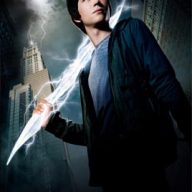
Percy_Jackson4.jpg
Percy Jackson
Percy Jackson

This article is by Frank LaVoie.

For those of you not familiar with the YA moniker, it refers to the genre of Young Adult literature. In the realm of publishing, it is most often coupled with the word ‘fantasy’, thus denoting a fairly specific breed that has proven its popularity in the form of the Harry Potters and Percy Jacksons of the literary world. The growing scope of YA Fantasy has been wholly responsible for an entire generation taking to books. Even medical science has had to pay attention; they credited Rowling’s works with the highly contagious Hogwart’s headache, onset by nonstop reading of the author’s seven-hundred-word whoppers.

But does the rising fashion-ability of YA Fantasy come at a price?

Read more

Is Imitation Integral to Fantasy?

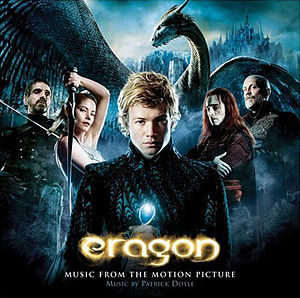
300px-Eragon_soundtrack2.jpg
Eragon (film)
Imitation run amok?

As a twelve year old boy I resolved to write my first fantasy epic.  Through months of toil I hammered out a draft and set it aside. When I returned to it, I was surprised to discover just how unoriginal it was. The plot borrowed heavily from The Lord of the Rings, with strong shades of Star Wars. The dialogue and description sounded too much like C.S. Lewis. And worst of all, virtually every fantasy cliché surfaced at some point in the tale.

In other words, it stunk. But in retrospect, this was a necessary stage in my development as a writer.  Without consciously realizing it, I was imitating the masters – albeit poorly. But by imitating them I was learning how to write. Then, and only then, was I able to move forward and find my own voice.

Read more