Fantasy is an expansive genre in which the reader can be transported to far-off lands. Urban fantasy does something quite different, laying the fantastical world over the one in which we live.
This can be a tricky thing to get right. Too much fantasy and the realism can be lost. Not enough fantasy, and the wonderful sense that anything can happen disappears, and the story becomes humdrum.
Following the writing and copious editing of my Urban Fantasy Trilogy, the Assembly, I’ve identified a few pointers as to what works and what doesn’t. Here are my top five tips to help you blend the real with the fantastical, and create a world your reader will become lost in.
Labelled by TIME as “The Dean of Harry Potter Scholars,” John Granger is a pioneer.
When many were dismissing the significance of the Hogwarts Saga, or condemning the books for “promoting witchcraft,” John was the first literary critic to explain how they carry on the tradition of English fantasy literature. His book, How Harry Cast His Spell, shows readers how J.K. Rowling used classic literary techniques to weave a timeless story that connects with the hearts of readers.
I recently spoke with John about the popularity of fantasy literature, and the secrets of writing a great fantasy story.
What draws people to fantasy literature?
I think Mircea Eliade was right when he wrote that reading serves a mythic or religious function in a secular society, which is to say that we read fiction in general because it offers us an escape from or transcendence of our ego existence.
Is it wrong for Christians to write about magic, wizards and otherworldly beings?
Surprisingly, some people believe so.
Over a decade ago a fundamentalist church not far from my home made headlines by having a Harry Potter bonfire. Christians from the surrounding area were invited to bring their Harry Potter books to a public burning. The fact that this event conjured images of Nazi Germany didn’t deter the organizers, as they were determined to rid the world (or at least the greater Pittsburgh area) of the influence of J.K. Rowling and her supposed promotion of witchcraft.
Recently this question has arisen in our writing forums, and this has led to a thought-provoking discussion. One of our members eloquently expressed the crux of the issue:
Ten years ago I began writing a fantasy epic. I spent months building my own world, complete with fresh mythologies and exotic cultures. I had a great villain and an original plot. Everything appeared to be in place for me to write a first class novel. Sadly, a quarter of the way through a terrible realization hit me: my hero sucked.
My story’s hero was one dimensional and boring. Sure, he could swing a sword. But he wasn’t a man of any depth or character. Worst of all, he was passive instead of proactive. Things happened to him, and all that he did was react. At no point did he make a bold decision that moved the story forward. He didn’t possess the qualities of a hero, but rather those of a victim.
The final movie has entered theaters and I, for one, am more than a little bit sad. I figured there was no better time to talk about the genius of JK Rowling and the Harry Potter series. I have never read a series of books that was more overwhelmingly loved by all different kinds of people. So, if you’re reading this article, I hope you loved Harry, Ron, Hermione, and the rest of the characters as much as I did. If you didn’t, then I would think you can at least admit that Rowling must have done something right to sell so many books.
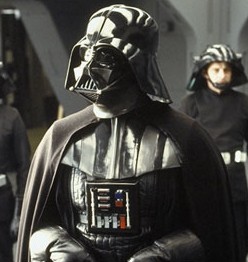
For a fantasy story to be truly great, it needs a memorable villain. In some cases the villain is so compelling that he or she overshadows the hero. That’s not always a bad thing. During my childhood every boy on the block wanted to dress as Darth Vader for Halloween. No one wanted to be the whiny farm boy from Tatooine.
So how do you craft a villain so fascinating that he can sell a million Halloween costumes? Looking at some of the villains whom I most admire, I have narrowed in on five common characteristics.
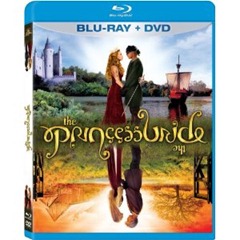
Like many writers of my generation, my first exposure to the fantasy genre was through films. I’ve previously told the story of how my father took me to see Conan the Barbarian when I was underage, and how this brought about an epiphany in my life. Ever since that first encounter, fantasy movies have helped to shape my imagination. When reflecting on the major milestones of my life, I often remember them in relation to the films that captured my attention during those years.
I recently asked our community members to compile a list of their favorite fantasy films. And as usual, our members provided inspired and sometimes provocative responses. This prompted me to consider which fantasy films have had the greatest impact on my writing, and why they are so meaningful.



 Labelled by TIME as “The Dean of Harry Potter Scholars,” John Granger is a pioneer.