‘Soft’ Magic Systems Still Have a Place

This article is by Ashley Capes.

soft magicThe idea that magic in fiction might possess or need a ‘system’ was nonexistent to me when I first read my favourites as a boy in the early 1990s.

Magic was but a component to the awe and wonder within the stories. I didn’t need to know how magic worked, only that magic worked. I never questioned it and certainly wouldn’t have wanted to. Gandalf, for instance, simply wouldn’t have been the same figure of mystery and power if I knew the way his magic functioned.

Read more

Absolutism vs. Ambiguity in Fantasy

This article is by Matthew R. Bishop.

good evilIn a recent article featured on Mythic Scribes, Christian Madera explored the strengths and limitations of “black and white” fantasy, while defending the rise of “grey” fantasy as something that can overcome the drawbacks of black and white.

Let me clarify that I am an author of grey fantasy myself, so I do not take issue with this defense. For the purposes of fully understanding these disparate ways of writing fantasy, however, I want to expand on the strengths and limitations of both, and on the downfall of thinking one is exclusive of another. I hope this effort will lead to a greater appreciation for fantasy of all colors.

Read more

Is Single-Genre Fiction Outdated?

This article is by Michael Cairns.

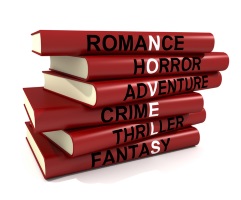
genresFor decades, the publishing industry has worked to ensure that every book that they publish can be marketed within a single genre. This is, up to a point, understandable. Publishing is a business, and the clearer the genre of a book, the easier it is to find the target audience.

However, the rise of self-publishing has changed the way in which people not only sell books, but also write them. Indie’s don’t need to have a big ‘opening weekend’, so as to avoid high returns on print copies. Self-publishers can play the long game, relying on good stories and brave readers to build an audience. They can also take more chances and write outside the long-established boxes.

Read more

4 Essential Tips for First-Time Con-Goers

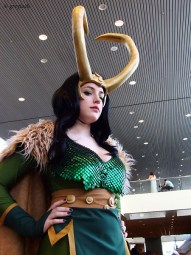
Baltimore Comic-Con Loki
Ditch the Costume

This article is by Joseph Zieja.

Cons are vicious, insane things, where emotions run as hard and fast as the alcohol, where dreams are made and broken at bars, and where George R. R. Martin sends people out for cheese steaks at three o’ clock in the morning.  You will meet people dressed in costumes from anime you have never heard of and, now, never want to see.  It’s a horrifically daunting, exhilarating, and generally rewarding experience.

So why should you take advice from me about going to a convention?  Because I’m you.  I’m the new guy, and I’m here to give you the new guy’s perspective on con-going, and I think I did pretty well for myself at the last few cons.  I’m here to give you the 4 Essential Tips of Convention Attendance.

Read more

Writing Historical Fantasy – Interview with Ian Tregillis

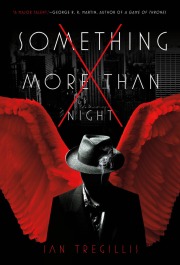
Something More Than NightIan Tregillis is the author of the Milkweed Triptych trilogy, and is a contributor to George R. R. Martin’s Wild Cards series.  His latest book is Something More Than Night, a noir urban fantasy detective story of fallen angels and nightclub stigmatics.
He joins us to answer questions on writing both historical fantasy and alternate history.

Your work is described as either historical fantasy or alternate history.  For readers who aren’t familiar with the differences between the two, could you explain how your work gains these descriptions?

I imagine that people who know me, or my background, must feel confused when they hear me described as a writer of historically influenced novels.  It surprises me, too, though I understand why it happens.

Read more

Writing Secondary Characters – Interview with Scott Lynch

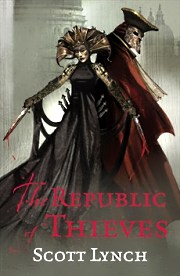
Republic of ThievesWinner of the Sydney J. Bounds Best Newcomer Award and 2007 World Fantasy Award finalist, Scott Lynch is the author of the Gentleman Bastard Sequence, several short stories and an online serial, Queen of the Iron Sands.

He has a strong following who call themselves ‘priests of the crooked author’ and many others, too, have been eagerly awaiting his next book, The Republic of Thieves, which will be out in October 2013.

We can safely say that your novels have a balance of in-depth main and secondary, then background characters, all receiving their due page (screen) time. When planning (or writing/editing), how do you get that balance humming?

The magic, I think, lies in the editing process… first I tend to ensure that I simply have the necessary secondary characters in place to serve their story functions.

Read more

Exploration Through Story – How Stories Teach Us About Ourselves

Albert Einstein
Albert Einstein
Albert Einstein

“When I examine myself and my methods of thought, I come to the conclusion that the gift of fantasy has meant more to me than my talent for absorbing positive knowledge.”

-Albert Einstein

When Albert Einstein imagined himself chasing a beam of light, he was able to conclude that the speed of time is relative to how fast one object is moving compared to another.

I’m not a physics guy, so hopefully I got that close to right.

When it comes to things like knowledge or wisdom, there are many ways to explore them.  There’s science, philosophy, and religion.  But what all of these approaches have in common is storytelling.  And, more importantly, creative storytelling.

Read more

Is Black and White Fantasy Dead?

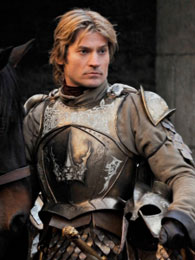
Jaime Lannister from Game of Thrones
Jaime from Game of Thrones

Is black and white dead?

No, I’m not talking about film.

With the recent surge in popularity of George R. R. Martin’s A Song of Ice and Fire series (a.k.a. Game of Thrones), fantasy as a genre has gained a new audience. Even those who have not ventured into fantasy before can easily find themselves engrossed in the world of Westeros.

Why is this so?

Typically, fantasy has been known for depicting the struggle between good and evil – a trope that, while tried and true, may be too conventional for today’s audiences. There, I said it.

Read more