Should You Write a Fantasy Trilogy?

trilogyI recently came to a part in my Work in Progress (WIP) when I said, “Huh, this doesn’t look like it’s going to be a standalone after all.”

While I believe there are a lot of important decisions to make about your book (awesome characters, coherent plot, enough giant roach mutants, traditional vs. self-publishing), one may be the decision to write every fantasy writer’s dream: the Great (Insert Nationality Here) Fantasy Trilogy.

Many of my favorite books of all time were part of trilogies, but the thought of beginning one myself brings thoughts of both excitement and apprehension. Is it the best choice for the story I want to tell? If I don’t write a series, am I cramming too much into one book? After some writers squeak out, “I’m writing a book,” the next question from curious minds may be “Will it be a trilogy?”

Well, will it?

Read more

Racial Diversity in Speculative Fiction

This article is by Anne Leonard.racial diversity

A current – and recurring – topic of conversation in the SFF writer/ blogger/ reader community is the lack of people of color (POC) writing and publishing in the field.  (This is also an issue in the literary community in general; here’s a recent post on the subject that appeared on the Book Riot website.)

People of color are underrepresented in SFF for a lot of reasons, but one which I see frequently mentioned is that books without diversity make POC feel excluded.  This creates a vicious circle – POC don’t read SFF, so they don’t write SFF, so there aren’t POC in SFF books, so POC don’t read SFF.  One way to break the cycle is for white writers to include more diversity in their own work.

Read more

Is Fantasy Fiction Too Safe?

fantasy booksThe last dozen fantasy books I’ve read would be classified as epic fantasy. Some kind of hero or heroine goes on a quest, or there are world-spanning conflicts between kings and queens.

I guess you’re expecting me to say, “Ugh, I’m so sick of epic fantasy.” Actually, no. I quite enjoy these kinds of stories for the most part, and have done so for around twenty years or more.

However, I found myself in a bit of a quandary recently when I thought, “I’d like to read something a bit different in tone, structure, and scope.” So I started looking through my collection of books.

Read more

Case Study: Using Villains to Shape Your Hero

Trindall Grove
A Return to Trindall Grove

In a previous article some time ago, I wrote about developing a character named Breldin, and how I created his home setting, the town of Trindall Grove, based on the way I wanted to shape his personality over the life that he’s lived.

I want to take this moment to return to Trindall Grove in order to reflect on Breldin’s villains, and to discuss the way I’ve designed them to push his personality as the story goes forward. I hope this can serve as a case study for other writers developing their own characters.

Breldin is a young fruit picker fascinated with the subtle magics which ripple through the forest garden surrounding his home. But the water of a dark lake corrupts many of the region’s animals, warping their appearance and instilling them with bouts of insane frenzy.

Read more

The Forests of Fantasyland

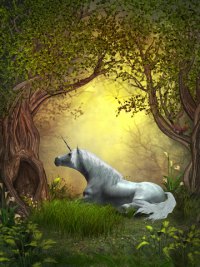
Unicorn in ForestForests are a staple of the fantasy genre. From Middle Earth to Hogwarts, or the forests of Hansel and Gretel or Red Riding Hood, the forest is a setting that crops up time and again across numerous fantasy worlds.

Sometimes these forests are magical, as in the above examples, and sometimes they are not. A forest can be home to fairies, unicorns, outlaws (of both the dashing and dangerous varieties), secret hideouts, sacred springs and lost shrines.

But why is this? What attracts authors of fantasy, more than other genres, to the forest?

Read more

The Fact and the Fantastical – 5 Tips for Creating an Urban Fantasy World

fantasy cityThis article is by Michael Cairns.

Fantasy is an expansive genre in which the reader can be transported to far-off lands. Urban fantasy does something quite different, laying the fantastical world over the one in which we live.

This can be a tricky thing to get right. Too much fantasy and the realism can be lost. Not enough fantasy, and the wonderful sense that anything can happen disappears, and the story becomes humdrum.

Following the writing and copious editing of my Urban Fantasy Trilogy, the Assembly, I’ve identified a few pointers as to what works and what doesn’t. Here are my top five tips to help you blend the real with the fantastical, and create a world your reader will become lost in.

Read more

Cover to Cover: From Inception to Publication

gryphonAll good books start from somewhere.

That inkling of an idea sparked by reading a great book, taking an afternoon walk, or even being walloped over the head by the muse. Time passes. Maybe months, maybe years.

You see that idea grow into a story concept, the story concept become a rough outline, the outline become a story, the story become a published novel. Sounds easy, right?

Yeah, don’t we all wish.

When I was approached with the idea of creating a series of articles that followed from that twinkling of an idea to the process of trying to publish a finished novel I thought, “Wow, this will be quite the daunting task.” However, I was up for the challenge.

Read more

10 Ways to Find Inspiration for Fantasy Writing

The elusive muse. Long considered dead by some, still widely sought after with hounds, nets, and harpoons by others, the concept of “invoking the muse” still lurks out there in the writers’ ether.

Inspiration can be fickle: it doesn’t always necessarily come when you want it. There are some tried and true methods for getting ideas and motivation to write. These have been discussed in multiple “killing writer’s block” and other such advice columns.

What I want to propose are ways to find inspiration for writing fantasy, some of which may be obvious and others not so much.

Read more