Surviving Grimdark Fantasy for the Squeamish

grimdarkWhile there is still some debate about whether it’s a legit sub-genre or not, grimdark has become part of the fantasy lexicon in recent years.

I actually like a lot of the authors that some label as grimdark, so I’m a bit torn on if it’s a good or bad thing. The term can be used to define fantasy with more realistic grit, where morals are gray and blood is bright red. Sounds cool to me.

However, on the flip side, it’s also used as a pejorative term for fiction that is perceived as too bleak, dark, and soul-sucking. This being the opposite of the good vs. evil type of conflicts that may be more familiar for fans of fantasy.

Well, I’m here to show you that grimdark doesn’t have to be unpleasant at all.
Read more

Is Single-Genre Fiction Outdated?

This article is by Michael Cairns.

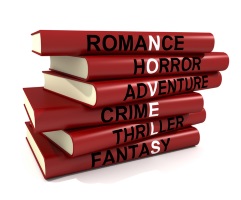
genresFor decades, the publishing industry has worked to ensure that every book that they publish can be marketed within a single genre. This is, up to a point, understandable. Publishing is a business, and the clearer the genre of a book, the easier it is to find the target audience.

However, the rise of self-publishing has changed the way in which people not only sell books, but also write them. Indie’s don’t need to have a big ‘opening weekend’, so as to avoid high returns on print copies. Self-publishers can play the long game, relying on good stories and brave readers to build an audience. They can also take more chances and write outside the long-established boxes.

Read more

Using Role-Playing to Rein in Your WIP

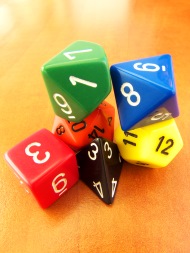
D&D DiceSo, you’ve been busy writing, I see. That work in progress (WIP) is coming along pretty well. But you just don’t know how your audience will feel about it. Or perhaps you’re ready to throw a new element into your story, but you’re not certain that your world is ready for it. So, you pace to and fro, sipping on a cup of coffee while you think it over. Suddenly an idea pops into your head:

“Hey, maybe I can get someone to be a beta reader!”

Suddenly, a knock sounds at your front door. But isn’t it, like, midnight? You open it, startled, and a bit confused to see a group of people clad in mail crafted from pop-can tabs and dresses woven from bedsheets. And there’s a guy in the back wearing sweats. But it’s okay, he has Cheetos.

Read more

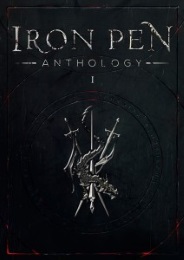
The Iron Pen Anthology is Now Available!

Click to View on Amazon

We’re excited to announce the publication of the Iron Pen Anthology: Volume 1.

This is a collection of stories written by members of Mythic Scribes.  Each of these stories was written for one of our Iron Pen contests, which challenge writers to come up with fantasy stories based on four prompts.

This anthology features eight winning entries, which have been further expanded and polished, as well as a bonus story.

The collection includes:

Read more

Names in Fantasy – 3 Ways to Invent Names for Characters and Creatures

Sirius Black
Sirius Black

This article is by Grace Robinson.

People sometimes ask me how I come up with names for my fantasy stories – names of characters, as well as names of creatures, places, and things.

I don’t have a standard formula for inventing names, but after doing some thinking, I realized that there are three main methods I use.

I believe that many authors use these methods in one way or another:

Read more

Magical Creatures for Magical Worlds: Fairies

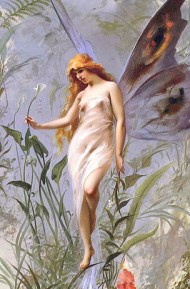
FairyFantasy is a genre where the mythical and made-up can be reality, where the fact that something is physically impossible doesn’t stop it from burning down your town or stealing your babies.

In this series, I’ll be looking at the creatures of fantasy – where they came from, how authors have used them, and what potential they have in the stories we’re writing now.

I’m starting with fairies. They are also known as the fey, the little people hiding in mystical groves, winged humanoids often thought to be pretty or playful – but not always quite so benign. Various other critters have been grouped under the fairy banner – imps, sprites, gnomes, nymphs and goblins, for example – but in this article I’ll be talking about the kind that are only ever called fairies or some variation thereof.

Read more

Cover to Cover III: Owning a First Draft

manuscriptThis is my third entry in my Cover to Cover series which follows a novel from inception to potential publication. It’s interesting to note since I started doing this, my novel has changed quite significantly. Most notable is that I completed a first draft last month.

If you’ve ever completed a long first draft, then you know how time-consuming and rewarding it can be to type “The End.” I was elated. It’s done, right? Well, no. The dreaded edit comes next. However, sometimes just getting the first draft down can be quite a slog for many writers.

So how do you get from inkling of an idea to a completed first draft? I’ll tell you how I did it and hopefully it will be of some help to others.

Read more

Fantasy and How the World Ought To Be

King_Aragorn
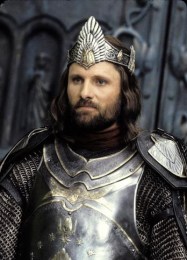
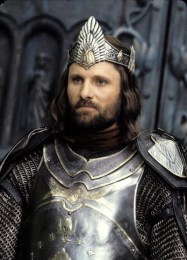
Viggo Mortensen as Aragorn

This article is by Christian Madera.

Early Fantasy literature, with its black-and-white morality, was very comfortable making statements about ethics. I’m using ‘ethics’ in a broad sense here: I don’t just mean questions about what a person should do in a difficult situation (though such questions are definitely a mainstay of Fantasy literature and merit discussion), but rather broader questions about how a person should be and how the world should be.

Recently, we’ve seen a backlash against black-and-white morality and a move towards so-called “grey” Fantasy. While I think it is very important to be cognizant of and think critically about the potential pitfalls of black-and-white Fantasy, I would argue that grey Fantasy is not without pitfalls of its own.

Read more