Secondary Characters: An Important Tool in a Writer’s Toolkit

This article is by AE Jones.

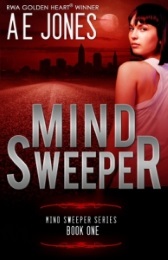
Mind Sweeper coverOne of the hardest jobs for a writer is to pull a reader into their story. I mean, really, really suck them in until they think of the story as a world they can escape to and revel in for hours.

And how do writers do this successfully?

By creating characters that are relatable. Characters that we think of as our friend or our enemy.

Heroes and heroines are the lifeblood of the story. And in romance, the play between these two needs to be magnetic and evocative. Evocative in the sense of stirring emotions. As readers we want to cheer the couple on when they’re together and smack the snot out of them when they’re being obstinate fools.
Read more

5 Ways to Build Stronger Characters

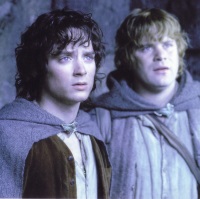
Frodo and Sam

This article is by Anne Marie Gazzolo.

Frodo and SamIt’s possible to build characters who achieve a secondary reality, and become people who live in their own right in our hearts and minds.

It jars me every time someone says Frodo Baggins and Sam Gamgee are ‘characters.’ I want to shout, “They are not characters! They are people!”

J. R. R. Tolkien’s masterful essay “On Fairy-Stories” is must reading for anyone who wishes to practice, as he calls it, the “elvish craft” of sub-creating secondary worlds that achieve a reality of their own. I wish to add some thoughts from my own travels in Middle-earth and a galaxy far, far away, that I hope will help you to build ‘characters’ who are truly more than that.

Read more

How to Kill Your Main Character

ExecutionerThis article is by Rhiannon Paille.

Catching Fire, the edgy, emotional, and jarring sequel to Suzanne Collin’s The Hunger Games trilogy pushed the boundaries, pitting teens against teens in a battle royale to the death, winner takes all. In light of the popular Suzanne Collin’s books, everyone is looking for a way to up the ante and do the unthinkable.

What’s more unthinkable than killing your main character?

As a young adult fantasy author who killed my main character in The Ferryman + The Flame series, I thought I’d give you some insight into the epic thought process that lead to the untimely death of Kaliel, The Amethyst Flame.

Read more

From Serviceable to Memorable: 5 Principles for Dialogue That Delivers

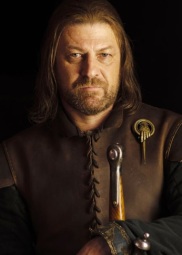
Ned Stark
Ned Stark

For my “writer self,” cracking (or clicking) open a new fantasy novel is one of the most exciting ways to spend my free time.

It’s also one of the most terrifying.

After all, I don’t really know what I’ll find inside, and encountering a badly-crafted story is more than disappointing. It’s downright painful.

I’m sure you could name many issues that hamper your literary enjoyment, but for me, one the biggest is subpar dialogue. I encounter it in books both traditionally and self-published. The story concept may unique, and the plot clever. The prose may even be compelling, well-paced, and active. Overall I’m intrigued…

Until the characters open their mouths.

Read more

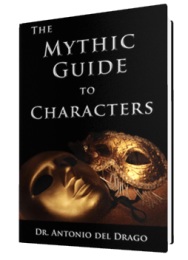
The Mythic Guide to Characters is Now Available!

The Mythic Guide to Characters
Click to View on Amazon

I’m thrilled to announce that The Mythic Guide to Characters is here!

I began planning this book in the summer of 2012, after spending five years studying the workings of the unconscious mind.  As a professional academic, I had become fascinated with how the unconscious drives so much of human behavior.

This gave me the idea of designing a new approach to writing characters, one that is based on the concept of “layers.”

This method starts with the unconscious mind, which is the first and deepest layer of each character, and moves outward.  The end result is characters who are driven by longings and fears that they aren’t consciously aware of… just like real people.

Read more

Using Plot to Reveal Character Transformation

JourneyIf there’s one thing no writer wants to be accused of, it’s writing flat characters.

As readers, we love watching characters transform over the course of their exploits. As writers, we aspire to create those characters. And the transformation need not always be positive; some of the most compelling characters in literature grow darker and more twisted as their stories progress.

Whatever the character’s transformation may be, writers often wrestle with the question, “How can I demonstrate it believably throughout my story?” It’s one thing to say a character is changing; it’s another thing to show that change.

When I first began writing, I was baffled and frustrated by this challenge. I wanted my characters to grow, but my early attempts to show that growth went something like this:

Read more