Magical Creatures for Magical Worlds: The Minotaur

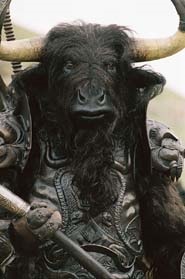
Minotaur as depicted in The Lion, the Witch and the Wardrobe

If ever you are stuck for ideas, look to Greece.

In the ancient myths and legends of Greece, there are intriguing prophecies, clever generals, jealous deities, inventive punishments – and frightening beasties. Herodotus is a favourite of mine for such tales, but there’s plenty to draw from. The plays of Euripides and Sophocles, or for a more comedic bent, Aristophanes. The histories of Thucydides and Xenophon, the biographies of Plutarch.

But the best source for today’s topic is Apollodorus and his Library of Greek Mythology, in which is told the story of the Minotaur.
Read more

5 Reasons Why Narration Can Work in Fiction

This article is by Anne Marie Gazzolo.

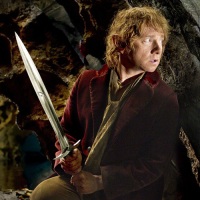
BilboAuthors can use narrators in many different ways to add value to any story. Among them, they can speak directly and indirectly to their audience, inform the readers of things not even the characters inside the story know, give a look into the heart and soul of the heroes and villains, and praise or condemn them for their actions.

Here are five reasons why you should consider using one:

Read more

Should Christians Write Fantasy?

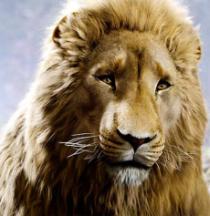
Aslan of Narnia

Is it wrong for Christians to write about magic, wizards and otherworldly beings?

Surprisingly, some people believe so.

Over a decade ago a fundamentalist church not far from my home made headlines by having a Harry Potter bonfire.  Christians from the surrounding area were invited to bring their Harry Potter books to a public burning.  The fact that this event conjured images of Nazi Germany didn’t deter the organizers, as they were determined to rid the world (or at least the greater Pittsburgh area) of the influence of J.K. Rowling and her supposed promotion of witchcraft.

Recently this question has arisen in our writing forums, and this has led to a thought-provoking discussion.  One of our members eloquently expressed the crux of the issue:

Read more

Is Imitation Integral to Fantasy?

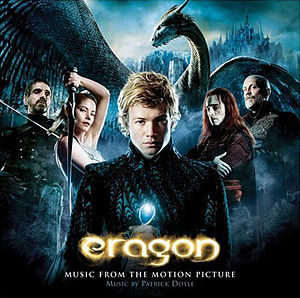
300px-Eragon_soundtrack2.jpg
Eragon (film)
Imitation run amok?

As a twelve year old boy I resolved to write my first fantasy epic.  Through months of toil I hammered out a draft and set it aside. When I returned to it, I was surprised to discover just how unoriginal it was. The plot borrowed heavily from The Lord of the Rings, with strong shades of Star Wars. The dialogue and description sounded too much like C.S. Lewis. And worst of all, virtually every fantasy cliché surfaced at some point in the tale.

In other words, it stunk. But in retrospect, this was a necessary stage in my development as a writer.  Without consciously realizing it, I was imitating the masters – albeit poorly. But by imitating them I was learning how to write. Then, and only then, was I able to move forward and find my own voice.

Read more

Fantasy Writing and the Spiritual Quest

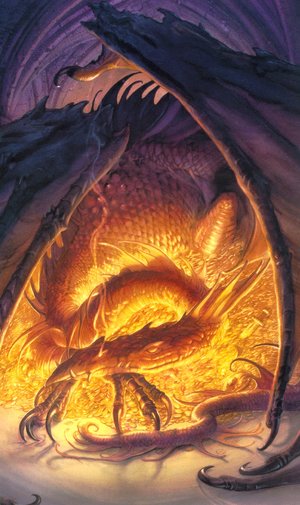
Smaug from Tolkien's The Hobbit, as illustrate...
Smaug

Many fantasy writers experience our craft as being more than a hobby, or even a career choice.  For us, it is a calling.

On my tenth birthday I received a precious gift: a hardback edition of The Hobbit, illustrated by Michael Hague.  This marked my first foray into fantasy literature, and it irrevocably touched my life.

Upon discovering Tolkien I experienced a new realm of possibilities. While clearly fictional, the world which he described had a distinctive aura of truth to it. It was a place of magic, where unseen power filled every aspect of life. Although my mind told me differently, my heart recognized something very real.

Read more