Cover to Cover III: Owning a First Draft

manuscriptThis is my third entry in my Cover to Cover series which follows a novel from inception to potential publication. It’s interesting to note since I started doing this, my novel has changed quite significantly. Most notable is that I completed a first draft last month.

If you’ve ever completed a long first draft, then you know how time-consuming and rewarding it can be to type “The End.” I was elated. It’s done, right? Well, no. The dreaded edit comes next. However, sometimes just getting the first draft down can be quite a slog for many writers.

So how do you get from inkling of an idea to a completed first draft? I’ll tell you how I did it and hopefully it will be of some help to others.
Read more

4 Essential Tips for First-Time Con-Goers

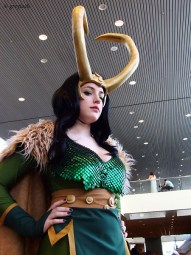
Baltimore Comic-Con Loki
Ditch the Costume

This article is by Joseph Zieja.

Cons are vicious, insane things, where emotions run as hard and fast as the alcohol, where dreams are made and broken at bars, and where George R. R. Martin sends people out for cheese steaks at three o’ clock in the morning.  You will meet people dressed in costumes from anime you have never heard of and, now, never want to see.  It’s a horrifically daunting, exhilarating, and generally rewarding experience.

So why should you take advice from me about going to a convention?  Because I’m you.  I’m the new guy, and I’m here to give you the new guy’s perspective on con-going, and I think I did pretty well for myself at the last few cons.  I’m here to give you the 4 Essential Tips of Convention Attendance.

Read more

Racial Diversity in Speculative Fiction

This article is by Anne Leonard.racial diversity

A current – and recurring – topic of conversation in the SFF writer/ blogger/ reader community is the lack of people of color (POC) writing and publishing in the field.  (This is also an issue in the literary community in general; here’s a recent post on the subject that appeared on the Book Riot website.)

People of color are underrepresented in SFF for a lot of reasons, but one which I see frequently mentioned is that books without diversity make POC feel excluded.  This creates a vicious circle – POC don’t read SFF, so they don’t write SFF, so there aren’t POC in SFF books, so POC don’t read SFF.  One way to break the cycle is for white writers to include more diversity in their own work.

Read more

Making Romance Epic – 5 Tips for Writers

Romantic relationships are a part of being human.

Not every novel needs a romantic subplot. But given enough time and depth, most characters will develop that side of their lives. If we’re ignoring love, we aren’t writing fully realized characters.

If we as writers can tap into the allure and mystery of romance, we have the opportunity to evoke more powerful and compelling emotions through our stories.

Here are five tips for making this happen:

Read more

Mastering Multiple POV in 6 Steps

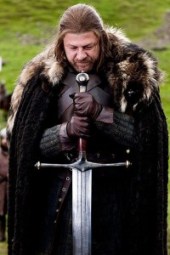
Eddard Stark
Eddard Stark

Multiple POV storytelling has a bad rap.

Sure, the practice of splitting a single narrative across multiple characters’ perspectives has a long history. And its popularity continues to expand as our society grows ever more distrustful of singular truth, in favor of individual realities.

But multiple POV writing is not without its critics—and some of them are quite loud. Many writers and readers complain about poor or confusing execution. Others cite their traditional literary tastes. Why hop between multiple character’s minds, they argue, when you could tell a story more simply through one pair of eyes?

Read more

The Benefits of Outlining: A Layered Approach

wizard writingThis article is by Steven M. Long.

Everybody outlines. The second a writer imagines one scene following another, that writer is creating an outline, even if the outline is incomplete and only in their head.

Referring to a novel writer as an “outliner” usually indicates someone who feels more comfortable with and sees the benefits of knowing – sometimes in great detail – where their novel is headed.

As you can probably guess, I outline, and over the time I’ve been writing novels (I’ve written four, two of them pretty good) I’ve been told repeatedly that I should just “let it go” and that I’m “ruining my creative process.” As often as not, these comments come from people who’ve never finished a novel.

Read more

Is Plot or Character More Important?

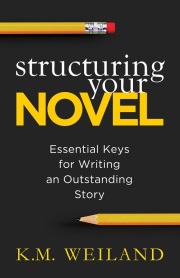
Structuring Your NovelThis article is by K.M. Weiland.

“Plot vs. character”—we hear it all the time, as if the two were mutually exclusive. Either your book is plot-driven or character-driven. Can’t possibly be both, right?

And anytime we run afoul of an either/or conundrum, you gotta know people are going to start believing one or the other is not only the best way, but even the only way to write a book.

Let’s consider this a little more microscopically. What would it take to make one or the other of these combatants “more important” than the other?

Read more

Writing Secondary Characters – Interview with Scott Lynch

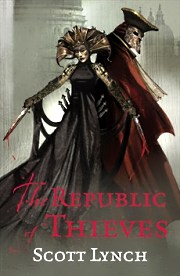
Republic of ThievesWinner of the Sydney J. Bounds Best Newcomer Award and 2007 World Fantasy Award finalist, Scott Lynch is the author of the Gentleman Bastard Sequence, several short stories and an online serial, Queen of the Iron Sands.

He has a strong following who call themselves ‘priests of the crooked author’ and many others, too, have been eagerly awaiting his next book, The Republic of Thieves, which will be out in October 2013.

We can safely say that your novels have a balance of in-depth main and secondary, then background characters, all receiving their due page (screen) time. When planning (or writing/editing), how do you get that balance humming?

The magic, I think, lies in the editing process… first I tend to ensure that I simply have the necessary secondary characters in place to serve their story functions.

Read more