Know the Rules. Understand the Rules. Break the Rules.

When it comes to writing, I like to say that there are no rules. However, that is not entirely accurate. There is one rule:

  1. Use What Works
  2. Weren’t you listening? One rule! That’s it!

This is a pretty obvious rule, assuming your goal is to write something that other people want to read.

If that isn’t your goal, then you would want to use what didn’t work… which, remembering your goal, would work. Which means you’re still the following the rule. Hrm.

My head hurts.

In the context of creative writing, rules are – as a certain pirate captain might say – really more like guidelines. Use them when they work and ignore them when you have enough reason.
Read more

Using Fantasy to Enhance a Story

Even when the characters’ adventures are fantastic, a good story should have an emotional core which is personal, drawing from common human experience to help readers connect with our characters.  A story written in this way needs little imagination to prop it up. Which is why, in my efforts to write fantasy, I’ve been asked:
If a story is universal, why do you need the magic?

Magic comes with the price of a built-in distance between your events and your reader which can keep you from achieving the potential of your story. Guarding the passageway to an important official, I can hint at the terror of a pair of trolls, or I can connect readers directly to the fear of two condescending and semi-sadistic guards. I can wound my character with the blast of a fireball from a distant wizard, or I can bring my readers the terror of being knifed by a killer.

Read more

Flash Novels: The Future of Fantasy Fiction?

flash fiction
flash fiction
Bigger Isn't Always Better

This article is by Leif G.S. Notae.

What if I told you that I could condense The Lord of the Rings or A Game of Thrones into less than 25,000 words? You’d think that I was crazy.

I assure you, this is not my intention. However, it is possible.

Flash fiction, which is a style of writing that emphasizes extreme brevity, is becoming increasingly popular.  While it has been around for years, it has recently been garnering respect in literary circles.  Even conventional novelists find it useful to experiment with flash fiction, as it challenges them to approach writing in new and creative ways.

Read more

Finding your Writer’s Voice

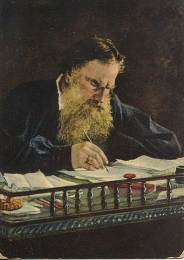
Leo Tolstoy

One of the fundamental challenges confronting every writer is “finding their voice”, their unique expression in the field or medium in which they’ve chosen to express themselves. When Alasdair Stuart – editor of The Hub e-zine and host of the horror podcast Pseudopod – was asked to identify the quality that defines the stories he’s drawn to, he sited, “a strong confident authorial voice. That feeling of, for want of a better word, swagger. If you can hit that point where you are in absolute control of your story… but it’s still you, then that really makes me sit up and take notice.”

We all strive for that effortless grace and utter conviction that transports our readers to the worlds we’ve crafted. It can’t be faked, applied, or forced. It just is, and the way to achieve such prose is NOT necessarily to write more.

Read more

Starting out Strong – How to Write a Killer Opening

Whether you are planning to self-publish or go the traditional route, there are two important pieces of writing that you need to pay particular attention to.
The first is what is sometimes referred to as the back of the book marketing copy (which I may cover in a future post), but today I want to talk about your book’s opening.

Whether it’s an agent reviewing submissions or a potential reader browsing through new releases, if you aren’t compelling right from the start they’ll quickly move on—an opportunity lost.

So what makes a good opening?

Read more

How to Write Battle Scenes

This article is by Ciele Edwards.

Battle scenes can be just as intense on the page as they are on the screen. Many classic novels, such as The Lord of the Rings and The Last of the Mohicans, contain vivid, well-written battle scenes that are essential to the plot.

Even if you do not have faith in your ability to create one of these scenes, the inevitable conflict present in every tale may eventually leave you with no choice. Once you learn how to properly write a battle scene, you will never again be stuck with a war or fight that you are unable to properly describe.

Read more

The Real Power of Fantasy Writing

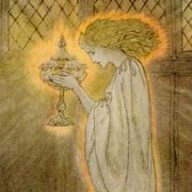
The Holy Grail

This article is by Darren Andrews.

Fantasy can be a potent form of writing if you understand how to use symbolism and maintain the inner consistency of reality.

J.R.R. Tolkien, perhaps the greatest of all fantasy writers, observed that “the realm of fairy-story is wide and deep and high and filled with many things…” (“On Fairy- Stories”, Tree and Leaf, p. 9).

Fantasy literature is purposely imaginative. The author of fantasy has the ability to engage the reader’s imagination more powerfully than the author of another genre – if it is done correctly. High fantasy has a very clear purpose in doing this: it is to take the reader on a journey to reaffirm certain principles of good and evil, of morals, of the spiritual and unseen. Fantasy breaks free of any attachment to political correctness or populist thought.

Read more