5 Reasons Why Narration Can Work in Fiction

This article is by Anne Marie Gazzolo.

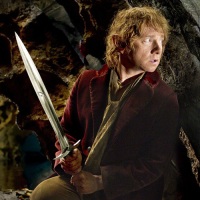
BilboAuthors can use narrators in many different ways to add value to any story. Among them, they can speak directly and indirectly to their audience, inform the readers of things not even the characters inside the story know, give a look into the heart and soul of the heroes and villains, and praise or condemn them for their actions.

Here are five reasons why you should consider using one:

Read more

Making Romance Epic – 5 Tips for Writers

Romantic relationships are a part of being human.

Not every novel needs a romantic subplot. But given enough time and depth, most characters will develop that side of their lives. If we’re ignoring love, we aren’t writing fully realized characters.

If we as writers can tap into the allure and mystery of romance, we have the opportunity to evoke more powerful and compelling emotions through our stories.

Here are five tips for making this happen:

Read more

How to Kill Your Main Character

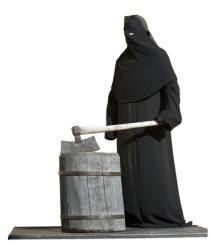
ExecutionerThis article is by Rhiannon Paille.

Catching Fire, the edgy, emotional, and jarring sequel to Suzanne Collin’s The Hunger Games trilogy pushed the boundaries, pitting teens against teens in a battle royale to the death, winner takes all. In light of the popular Suzanne Collin’s books, everyone is looking for a way to up the ante and do the unthinkable.

What’s more unthinkable than killing your main character?

As a young adult fantasy author who killed my main character in The Ferryman + The Flame series, I thought I’d give you some insight into the epic thought process that lead to the untimely death of Kaliel, The Amethyst Flame.

Read more

6 Tips for Writing a Knockout Fight Scene

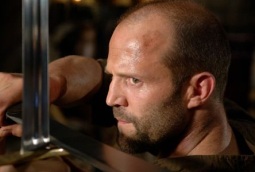
The Jason Statham
The Jason Statham

Hey, you. Yes, you!

Do you have doubts as to whether or not your puny fingers can punch out what happens during a fight?

Most writer-types aren’t the kind who frequent underground fighting rings, so conveying what a fight is like through writing isn’t the easiest thing to do. And I’m not going to recommend that you go out and assault someone to gain experience, because, you know, jail and stuff.

Have no fear, comrade! By the end of this article you’ll have grown a beard worthy of Valhalla, and you’ll be able to write with such brutality and carnage that you’ll make Sylvester Stallone shed a tear. I’ll turn you into a keyboard crusader, yet!

Read more

Writing Historical Fantasy – Interview with Ian Tregillis

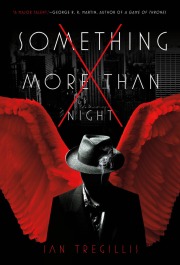
Something More Than NightIan Tregillis is the author of the Milkweed Triptych trilogy, and is a contributor to George R. R. Martin’s Wild Cards series.  His latest book is Something More Than Night, a noir urban fantasy detective story of fallen angels and nightclub stigmatics.
He joins us to answer questions on writing both historical fantasy and alternate history.

Your work is described as either historical fantasy or alternate history.  For readers who aren’t familiar with the differences between the two, could you explain how your work gains these descriptions?

I imagine that people who know me, or my background, must feel confused when they hear me described as a writer of historically influenced novels.  It surprises me, too, though I understand why it happens.

Read more

Mastering Multiple POV in 6 Steps

Eddard Stark
Eddard Stark

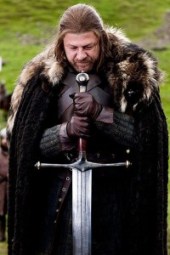
Multiple POV storytelling has a bad rap.

Sure, the practice of splitting a single narrative across multiple characters’ perspectives has a long history. And its popularity continues to expand as our society grows ever more distrustful of singular truth, in favor of individual realities.

But multiple POV writing is not without its critics—and some of them are quite loud. Many writers and readers complain about poor or confusing execution. Others cite their traditional literary tastes. Why hop between multiple character’s minds, they argue, when you could tell a story more simply through one pair of eyes?

Read more

A Fine Line Between Love and Death – How to Write Love Scenes

kissingAs fantasy writers, we accept that certain elements are expected in our novels.  For example, the fight scene. Whether it’s an epic battle or a street duel, there’s going to be a fight somewhere. But what about love?

I recently talked with a few friends about writing romantic scenes. The general feeling that these writers shared was one of hesitancy. Hesitant to write a love scene? How could that be? Don’t we all love more than we brawl?

After a few in-depth conversations, I determined that their hesitancy was really apprehension over the execution of an intimate scene. So I tried to boost my friends’ confidence, and I think what I came up with might be useful to other people struggling with a similar conundrum.

Read more

Purple Prose – How to Find It and Fight It

Purple FlowersThis article is by Brendan McNulty.

Wikipedia defines purple prose as “written prose that is so extravagant, ornate, or flowery as to break the flow and draw excessive attention to itself.”

It’s one of those writing styles we’re always told to guard against. The best way to look at it is to see what is a necessary way of expressing something vs. overly flouncy and descriptive passages.

Some people think that this means that your writing has to be exclusively lean and clear, but I would disagree.

You don’t need to forsake complex or intricate writing in order to ward off purple prose.  Instead, the objective is to write in such a manner that you communicate effectively, without your word choice drawing attention to itself.

Read more