What Writers Can Learn From Soaping

This article is by A.L.S. Vossler.

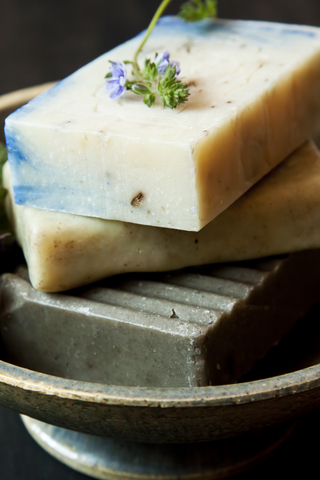
dreamstime_xs_40257559Recently, I took up the hobby of soaping, which, as you might guess, is making soap. There are three ways of making soap: hand-milled, cold process, and hot process.

Hand-milled, which is also known as melt-and-pour, basically involves taking a soap base which someone else has already prepared, and modifying it by melting it, putting in your own additives such as colors and fragrances, and molding it. This process does not require working with lye. I’ve never actually tried this, because I prefer the idea of building my soap from the ground up, so to speak. If soaping were writing, melt-and-pour soap would be fan fiction.

Read more

Beta Readers: The Unsung Heroes of Literature

silhoutteThis article is by Julian Saheed.

There is a reason we all leave space for acknowledgments in the first few pages of our books.

Though our names appear on the front covers as the architects of the story, there are those who check to make sure the final product is what people want. Those whose eyes are red from reading, whose hands are tired from scribbling and whose contributions must never be taken lightly.

I speak of course of that most noble of vocations, the Beta Reader.

Read more

30 Ways to Resuscitate a Dying NaNoWriMo Novel

novelIf you’ve done National Novel Writing Month (NaNoWriMo) you know there sometimes comes a point when you think, “Why in the hell am I doing this?”

This is a normal feeling albeit a demoralizing one. You’ve been tap-tapping away when suddenly the juice runs out, the muse falls off her glittery pegasus, or writer’s block smashes you square in the face.

You need a pick-me-up, something to keep you moving along towards you goals, whether that be 50,000 words or some other suitably insane feat of writerly badassery. Even if you’re not doing NaNoWriMo, maybe you can find a nugget of wisdom buried underneath my sagely ramblings.

Read more

Help! I Accidentally Wrote a Novel

typingOkay, so the story wasn’t an accident, but its length was.
I searched for any way to pass lonely Wisconsin winter hours while my coworkers paced an empty showroom floor, waiting for clients who needed a vehicle badly enough to brave low temperatures and icy streets.

I hated all of it. In fact, I never meant to sell cars, either. While in school for auto body repair, I turned in an application to the body shop and they sold me the job on the showroom floor!

During slow times, I wrote. I scribbled notes on the backs of financing forms, filled pages of lined paper with a story, and even based my character off my predicament purely for inspiration—not as some sort of immature way to deal with my frustrating job. So what if a few salesmen wizards had a few bad things happen to them?

Read more

Writing What You Know When There’s No Way to “Know” It

This article is by Selah Janel.

magic bookIf there’s one piece of advice I’ve heard from the time I was in high school until now, it’s “write what you know.” This used to bug me as a teen because I felt that my life hadn’t even started yet, so how was I supposed to write anything interesting?

It also seems to directly contradict the entire reality of writing genre fiction. How can you write what you know if you can’t live in impossible worlds, use magic, or go up against fantastic creatures? There’s absolutely no way this advice can be applicable if you write fantasy or any fantasy subgenre, right?

You’d be surprised.

Read more

Surviving Grimdark Fantasy for the Squeamish

grimdarkWhile there is still some debate about whether it’s a legit sub-genre or not, grimdark has become part of the fantasy lexicon in recent years.
I actually like a lot of the authors that some label as grimdark, so I’m a bit torn on if it’s a good or bad thing. The term can be used to define fantasy with more realistic grit, where morals are gray and blood is bright red. Sounds cool to me.

However, on the flip side, it’s also used as a pejorative term for fiction that is perceived as too bleak, dark, and soul-sucking. This being the opposite of the good vs. evil type of conflicts that may be more familiar for fans of fantasy.

Well, I’m here to show you that grimdark doesn’t have to be unpleasant at all.

Read more

Using Role-Playing to Rein in Your WIP

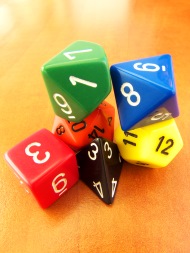
D&D DiceSo, you’ve been busy writing, I see. That work in progress (WIP) is coming along pretty well. But you just don’t know how your audience will feel about it. Or perhaps you’re ready to throw a new element into your story, but you’re not certain that your world is ready for it. So, you pace to and fro, sipping on a cup of coffee while you think it over. Suddenly an idea pops into your head:

“Hey, maybe I can get someone to be a beta reader!”

Suddenly, a knock sounds at your front door. But isn’t it, like, midnight? You open it, startled, and a bit confused to see a group of people clad in mail crafted from pop-can tabs and dresses woven from bedsheets. And there’s a guy in the back wearing sweats. But it’s okay, he has Cheetos.

Read more

Critiques: A How-To Guide

By far, one of the most useful tools in a writer’s arsenal is the critique. But what is a critique? What makes a good critique? And how do I critique for a writer who wants to trade?

penWhen I began trading work, I wasn’t sure what to do or what to expect. After three years I’ve gained experience, and have settled into a sort of structure on how to best aid other writers and request the feedback that I find most useful.

While the critique relationship is best based on mutual respect and a genuine desire to help, it’s also a mostly negative undertaking. Through a balance of praise and recognition for the things that wow you as a reader, the nit-picks hurt less for the writer.

Read more