The RPG Experience to Writing a Novel

Blood SwordThis article is by Terry W. Ervin II.

It is often said, “Write what you know.” This can be a stumbling block for some writers. How do you convincingly write a dastardly or evil character in a novel if you’ve never acted or done such things? That is where Role Playing Game (RPG) experience can benefit a writer.

Whether it’s space adventure (as in Traveller), sword and sorcery (as in AD&D) or even spy and espionage intrigue (as in Top Secret)—okay, you as the reader may be muttering, “Man, those games are old—no, near ancient.” But those are examples of games that I cut my RPG teeth on years ago, and those led to the foundation for some of my writing and storytelling ability. Even games like Diplomacy, Star Fleet Battles, King Maker, Axis & Allies, and yes, even Monopoly, can add a more strategic overview that may be of benefit to a writer.
Read more

The Real Power of Fantasy Writing

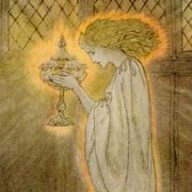
The Holy Grail

This article is by Darren Andrews.

Fantasy can be a potent form of writing if you understand how to use symbolism and maintain the inner consistency of reality.

J.R.R. Tolkien, perhaps the greatest of all fantasy writers, observed that “the realm of fairy-story is wide and deep and high and filled with many things…” (“On Fairy- Stories”, Tree and Leaf, p. 9).

Fantasy literature is purposely imaginative. The author of fantasy has the ability to engage the reader’s imagination more powerfully than the author of another genre – if it is done correctly. High fantasy has a very clear purpose in doing this: it is to take the reader on a journey to reaffirm certain principles of good and evil, of morals, of the spiritual and unseen. Fantasy breaks free of any attachment to political correctness or populist thought.

Read more

Considering the Fantastical

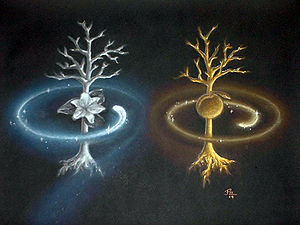
300px-Tolkien_The_two_trees4.jpg
The Creation of the Two Trees
The Trees of Valinor

This article is by Frank LaVoie.

Don’t be mistaken.  Writing in the fantasy genre is not the same as working in other types of literature. They each have their complexities, and I’m sure you could argue for the inclusion of some of my points below in one kind of writing or another. But, the overall depth and scope of fantasy in terms of writing has all the intricacies of playing God.

World-Building

You are now the master of your own continent, world, universe, or even something so grand that you have a hard time comprehending it yourself.

So what?

Read more

Are Magic Systems a Distraction?

spell compendiumA fellow writer shared his dilemma with me.  He and his partner were starting a new project, and had invested much time in developing a magic system.  He had shared it with me before, and I was intrigued by their original spin on magic and spell-casting.

But then something happened.  While flipping through the channels, they came across a television series in which characters were using magic.  And to my friend’s horror, they were using virtually the same magic system that he had just spent months developing.

Understandably, this felt like a major setback.  But was it?

Read more

How to Design Your Diabolical Cult

conan_the_barbarian1In the summer of 1982 I had a life changing experience.  Although I was underage, I accompanied my father to see the new epic fantasy Conan the Barbarian, starring Mr. Universe Arnold Schwarzenegger.  While the film itself was amazing (especially the score), I was particularly impressed by its charismatic villain, Thulsa Doom.

As portrayed by James Earl Jones, this Thulsa Doom wasn’t the grotesque necromancer from the Robert E. Howard stories.  Instead, he was an appealing and persuasive speaker with the power to control the masses.  When he spoke, people obeyed him – even eagerly jumping to their death at his command.  He was, in short, a cult leader.

Read more