Secrets of Story Structure – Interview with Hollywood Writer Eric Luke

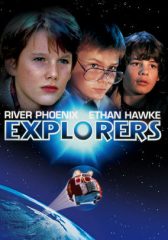
Writer and director Eric Luke has worked on films for Paramount, Disney, and Fox TV.  He’s the writer of the science-fiction cult classic Explorers, which starred Ethan Hawke and the late River Phoenix

I recently chatted with Eric about story development and narrative structure, as well as his latest project, the self-aware audiobook Interference.

How did you get into screenwriting?

I’ve wanted to make movies ever since I can remember.  I picked up the family wind-up 16mm camera, started shooting, and very quickly found out I’d need a narrative to keep people interested.  The first scripts were more like verbal storyboards, and I’ve always tried to hang onto that: just enough description to get an image into the reader’s head, then onto the next and the next: a really fast read.  
Read more

The Owls Are Not What They Seem – Expanding Minds with Loose Ends

This article is by Nathan Lauffer and Kevin Spencer.

We are all, to varying extents, seekers after truth.  I’m certain we are hard wired for it.  Humans are all philosophers, who vary only in the questions they ask.

Over the years, I’ve become fascinated with stories that operate in worlds whose mythology, or at least backstory, is not immediately rendered apparent to the reader/viewer.  I like the way these stories progressively reveal these things as they go and give us a series of Uh-Huh moments.

Mystery in Stories Engages Us

Going back, I can recall shows from my childhood all the way up to the present that have done this.  Dune made me wonder what was so special about the spice mélange and how it was made.

Read more

Why Plot Clichés are a Good Thing

This article is by Dr John Yeoman.

Every plot is a cliché, isn’t it?

According to Christopher Booker, there have been only seven basic plots since the dawn of story telling, although Georges Polti expanded the total to 36. No good plot is original because successful stories evoke one or more of the Seven Deadly Sins.  (It seems humans are not clever enough to think of any fresh ones.)

Every one of the 3000+ tales I’ve judged at the Writers’ Village story contest have been grounded in a plot cliché. Yet some stories were spectacularly fresh. How come? Their writers had added a clever new twist, dropped in sensibility or played creatively with the cliché. Here’s how to do it:

Read more

Character Girl – Letting Characters Drive the Story

Celtic Cross
Celtic Cross

This article is by Bets Davies.

I’m a character girl.

The question becomes inevitable when you have a novel in your head:  Where to start?  I used to plunge into a rambling first draft with inconsistencies, reams I had to cut out and reams I had to fit in.  Then there are outliners.  Plot every important event in sensible order.  Me?  I begin, continue, and end with character.  If I want to be character-driven, I let the characters drive.

It starts with the character sheet.  I use Leonard Chang’s but he claims it as intellectual property, so I can’t hand it out.  Suffice to say it is single spaced aspects about your character that take up more than a page.  You can Google one.  Make sure to fill it out in obscene detail.

Read more

How Much Do Endings Matter?

300px-Deadwood_Season32.jpg
Deadwood
RIP Deadwood

Recently a feud of sorts has developed between George R.R. Martin, author of A Game of Thrones, and Damon Lindelof, the mastermind behind Lost. When Martin was asked if he felt nervous about ending his series, he answered that he feared “pulling a Lost.” When Lindelof learned of this interview, he lashed out on Twitter, understandably miffed that his show has become synonymous with disappointing endings.

This exchange prompted me to consider a point of crucial importance to all writers. Specifically, how much do endings really matter? If a story is otherwise excellent, can a poor ending bring the whole thing to ruin? Conversely, can an outstanding ending elevate a mediocre story to greatness?

Read more