Is Single-Genre Fiction Outdated?

This article is by Michael Cairns.
genresFor decades, the publishing industry has worked to ensure that every book that they publish can be marketed within a single genre. This is, up to a point, understandable. Publishing is a business, and the clearer the genre of a book, the easier it is to find the target audience.

However, the rise of self-publishing has changed the way in which people not only sell books, but also write them. Indie’s don’t need to have a big ‘opening weekend’, so as to avoid high returns on print copies. Self-publishers can play the long game, relying on good stories and brave readers to build an audience. They can also take more chances and write outside the long-established boxes.
Read more

Magical Creatures for Magical Worlds: Fairies

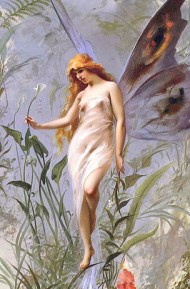
FairyFantasy is a genre where the mythical and made-up can be reality, where the fact that something is physically impossible doesn’t stop it from burning down your town or stealing your babies.

In this series, I’ll be looking at the creatures of fantasy – where they came from, how authors have used them, and what potential they have in the stories we’re writing now.

I’m starting with fairies. They are also known as the fey, the little people hiding in mystical groves, winged humanoids often thought to be pretty or playful – but not always quite so benign. Various other critters have been grouped under the fairy banner – imps, sprites, gnomes, nymphs and goblins, for example – but in this article I’ll be talking about the kind that are only ever called fairies or some variation thereof.

Read more

Racial Diversity in Speculative Fiction

This article is by Anne Leonard.racial diversity

A current – and recurring – topic of conversation in the SFF writer/ blogger/ reader community is the lack of people of color (POC) writing and publishing in the field.  (This is also an issue in the literary community in general; here’s a recent post on the subject that appeared on the Book Riot website.)

People of color are underrepresented in SFF for a lot of reasons, but one which I see frequently mentioned is that books without diversity make POC feel excluded.  This creates a vicious circle – POC don’t read SFF, so they don’t write SFF, so there aren’t POC in SFF books, so POC don’t read SFF.  One way to break the cycle is for white writers to include more diversity in their own work.

Read more

Is Fantasy Fiction Too Safe?

fantasy booksThe last dozen fantasy books I’ve read would be classified as epic fantasy. Some kind of hero or heroine goes on a quest, or there are world-spanning conflicts between kings and queens.

I guess you’re expecting me to say, “Ugh, I’m so sick of epic fantasy.” Actually, no. I quite enjoy these kinds of stories for the most part, and have done so for around twenty years or more.

However, I found myself in a bit of a quandary recently when I thought, “I’d like to read something a bit different in tone, structure, and scope.” So I started looking through my collection of books.

Read more

The Why of Weapons: The Great Sword of War

This article is by Joseph Malik.

Today I’m going to discuss an underrepresented weapon in fantasy, although it was likely the single greatest casualty-producing weapon on the medieval battlefield until the development of the longbow.

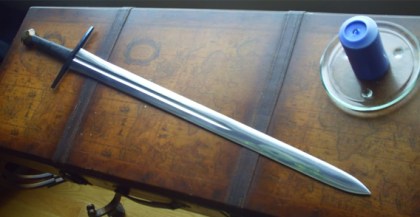
Image 1A Gran Espée de Guerre by Michael “Tinker” Pearce. (www.tinkerswords.com)

It’s a sword. It’s arguably the sword. It’s the Oakeshott Type XIIIa great sword of war, referred to as a gran espée de guerre.

Read more

Fan Fiction: An Epiphany

YodaThis article is by A.L.S. Vossler.

Fan fiction is the lowest life form of the writing universe.

If you had asked me what I thought about fan fiction about a year ago, that is what I would have said.

I had not always looked down so fiercely on fan fiction.  I was never a huge proponent of it, but I did not always thumb my nose at it, either.

In college, however, I took a creative writing class.  We talked about “developmental” stages of writing, and the most infantile of those stages was the “writer’s personal fantasy.”  The idea behind this stage was that the writer was living vicariously through the characters and only producing, more or less, self-indulgent tripe.

Read more

Embracing My Inner Fanboy – 10 Things That Fuel My Obsession With a Story

Tardis“I don’t really like Fantasy or Science Fiction, but I think I’ll write stories in those genres anyway.”

-No one

This month I decided to participate in NaNoWriMo.  It had been a while since I had written anything, and I felt like it would be a good opportunity to try.

Then life happened…a lot.  And, long story short, the only way I’m going to make 50,000 words is if I change direction and write a graphic novel where I draw 50 pictures.  Get it?  Because a picture is worth a thousand words.  Sorry, bad joke.

The good news is that I do have a story, and a mythology.  I even have some characters.  I’ve done some of the foot work.  And, one of the exercises that accomplished this for me is that I pulled from my inner-fanboy.

Read more

The Forests of Fantasyland

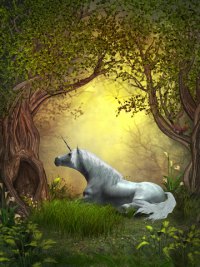
Unicorn in ForestForests are a staple of the fantasy genre. From Middle Earth to Hogwarts, or the forests of Hansel and Gretel or Red Riding Hood, the forest is a setting that crops up time and again across numerous fantasy worlds.

Sometimes these forests are magical, as in the above examples, and sometimes they are not. A forest can be home to fairies, unicorns, outlaws (of both the dashing and dangerous varieties), secret hideouts, sacred springs and lost shrines.

But why is this? What attracts authors of fantasy, more than other genres, to the forest?

Read more