Finding Success as a Novelist — Interview with C.S. Lakin

C. S. Lakin has penned nineteen novels of various genres. She works professionally as a copyeditor and writing coach, and critiques more than two hundred manuscripts a year. She also guest blogs on the top writing blogs, such as Writers’ Digest and Grammarly, and teaches workshops around the country. Her award-winning blog Live Write Thrive … Read more

Speaking of Thorns – Interview with Mark Lawrence

prince of thornsMark Lawrence is the author of Prince of Thorns, King of Thorns, and Emperor of Thorns.

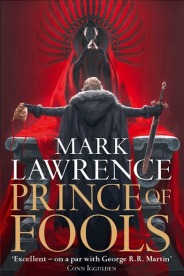
His latest novel, Prince of Fools, will be released in June 2014.

Literature has depicted violence since the earliest records. Even the “high fantasy” subgenre has heroes we physically associate with killing troves of orcs. What is it in the “grimdark” subgenre that ruffles so many feathers?

No idea! I don’t even know what “grimdark” is. People back off rapidly if you ask them to actually define it. It seems to be shorthand for ‘this thing I don’t like’ … and given that the things people don’t like are as diverse as the things people do like … it ends up pretty meaningless, generally a form of slur.
Read more

Writing Historical Fantasy – Interview with Ian Tregillis

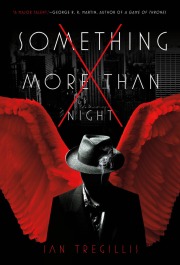
Something More Than NightIan Tregillis is the author of the Milkweed Triptych trilogy, and is a contributor to George R. R. Martin’s Wild Cards series.  His latest book is Something More Than Night, a noir urban fantasy detective story of fallen angels and nightclub stigmatics.
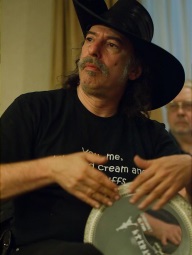
He joins us to answer questions on writing both historical fantasy and alternate history.

Your work is described as either historical fantasy or alternate history.  For readers who aren’t familiar with the differences between the two, could you explain how your work gains these descriptions?

I imagine that people who know me, or my background, must feel confused when they hear me described as a writer of historically influenced novels.  It surprises me, too, though I understand why it happens.

Read more

Playing with Story Structure – Interview with Steven Brust

Steven Brust

Steven BrustSteven Brust is the author of twenty-six novels so far, with his most popular following the assassin Vlad Taltos (starting with the novel Jhereg).  His most recent novel, The Incrementalists, is a collaboration with author Skyler White.

Steven is also a member of the Pre-Joycean Fellowship, a group of writers who value 19th-century values of storytelling. He joins us to discuss something he loves to do, playing with structure.

Speaking generally, where do your ideas start – a plot or structure idea, a character, a question you want answered – or does it change with each novel?

It changes with each novel.  With Hawk, it was plot structure.  With Athyra, it was a single image I couldn’t get out of my head.  Sometimes it’s a particular scene that grabs me, so I need to write to it, then follow up the consequences.  My favorite is when I get a sentence that makes me go, “That’d be a great first sentence for a book.  I wonder what the book is about?”

Read more

Writing Secondary Characters – Interview with Scott Lynch

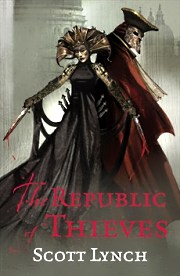
Republic of ThievesWinner of the Sydney J. Bounds Best Newcomer Award and 2007 World Fantasy Award finalist, Scott Lynch is the author of the Gentleman Bastard Sequence, several short stories and an online serial, Queen of the Iron Sands.

He has a strong following who call themselves ‘priests of the crooked author’ and many others, too, have been eagerly awaiting his next book, The Republic of Thieves, which will be out in October 2013.

We can safely say that your novels have a balance of in-depth main and secondary, then background characters, all receiving their due page (screen) time. When planning (or writing/editing), how do you get that balance humming?

The magic, I think, lies in the editing process… first I tend to ensure that I simply have the necessary secondary characters in place to serve their story functions.

Read more

Secrets of Fantasy Literature – Interview with Harry Potter Scholar John Granger

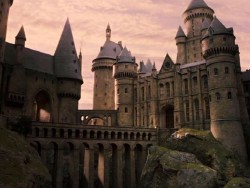
HogwartsLabelled by TIME as “The Dean of Harry Potter Scholars,” John Granger is a pioneer.
When many were dismissing the significance of the Hogwarts Saga, or condemning the books for “promoting witchcraft,” John was the first literary critic to explain how they carry on the tradition of English fantasy literature.  His book, How Harry Cast His Spell, shows readers how J.K. Rowling used classic literary techniques to weave a timeless story that connects with the hearts of readers.

I recently spoke with John about the popularity of fantasy literature, and the secrets of writing a great fantasy story.

What draws people to fantasy literature?

I think Mircea Eliade was right when he wrote that reading serves a mythic or religious function in a secular society, which is to say that we read fiction in general because it offers us an escape from or transcendence of our ego existence.

Read more

Secrets of Story Structure – Interview with Hollywood Writer Eric Luke

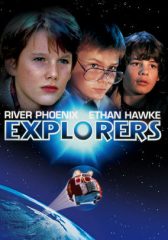
Writer and director Eric Luke has worked on films for Paramount, Disney, and Fox TV.  He’s the writer of the science-fiction cult classic Explorers, which starred Ethan Hawke and the late River Phoenix

I recently chatted with Eric about story development and narrative structure, as well as his latest project, the self-aware audiobook Interference.

How did you get into screenwriting?

I’ve wanted to make movies ever since I can remember.  I picked up the family wind-up 16mm camera, started shooting, and very quickly found out I’d need a narrative to keep people interested.  The first scripts were more like verbal storyboards, and I’ve always tried to hang onto that: just enough description to get an image into the reader’s head, then onto the next and the next: a really fast read.  

Read more

Publishing Perils – Interview with James D. Macdonald

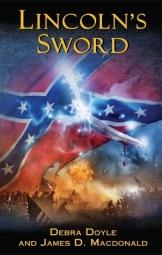
James D. Macdonald is the award-winning author of over forty fantasy and science fiction novels, including his most recent work, Lincoln’s Sword.  I recently chatted with Jim about his frequent collaborations with co-author Debra Doyle, as well as his work in educating writers about publishing scams.

You’ve had a pretty amazing career as a fantasy author.  Can you tell us how you got started in the genre?

I got started in the genre by reading an awful lot of fantasy when I was young.  Fafhrd and the Grey Mouser, the Chronicles of Prydain, pretty much every word that Robert E. Howard ever wrote, Tolkien, and endless others.  My father had been reading and collecting science fiction since the ‘thirties, so we had the house filled with fantasy and science fiction.

So, fast forward a few years.  I was a young sailor, with a girlfriend in Philadelphia, a bookish young lady.

Read more