5 Tips for Writing Kick-Ass Characters

Walter White from Breaking Bad
Bryan Cranston as Walter White

Characters make the story.

They are the most difficult aspect of any work in progress, and the most crucial to its success.

There are so many elements to be considered when dealing with characters, especially when your cast is many.  And let’s face it; your characters are in need of some tender loving care.

Have no fear!  This scribe has some tips and ideas to help you write kick-ass characters that your readers will never forget.
Read more

The Human Beneath the Hero

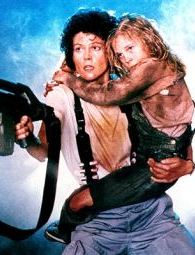
Ellen Ripley
Ellen Ripley
Ripley with Newt

A common trait of beginner fiction is that its protagonists are all – to use the technical term – “total badasses.” They have no appreciable sense of fear, pain, apprehension, or doubt. They take multiple drastic wounds without slowing down, are threatened with all manner of terrible fates without flinching, and always seem to know the right thing to do.

When we are young, we might mistake the lack of obvious signs of these emotions for the lack of the emotions themselves – few of us possess enough discipline at an early age to conceal fear and pain, and thus have trouble understanding the concept. As we grow older, though, we realize that other people feel these things as well – even the ones who rarely show it.

Read more

Killing Off Characters – Knowing When to Drop the Guillotine

Killing off your characters, while heartbreaking for some, and a joyous field day for others, is something that should not be taken lightly. Kill off too many characters, and your audience becomes irritated. Kill of a beloved character prematurely, and you may face a backlash.

Yet there comes a time when a character has had his moment of glory, and is ready to be retired. If you handle this correctly, you can create a monumental force of emotion in the story. But before you drop the guillotine, understand when it is, and is not, appropriate to do so.

Here are some points to consider:

Read more

Fantasy Writing Case Study: Trindall Grove

In two previous articles, I’ve talked about ways to help authors better understand their characters, as well as techniques for using fantasy to enhance the stories those characters are a part of.

With this article, I’m going to take a departure from the style and nature of those posts to try and put my words into context. I want to talk a little about how I’ve used this advice in one of my own fantasy projects as a Case Study to help other authors consider their own work.

Today I’m going to tell you about the story of a character named Breldin and the thought process I used to create a town called Trindall Grove.

Read more

Bridging the Gap Between Author and Character

When sitting down to plan a story, I focus my attention on developing memorable heroes and horrendous villains, constructing epic settings filled with ancient magic, and crafting plots with satisfying endings. But what’s lacking is anything connected to the piece of advice that I’ve heard repeatedly:
Write what you know.

These words, which I’ve been told again and again, have vanished from my arsenal of aphorisms. I write fantasy, which means that I write from my imagination. I write about lives and experiences that have never existed in history. My characters are impossible to know before I meet them on the page.

That’s the downside. In fantasy, we don’t intuitively know our characters the way authors of another genre might.

Read more

The RPG Experience to Writing a Novel

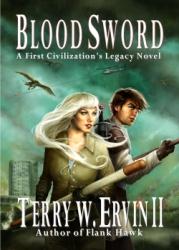
Blood SwordThis article is by Terry W. Ervin II.

It is often said, “Write what you know.” This can be a stumbling block for some writers. How do you convincingly write a dastardly or evil character in a novel if you’ve never acted or done such things? That is where Role Playing Game (RPG) experience can benefit a writer.

Whether it’s space adventure (as in Traveller), sword and sorcery (as in AD&D) or even spy and espionage intrigue (as in Top Secret)—okay, you as the reader may be muttering, “Man, those games are old—no, near ancient.” But those are examples of games that I cut my RPG teeth on years ago, and those led to the foundation for some of my writing and storytelling ability. Even games like Diplomacy, Star Fleet Battles, King Maker, Axis & Allies, and yes, even Monopoly, can add a more strategic overview that may be of benefit to a writer.

Read more

5 Characteristics of a Hero

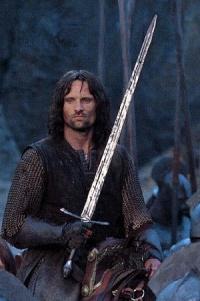
Viggo Mortensen as Aragorn

Ten years ago I began writing a fantasy epic.  I spent months building my own world, complete with fresh mythologies and exotic cultures.  I had a great villain and an original plot.  Everything appeared to be in place for me to write a first class novel.  Sadly, a quarter of the way through a terrible realization hit me: my hero sucked.

My story’s hero was one dimensional and boring.  Sure, he could swing a sword.  But he wasn’t a man of any depth or character.  Worst of all, he was passive instead of proactive.  Things happened to him, and all that he did was react.  At no point did he make a bold decision that moved the story forward.  He didn’t possess the qualities of a hero, but rather those of a victim.

So what are the characteristics of a hero?

Read more

Writing Character-Driven Fantasy

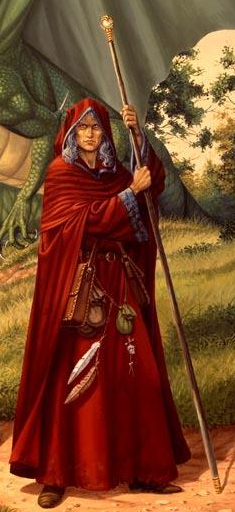
Raistlin1.png
Raistlin Majere
Raistlin Majere

A key element of any successful novel is a cast of vivid, compelling characters.  I recently discussed the topic of character development with author Frank LaVoie, whose debut novel Firesoul has been praised for its colorful characters.  We also chatted about the special importance of characterization in the sub-genre of High Fantasy.

You are an unabashed fan of so-called “epic” or “high” fantasy. Can you elaborate on what sets this sub-genre apart from other forms of fantasy?

High Fantasy serves as the category’s best example in terms of defining the archetype. Typical structures might include the questing hero, a supportive band of allies, fantastical settings, magic as a vehicle for both good and evil, and a vast array of other fictional and far-fetched elements.

Read more