Secondary Characters: An Important Tool in a Writer’s Toolkit

This article is by AE Jones.

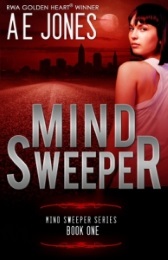
Mind Sweeper coverOne of the hardest jobs for a writer is to pull a reader into their story. I mean, really, really suck them in until they think of the story as a world they can escape to and revel in for hours.

And how do writers do this successfully?

By creating characters that are relatable. Characters that we think of as our friend or our enemy.

Heroes and heroines are the lifeblood of the story. And in romance, the play between these two needs to be magnetic and evocative. Evocative in the sense of stirring emotions. As readers we want to cheer the couple on when they’re together and smack the snot out of them when they’re being obstinate fools.
Read more

5 Ways to Build Stronger Characters

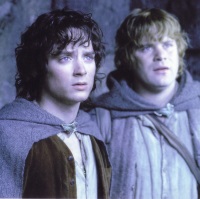
Frodo and Sam

This article is by Anne Marie Gazzolo.

Frodo and SamIt’s possible to build characters who achieve a secondary reality, and become people who live in their own right in our hearts and minds.


It jars me every time someone says Frodo Baggins and Sam Gamgee are ‘characters.’ I want to shout, “They are not characters! They are people!”

J. R. R. Tolkien’s masterful essay “On Fairy-Stories” is must reading for anyone who wishes to practice, as he calls it, the “elvish craft” of sub-creating secondary worlds that achieve a reality of their own. I wish to add some thoughts from my own travels in Middle-earth and a galaxy far, far away, that I hope will help you to build ‘characters’ who are truly more than that.

Read more

Names in Fantasy – 3 Ways to Invent Names for Characters and Creatures

Sirius Black
Sirius Black

This article is by Grace Robinson.

People sometimes ask me how I come up with names for my fantasy stories – names of characters, as well as names of creatures, places, and things.

I don’t have a standard formula for inventing names, but after doing some thinking, I realized that there are three main methods I use.

I believe that many authors use these methods in one way or another:

Read more

Case Study: Using Villains to Shape Your Hero

Trindall Grove
A Return to Trindall Grove

In a previous article some time ago, I wrote about developing a character named Breldin, and how I created his home setting, the town of Trindall Grove, based on the way I wanted to shape his personality over the life that he’s lived.

I want to take this moment to return to Trindall Grove in order to reflect on Breldin’s villains, and to discuss the way I’ve designed them to push his personality as the story goes forward. I hope this can serve as a case study for other writers developing their own characters.

Breldin is a young fruit picker fascinated with the subtle magics which ripple through the forest garden surrounding his home. But the water of a dark lake corrupts many of the region’s animals, warping their appearance and instilling them with bouts of insane frenzy.

Read more

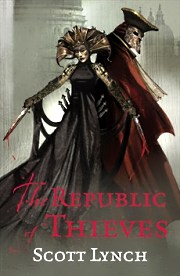
Writing Secondary Characters – Interview with Scott Lynch

Republic of ThievesWinner of the Sydney J. Bounds Best Newcomer Award and 2007 World Fantasy Award finalist, Scott Lynch is the author of the Gentleman Bastard Sequence, several short stories and an online serial, Queen of the Iron Sands.

He has a strong following who call themselves ‘priests of the crooked author’ and many others, too, have been eagerly awaiting his next book, The Republic of Thieves, which will be out in October 2013.

We can safely say that your novels have a balance of in-depth main and secondary, then background characters, all receiving their due page (screen) time. When planning (or writing/editing), how do you get that balance humming?

The magic, I think, lies in the editing process… first I tend to ensure that I simply have the necessary secondary characters in place to serve their story functions.

Read more

Writing a Great Villain

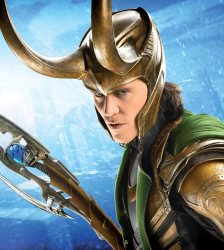
Loki
Loki
Loki

When it comes to villains, we’ve seen the clichés.  Dark lords.  Psychopaths.  Petty super villains who kill their own henchmen.

We’ve also heard the advice.  Villains need personal goals.  Villains need depth.  Villains need to be the heroes of their own stories.

In my experience, conversations about villains get overshadowed by the question of whether a story is about good and evil, or the morally grey.  But as authors, we need to understand what that thematic choice means for developing our characters.

Do your villains embrace their villainy or attempt to justify it?

Knowing the answer to that question will help you create the character’s arc.

Read more

Using Plot to Reveal Character Transformation

JourneyIf there’s one thing no writer wants to be accused of, it’s writing flat characters.

As readers, we love watching characters transform over the course of their exploits. As writers, we aspire to create those characters. And the transformation need not always be positive; some of the most compelling characters in literature grow darker and more twisted as their stories progress.

Whatever the character’s transformation may be, writers often wrestle with the question, “How can I demonstrate it believably throughout my story?” It’s one thing to say a character is changing; it’s another thing to show that change.

When I first began writing, I was baffled and frustrated by this challenge. I wanted my characters to grow, but my early attempts to show that growth went something like this:

Read more

The Magnificent(ly Flawed) Seven – Classic Characters Whose Flaws Make Them Great

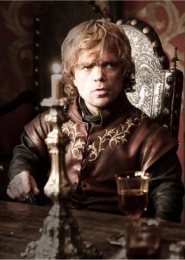
Tyrion Lannister
Tyrion Lannister

Meet Mr. Perfect:

Polite. Well-groomed. Muscular. Handsome. Irresistible to women. Deadly with any weapon you can name. Cool under fire. Immune to pain and to blows that would cripple lesser men. Knows every city and every powerful ruler from here to the far kingdoms. His enemies quail at the very mention of his name. Even when he’s ambushed, Mr. Perfect easily thwarts his opponents.

Mr. Perfect is a boring turd and you should never, ever write a story about him.

The essence of storytelling is conflict. Characters who never face any serious conflict are dull, because the reader never worries that anything bad is going to happen.

Read more