How to Write Captivating Villains

This article is by Anne Marie Gazzolo.

Andy Serkis as Sméagol

There would be no Lord of the Rings without the title character and the galaxy far, far away would certainly be less dramatic without Darth Sidious.

But the most interesting villains are those who are more than just plain evil. Darth Vader in Return of the Jedi is more complex than he was in A New Hope. Sméagol-Gollum holds more fascination than Sauron.

For your own villain to have more dimension, there should be something if not lovable at least likable or pitiable that tugs at our heartstrings, keeps us guessing what will happen to him, and even hope for his redemption.
Read more

5 Ways Writing Fanfiction Can Help the Beginning Writer

This article is by Melissa Cornwell.

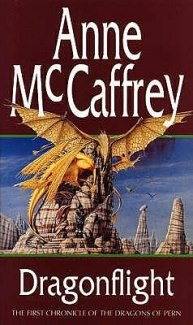
dragonflightAs a beginning writer who hasn’t written fiction in years, I ran into several problems as I began writing fantasy. I began one story (sort a memoir turned fantasy) and wrote 14,000 words….only to eventually get stuck.
Why did I get stuck?

I realized that my writing skills were not at the level I wanted or needed them to be. And I didn’t realize how much I didn’t know about the craft of writing until I actually began writing.

Read more

Producing Developed Worlds in Cross-Genre Fiction

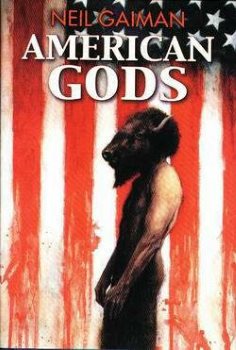
american godsThis article is by Selah Janel.

There are a lot of reasons to write cross-genre books. While many stories thrive on rigid classification, many authors find that their potential readership increases by incorporating different genre elements.

Cross-genre fiction is a way to stretch boundaries and challenge yourself. In a world where these plots are embraced in television and movies, where titles like the Sookie Stackhouse books, Sandman, and American Vampire get shelf space with more traditional horror and fantasy, producing interesting cross-genre worlds is not only possible and acceptable, but a lot of fun.

Read more

Secondary Characters: An Important Tool in a Writer’s Toolkit

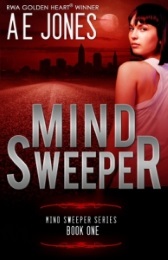
This article is by AE Jones.

Mind Sweeper coverOne of the hardest jobs for a writer is to pull a reader into their story. I mean, really, really suck them in until they think of the story as a world they can escape to and revel in for hours.

And how do writers do this successfully?

By creating characters that are relatable. Characters that we think of as our friend or our enemy.

Heroes and heroines are the lifeblood of the story. And in romance, the play between these two needs to be magnetic and evocative. Evocative in the sense of stirring emotions. As readers we want to cheer the couple on when they’re together and smack the snot out of them when they’re being obstinate fools.

Read more

Writing What You Know When There’s No Way to “Know” It

This article is by Selah Janel.

magic bookIf there’s one piece of advice I’ve heard from the time I was in high school until now, it’s “write what you know.” This used to bug me as a teen because I felt that my life hadn’t even started yet, so how was I supposed to write anything interesting?

It also seems to directly contradict the entire reality of writing genre fiction. How can you write what you know if you can’t live in impossible worlds, use magic, or go up against fantastic creatures? There’s absolutely no way this advice can be applicable if you write fantasy or any fantasy subgenre, right?

You’d be surprised.

Read more

‘Soft’ Magic Systems Still Have a Place

This article is by Ashley Capes.

soft magicThe idea that magic in fiction might possess or need a ‘system’ was nonexistent to me when I first read my favourites as a boy in the early 1990s.
Magic was but a component to the awe and wonder within the stories. I didn’t need to know how magic worked, only that magic worked. I never questioned it and certainly wouldn’t have wanted to. Gandalf, for instance, simply wouldn’t have been the same figure of mystery and power if I knew the way his magic functioned.

Read more

Absolutism vs. Ambiguity in Fantasy

This article is by Matthew R. Bishop.

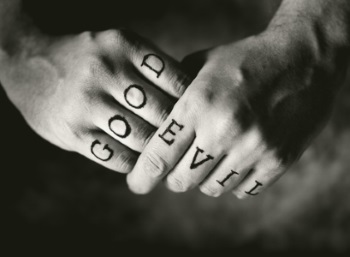
good evilIn a recent article featured on Mythic Scribes, Christian Madera explored the strengths and limitations of “black and white” fantasy, while defending the rise of “grey” fantasy as something that can overcome the drawbacks of black and white.

Let me clarify that I am an author of grey fantasy myself, so I do not take issue with this defense. For the purposes of fully understanding these disparate ways of writing fantasy, however, I want to expand on the strengths and limitations of both, and on the downfall of thinking one is exclusive of another. I hope this effort will lead to a greater appreciation for fantasy of all colors.

Read more

Is Single-Genre Fiction Outdated?

This article is by Michael Cairns.

genresFor decades, the publishing industry has worked to ensure that every book that they publish can be marketed within a single genre. This is, up to a point, understandable. Publishing is a business, and the clearer the genre of a book, the easier it is to find the target audience.

However, the rise of self-publishing has changed the way in which people not only sell books, but also write them. Indie’s don’t need to have a big ‘opening weekend’, so as to avoid high returns on print copies. Self-publishers can play the long game, relying on good stories and brave readers to build an audience. They can also take more chances and write outside the long-established boxes.

Read more