How to Write Battle Scenes

This article is by Ciele Edwards.

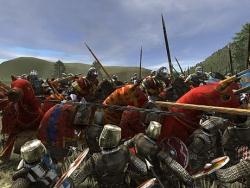
Battle scenes can be just as intense on the page as they are on the screen. Many classic novels, such as The Lord of the Rings and The Last of the Mohicans, contain vivid, well-written battle scenes that are essential to the plot.

Even if you do not have faith in your ability to create one of these scenes, the inevitable conflict present in every tale may eventually leave you with no choice. Once you learn how to properly write a battle scene, you will never again be stuck with a war or fight that you are unable to properly describe.
Read more

The RPG Experience to Writing a Novel

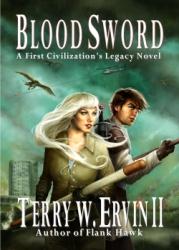
Blood SwordThis article is by Terry W. Ervin II.

It is often said, “Write what you know.” This can be a stumbling block for some writers. How do you convincingly write a dastardly or evil character in a novel if you’ve never acted or done such things? That is where Role Playing Game (RPG) experience can benefit a writer.

Whether it’s space adventure (as in Traveller), sword and sorcery (as in AD&D) or even spy and espionage intrigue (as in Top Secret)—okay, you as the reader may be muttering, “Man, those games are old—no, near ancient.” But those are examples of games that I cut my RPG teeth on years ago, and those led to the foundation for some of my writing and storytelling ability. Even games like Diplomacy, Star Fleet Battles, King Maker, Axis & Allies, and yes, even Monopoly, can add a more strategic overview that may be of benefit to a writer.

Read more

J.R.R. Tolkien, “The Lord of the Rings”, and Free Will

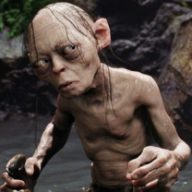
Gollum
Gollum
Gollum

This article is by Darren Andrews.

Generations have been enthralled by Tolkien’s epic fantasy, “The Lord of The Rings”. Its pages have been studied alongside the works of C.S. Lewis in Christian-literature classes, a society exists dedicated to preserving it in the spirit of its author, and back in the 1970s (in England at least) it was ‘unofficial required reading’ to enter the more respected universities – if you wanted to be accepted by your peers!

J.R.R. Tolkien, born 1892, was both a philologist and a student of mythology. He was a down-to-earth man nevertheless, and filled with a remarkable amount of common sense and clarity of thought. That he spent so much of his effort in fiction yet had so great a grasp of reality – both of the seen and unseen – is perhaps one of his most endearing qualities.

Read more

The Real Power of Fantasy Writing

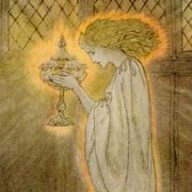
The Holy Grail

This article is by Darren Andrews.

Fantasy can be a potent form of writing if you understand how to use symbolism and maintain the inner consistency of reality.

J.R.R. Tolkien, perhaps the greatest of all fantasy writers, observed that “the realm of fairy-story is wide and deep and high and filled with many things…” (“On Fairy- Stories”, Tree and Leaf, p. 9).

Fantasy literature is purposely imaginative. The author of fantasy has the ability to engage the reader’s imagination more powerfully than the author of another genre – if it is done correctly. High fantasy has a very clear purpose in doing this: it is to take the reader on a journey to reaffirm certain principles of good and evil, of morals, of the spiritual and unseen. Fantasy breaks free of any attachment to political correctness or populist thought.

Read more

Conan on the Couch – Psychoanalyzing Conan the Barbarian

 This article is by John Garlick.

Film is a powerful medium for communicating, even on levels which we aren’t aware of.  In watching a film, the viewer is able to take part in their own desires and conflicts, literally “projected” onto the screen in front of them.  As a viewer’s perception works on the film, so too do elements of the film work on the viewer, playing off of their psychological histories, and even addressing unresolved issues from childhood.  By examining elements of a film through a psychoanalytic lens, we’re able to gain a better understanding of the film itself.

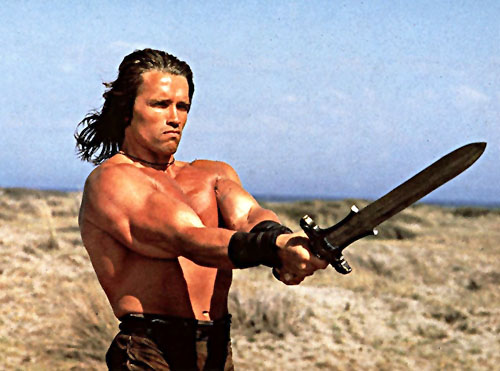
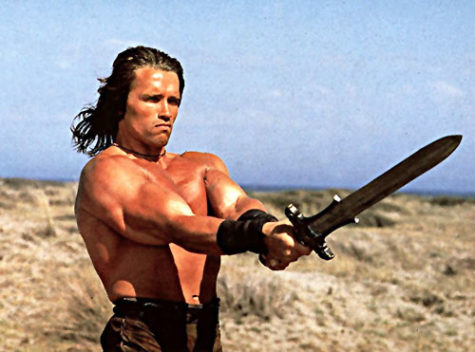
To demonstrate how a psychoanalytic approach to film is possible, let’s examine Conan the Barbarian, a fantasy adventure film from 1982.  The film follows Conan on his quest to avenge his slain family and reclaim his father’s sword.

Read more

Character Girl – Letting Characters Drive the Story

Celtic Cross
Celtic Cross

This article is by Bets Davies.

I’m a character girl.

The question becomes inevitable when you have a novel in your head:  Where to start?  I used to plunge into a rambling first draft with inconsistencies, reams I had to cut out and reams I had to fit in.  Then there are outliners.  Plot every important event in sensible order.  Me?  I begin, continue, and end with character.  If I want to be character-driven, I let the characters drive.

It starts with the character sheet.  I use Leonard Chang’s but he claims it as intellectual property, so I can’t hand it out.  Suffice to say it is single spaced aspects about your character that take up more than a page.  You can Google one.  Make sure to fill it out in obscene detail.

Read more

Why Am I Still Writing?

300px-Pink_knitting_in_front_of_pink_sweatshirt7.jpg
Knitting
What do knitting and writing have in common?

This article is by Craig Robertson.

If I write something and not many people read it, am I wasting my time?  This is an important question and I think most creators ask it, be they authors, musicians, dancers, or painters.

I write speculative fiction – time travel, mythic figures, spoofs on genres – that type of thing.  Moreover, I write fiction which is not mainstream.  I pound away for hours at my stories and my podcasts and my blogs.  I think they are all perfectly wonderful.  But, come on now, we all know people who think their FLK’s (medical for ‘funny looking kid’ – honest to goodness) are soooo beautiful.  In point of fact, the child is so peculiar looking, and acting, that you are glad you are not the parent.  Many might advise, for example, that if my writing efforts are not very successful maybe I could better spend my time doing something else – you know, something productive, useful, not a complete waste of my time.

Read more

Considering the Fantastical

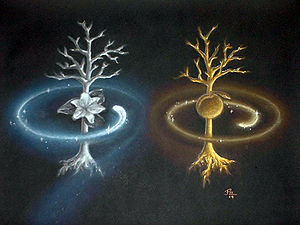
300px-Tolkien_The_two_trees4.jpg
The Creation of the Two Trees
The Trees of Valinor

This article is by Frank LaVoie.

Don’t be mistaken.  Writing in the fantasy genre is not the same as working in other types of literature. They each have their complexities, and I’m sure you could argue for the inclusion of some of my points below in one kind of writing or another. But, the overall depth and scope of fantasy in terms of writing has all the intricacies of playing God.

World-Building

You are now the master of your own continent, world, universe, or even something so grand that you have a hard time comprehending it yourself.

So what?

Read more