Why I Don’t Write About Evil

Completely, undoubtedly, irredeemably evil?

This article is by Martin White.

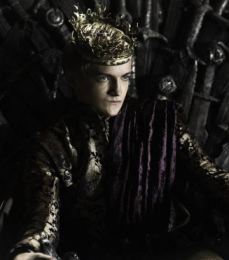
Every epic needs an opposing force, and in most high and heroic fantasy, that opposing force is evil. Sometimes, it’s literal Evil with a capital E, embodied in an army of twisted champions. Other times, it’s the sort of evil that kicks puppies and kidnaps damsels. Either way, it contains within it the author’s conception of the things that humanity would be better off without.

I don’t typically write about evil people. Many of my characters, both protagonists and antagonists, have traits that could be called evil, but I’ll never have more than one character per story who’s completely, undoubtedly, irredeemably evil. More often, the concept shows up only in first-person perspectives, and it’s called into question whenever the accuracy of those perspectives becomes questionable. In this essay, I aim to show why.
Read more

Why Plot Clichés are a Good Thing

This article is by Dr John Yeoman.

Every plot is a cliché, isn’t it?

According to Christopher Booker, there have been only seven basic plots since the dawn of story telling, although Georges Polti expanded the total to 36. No good plot is original because successful stories evoke one or more of the Seven Deadly Sins.  (It seems humans are not clever enough to think of any fresh ones.)

Every one of the 3000+ tales I’ve judged at the Writers’ Village story contest have been grounded in a plot cliché. Yet some stories were spectacularly fresh. How come? Their writers had added a clever new twist, dropped in sensibility or played creatively with the cliché. Here’s how to do it:

Read more

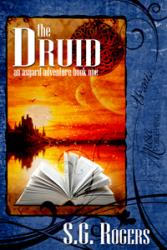
Welcome To My Worlds – One Author’s Approach to Building Fantasy Worlds

This article is by S.G. Rogers.
I’m a fantasy author who enjoys building worlds.  Perhaps my interest in world-building stems from the wonderment I feel in the presence of beauty.  Magic exists in the waterfalls of Brevard County, North Carolina, the stunning views at Big Sur, and the Carlsbad Caverns, New Mexico.  Magic radiates from the paintings of Michelangelo, the castles of Europe, and the sculptures of Bruno Torfs in Australia.  When I experience this magic, I feel compelled to communicate my sense of awe in the stories that I write.

I’ve sold eight fantasy manuscripts so far on the strength of my world-building, with two sequels in the works.  Although each project has its own unique challenges, my approach to world building involves a few common principals.

Read more

Flash Novels: The Future of Fantasy Fiction?

flash fiction
flash fiction
Bigger Isn't Always Better

This article is by Leif G.S. Notae.

What if I told you that I could condense The Lord of the Rings or A Game of Thrones into less than 25,000 words? You’d think that I was crazy.

I assure you, this is not my intention. However, it is possible.

Flash fiction, which is a style of writing that emphasizes extreme brevity, is becoming increasingly popular.  While it has been around for years, it has recently been garnering respect in literary circles.  Even conventional novelists find it useful to experiment with flash fiction, as it challenges them to approach writing in new and creative ways.

Read more

Five Ways to Beat Writer’s Block

Writer's Block
Writer's Block
Blank Pages

This Article is by Currie Jean.

Writer’s block doesn’t happen to everyone, but even the fear of writer’s block can cause a few fits and starts before a writer starts to pen an opening paragraph. Countless solutions for writer’s block have been devised by many writers, and often work best for those same writers themselves. There are as many solutions for writers block as there are writers! Most of these solutions can be grouped into the following five types.

Read more

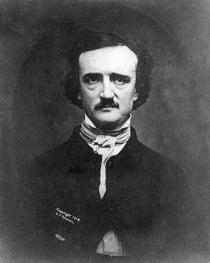
Depression in Writers

Edgar Allan Poe
Edgar Allan Poe
Edgar Allan Poe

This article is by Nicola Stretton.

It’s not easy being a writer at the best of times. But when you’re suffering from depression it can be a lot worse.

Most writers are plagued by negative thoughts such as ‘I’m not good enough’ and ‘Everything I write is terrible’. Then there are the days when you can’t muster up the energy to write anything at all. That’s when those negative voices step up a level: ‘How can you call yourself a writer? You can’t even write.’

These internal monologues affect most, if not all, writers from time to time. Self-doubt is a part of being human. But when it starts to take over your life, it will make a negative impact on your writing and maybe even force you to give up completely. You may well be depressed.

Read more

How to Publish an eBook – Publishing on Amazon

Electronic Book Reader
eBook Reader

This article is by P.T. Kendall.

If you are an author who has dedicated a lot of time to the pursuit of traditional publishing with little or no results, you may want to consider self publishing on Amazon’s Kindle store. Many seasoned authors have grown tired of making submissions to literary agents, polishing their query letters and waiting for publishers to give some sort of response. Fortunately for these authors the game has changed and authors can now take publishing matters into their own hands.

Authors with completed work need only take a few small steps to get their work live and for sale in the Kindle store.

Read more

How to Write a Novel – 5 Essential Tips

How to Write a Novel
Making It Happen
Making It Happen

This article is by Neil Olmedo.

Everyone has a story to tell.  Most people have the dream of writing a novel, but few actually make this dream a reality.  Here are five essential tips for anyone who wishes to write a novel.

1. Write

The first rule is really very simple: just start writing.  You can dream of becoming an author, but you’ll never succeed at it until you actually sit down and start writing.

Set aside some time to write every day.  Depending on how serious you are about following your dream, this time could be as little as ten minutes or as much as an hour.  Whatever you decide, stick to it, and write for the whole time.

Read more