The Perilous and Wondrous Realm of Faërie

J.R.R. Tolkien
J.R.R. Tolkien
J.R.R. Tolkien

This article is by Anne Marie Gazzolo.

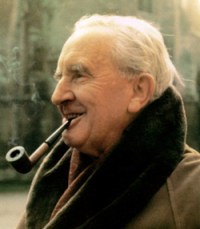
In the essay, “On Fairy-Stories,” J.R.R. Tolkien speaks of a subject close to his heart. He had a life-long interest in and love for the genre, and approaches the topic as an author.

According to Tolkien, fairy-stories allow us as readers and authors to experience what he calls recovery, escape, and consolation. In our broken world, we need all three.

Such affords us the opportunity to profoundly change the way we view ordinary things and life itself.
Read more

Give Your Clichés a Makeover!

Star Wars Episode 4This article is by Sarah Hood.

I know what you’re thinking: “Great, another article about clichés.”

Yes, I know. Google “clichés in writing” and most of what comes up tells you to avoid them. No, wait! Don’t hit that back button yet. I’m not going to tell you to avoid clichés. Because here’s the deal. You can’t avoid clichés.

If what I’ve heard is true, that there are only seven basic plots, then every one of them is cliché by now. And even if there are more than seven, you’d have to be a lot smarter than me to think up a plot that’s completely original.

I used to drive myself halfway to the psychiatric ward trying to come up with something that’s never been done before. I couldn’t do it.

Read more

Writing the Military: 5 Biggest Mistakes

kingdom-of-heaven
Kingdom of Heaven

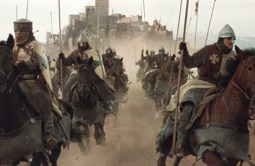
This article is by Joseph Zieja.

I’m an officer in the United States Air Force, and I’ve been wearing the uniform for ten years.  I also write.

I’ve had pieces appear in Daily Science Fiction and some other anthologies across the web and in print.  So I have a tiny bit of writing clout to back up my military experience, and you can lean on that when I tell you that there are a lot of mistakes in the way that writers portray the military in their fiction.

I therefore present to you the Top 5 Biggest Military Mistakes in Fiction, According to Joe Zieja.  I’ll try my best to keep it­ to speculative fiction, since I know that’s who my audience is, but these mistakes extend to all genres.

One last warning:  I’m from New Jersey.  Hold on to your self-esteem.

Read more

Co-Authoring with Kids

Nimpentoad
Nimpentoad

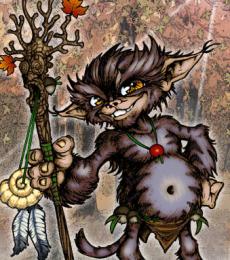
This article is by Henry L. Herz.

When my sons were five and seven years old, I wanted to share my love of fantasy with them. Struck by inspiration one day, I came up with a way to share the joy of entering the magical realms of fantasy. I would write a fantasy book for them.

What I did not anticipate was that my boys would give me feedback on the story.

They devised some of the character (“Nimpentoad”) and creature (“Neebel”) names, and made plot line suggestions. And who better to help make the story appealing to kids than other kids? My sons also helped with the art direction. Our artist would give us a rough sketch, and we would provide feedback on details and color palette. My goal of interesting my sons in fantasy transformed into also encouraging them to participate in the creative process.

Read more

How Tolkien Influences My Writing

gandalf-and-bearThis article is by Terri Rochenski.
My love affair with the fantasy genre started at an early age when someone bought me and my older brother The Chronicles of Narnia seven book gift set. I read them ‘til they fell apart.

Literally.

I can’t tell you how many times I checked the backs of every closet in our large farm house, totally expecting to find Mr. Tumnus. Oh, the disappointment of finding fantasy is just that—fantasy. Make Believe.

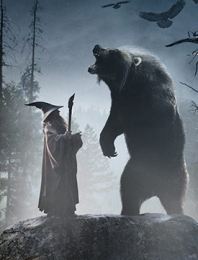
I was introduced to The Hobbit in middle school. The first time I watched the original cartoon released in 1977, I was hooked. I gobbled up the LotR series within the following month. While I may not have understood the underlying moral lessons at that age, re-reads through the years cemented Middle Earth as my favorite daydream land.

Read more

Profitable Games with Point of View (PoV)

This article is by Dr John Yeoman.

I knew I had to kill the wizard that night. Sure, I felt bad about it. Hadn’t he always been my buddy? But he shouldn’t have fooled around with my wife.

Every new story writer knows the difference between first and third person narration. Don’t we?

The first person voice ‘I’ has power and immediacy. The narrator can convey his or her innermost feelings and intentions directly to the reader. Try changing the voice in the passage above to the third person: ‘He knew he had to kill the wizard, etc’. It loses its power. It’s awkward.

The third person voice is the newbie’s choice. It’s far easier to use than the first person. There’s no constraint on the Point of View (PoV). The narrator can be privy to every secret (although omniscience is optional).

Read more

What Fantasy Writers Can Learn From Horror

This article is by Martin White.

Horror is by no means an underrated genre, but it’s typically forgotten in discussions of speculative fiction. Much ink is spilled on the differences between science fiction and fantasy, but horror is examined on its own, with few connections to its siblings.

As an advocate of genre-mixing, I’m drawn to horror from the direction of fantasy. One discusses our dreams, and the other our nightmares, but the two sometimes call upon surprisingly similar techniques.

Read more

LGBT Characters in Sci-Fi and Fantasy

This article is by Marc Davies.

If you have watched television, read a newspaper, seen a play or been to a movie in the last couple of years, there’s no doubt that you would have been exposed to lesbian, gay, bisexual or transgender people and their issues.

The only way you could avoid it is by living under a rock, and even then you’d probably discover said Rock has a penchant for designer clothes and an obsession with maintaining its rocky skin in fabulous condition.

Whatever your personal views, LGBT people have been readily accepted by much of mainstream media. There are popular movies and sit-coms with gay characters. Literary fiction has embraced gay characters and gay issues. If you go to see the ballet or a musical, you can bet half the cast is probably gay. And pop music embraced gay performers and music long before Elton John and Queen became best sellers.

Read more