Magical Creatures for Magical Worlds: The Hydra

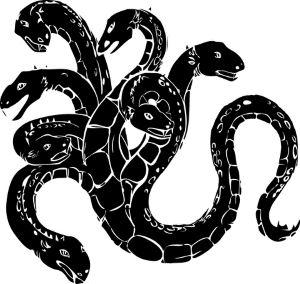
hydraThe Hydra is a many-headed creature, fierce and dangerous. If a head is cut off, two more will grow in its place, making it a difficult monster to defeat.

The Hydra story comes from the Labours of Heracles, and, like the Phoenix which I wrote about last time, has gone from being a single individual creature in ancient Greek myth to a species of creature in many modern interpretations.
Read more

Magical Creatures for Magical Worlds: The Phoenix

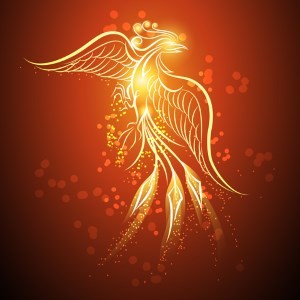
PhoenixThe phoenix; the firebird. It’s a popular mythic creature for fantasy – beautiful, unnatural and filled with symbolism.
In fantasy, the phoenix is a large bird, usually with red and gold feathers, which is associated with fire and regenerates itself by burning up into ash and being reborn from those ashes. It has been written by big name authors like C S Lewis, Terry Pratchett and J K Rowling, appears in games and TV shows, and is used by cities and sports clubs as a mascot.

But where did the myth come from, and what is the phoenix really all about?

Read more

Magical Creatures for Magical Worlds: The Minotaur

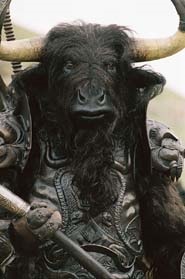
Minotaur as depicted in The Lion, the Witch and the Wardrobe

If ever you are stuck for ideas, look to Greece.

In the ancient myths and legends of Greece, there are intriguing prophecies, clever generals, jealous deities, inventive punishments – and frightening beasties. Herodotus is a favourite of mine for such tales, but there’s plenty to draw from. The plays of Euripides and Sophocles, or for a more comedic bent, Aristophanes. The histories of Thucydides and Xenophon, the biographies of Plutarch.

But the best source for today’s topic is Apollodorus and his Library of Greek Mythology, in which is told the story of the Minotaur.

Read more

Magical Creatures for Magical Worlds: Fairies

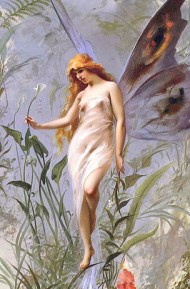
FairyFantasy is a genre where the mythical and made-up can be reality, where the fact that something is physically impossible doesn’t stop it from burning down your town or stealing your babies.

In this series, I’ll be looking at the creatures of fantasy – where they came from, how authors have used them, and what potential they have in the stories we’re writing now.

I’m starting with fairies. They are also known as the fey, the little people hiding in mystical groves, winged humanoids often thought to be pretty or playful – but not always quite so benign. Various other critters have been grouped under the fairy banner – imps, sprites, gnomes, nymphs and goblins, for example – but in this article I’ll be talking about the kind that are only ever called fairies or some variation thereof.

Read more

A New Page for a New Year

blank pageA writer, in my experience, is very good at looking to the future. We plan the course of our novels and look to a time when our works in progress will be complete and make us piles of money. Or at least I do.

As Michael Kanin once said, “I don’t like to write, but I love to have written.”

And it’s so easy to fantasise at what our writing might bring us, such as a future of prosperity where we might leave our day jobs to write full time. My personal dream involves a well-stocked personal library with a view of the Wrekin where I will spend my days writing in comfort.

Read more

The Forests of Fantasyland

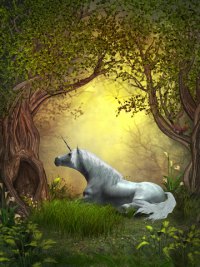
Unicorn in ForestForests are a staple of the fantasy genre. From Middle Earth to Hogwarts, or the forests of Hansel and Gretel or Red Riding Hood, the forest is a setting that crops up time and again across numerous fantasy worlds.

Sometimes these forests are magical, as in the above examples, and sometimes they are not. A forest can be home to fairies, unicorns, outlaws (of both the dashing and dangerous varieties), secret hideouts, sacred springs and lost shrines.

But why is this? What attracts authors of fantasy, more than other genres, to the forest?

Read more

Adding Depth to a Fantasy World

fantasy worldWhen worldbuilding, writers tend to focus on topics such as magic systems, fantasy races, kingdoms, politics, and religions. These elements form the settings, the backdrops against which our stories take place.

But consider your world. Not the world you’ve created, but the one you live in.

What is important to you?  What aspects of your life do you take for granted?

Your world consists of things like your job, your family, your education, and your friends. It also includes the places you buy food from, or visit for entertainment.

It should be the same for your characters. They’ve got to eat and have fun too, so they’ll have places where they do those things or ways to do them.

Read more

Fantasy Weapons – the Good, the Bad, and the Ugly

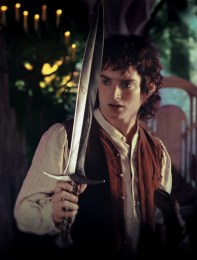
Frodo with Sting
Frodo with Sting

In fantasy, weaponry is something we’ve come to expect to see.  There are wars, battles, even personal fights against a single rival, and that means the combatants need something to fight with. Sometimes fists are enough; sometimes magic is used. But the rest of the time, there are weapons.

One thing fantasy weapons sometimes come under fire for, especially swords, is that they’re all fancy pants spikes and dragon motifs and not a huge amount of practicality.

Below is a catalogue of some weapons you might have read about in fantasy, looking at what makes them good or bad in different ways.

Read more