Writing Character-Driven Fantasy

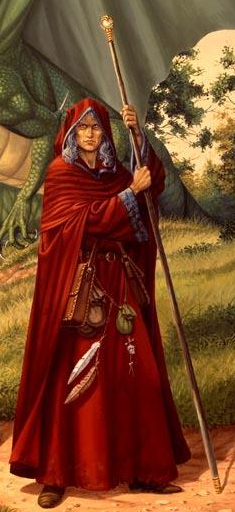
Raistlin1.png
Raistlin Majere
Raistlin Majere

A key element of any successful novel is a cast of vivid, compelling characters.  I recently discussed the topic of character development with author Frank LaVoie, whose debut novel Firesoul has been praised for its colorful characters.  We also chatted about the special importance of characterization in the sub-genre of High Fantasy.

You are an unabashed fan of so-called “epic” or “high” fantasy. Can you elaborate on what sets this sub-genre apart from other forms of fantasy?

High Fantasy serves as the category’s best example in terms of defining the archetype. Typical structures might include the questing hero, a supportive band of allies, fantastical settings, magic as a vehicle for both good and evil, and a vast array of other fictional and far-fetched elements.
Read more

Is YA the Death of Epic Fantasy?

Percy_Jackson4.jpg
Percy Jackson
Percy Jackson

This article is by Frank LaVoie.

For those of you not familiar with the YA moniker, it refers to the genre of Young Adult literature. In the realm of publishing, it is most often coupled with the word ‘fantasy’, thus denoting a fairly specific breed that has proven its popularity in the form of the Harry Potters and Percy Jacksons of the literary world. The growing scope of YA Fantasy has been wholly responsible for an entire generation taking to books. Even medical science has had to pay attention; they credited Rowling’s works with the highly contagious Hogwart’s headache, onset by nonstop reading of the author’s seven-hundred-word whoppers.

But does the rising fashion-ability of YA Fantasy come at a price?

Read more

Getting Published in the Fantasy Genre

5849686723_70de93ffa9_m1.jpg

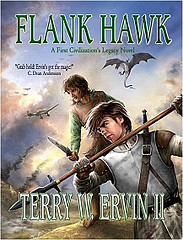
Flank Hawk

For every first time author, finding the right publisher for your novel can seem like an impossible feat.  I recently had the opportunity to chat with fantasy and science fiction author Terry W. Ervin II, whose debut novel Flank Hawk has received impressive reviews.  Terry was kind enough to share his own journey to publication with us.

How did you first become interested in writing fantasy, and at what point did you decide to write a novel and see it through to completion?

I became interested in fantasy around the 7th grade. My sister brought home The Sword of Shannara by Terry Brooks. I read it twice and was hooked on fantasy. A second novel that impacted me was The Broken Sword by Poul Anderson. It captured my imagination and made me wonder if I could write something like that. It never went much further than that, although I continued reading and playing fantasy RPGs.

Read more

Is Imitation Integral to Fantasy?

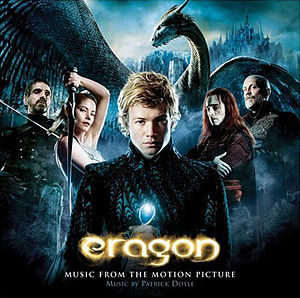
300px-Eragon_soundtrack2.jpg
Eragon (film)
Imitation run amok?

As a twelve year old boy I resolved to write my first fantasy epic.  Through months of toil I hammered out a draft and set it aside. When I returned to it, I was surprised to discover just how unoriginal it was. The plot borrowed heavily from The Lord of the Rings, with strong shades of Star Wars. The dialogue and description sounded too much like C.S. Lewis. And worst of all, virtually every fantasy cliché surfaced at some point in the tale.

In other words, it stunk. But in retrospect, this was a necessary stage in my development as a writer.  Without consciously realizing it, I was imitating the masters – albeit poorly. But by imitating them I was learning how to write. Then, and only then, was I able to move forward and find my own voice.

Read more

Who’s Killing Fantasy? You Are!

300px-Legolas600ppx2.jpg
Orlando Bloom as Legolas
Too many elves?

I recently took my daughter to buy some books in a rather large UK book chain and was dismayed to discover that the Fantasy section had all but disappeared.

Whereas a decade or more ago it took up an entire wall, it’s now reduced to shelf space maybe eight feet long, if that. What’s worse, it’s no longer Fantasy: each work of imaginative fiction strains beneath the banner of Sci-Fi so that Tolkien shares space with computer game tie-ins.

While I’m always happy to see genre distinctions eroded (though I don’t see why it’s not all under a Fantasy banner) it made me realise just how low the genre has fallen in the public’s affections.

Read more

Why the Star Wars Prequels Failed

300px-DookuBZZZ21.jpg
Count Dooku
Sir Christopher Lee as Count Dooku

Like most children of the 1980s, I grew up surrounded by Star Wars. Star Wars lunch pales were the rage at school. Star Wars toys, books and magazines littered my room. And the Darth Vader outfit was the Holy Grail of Halloween costumes.

Yet the most admired of all things Star Wars were the movies themselves. Amongst my peers it was agreed that these films were the pinnacle of cinematic greatness. They were spoken of with reverence and awe. And the bearded, benevolent toy maker – George Lucas – was viewed with the same enchanted wonder as Santa Claus.

Read more

5 Characteristics of an Epic Villain

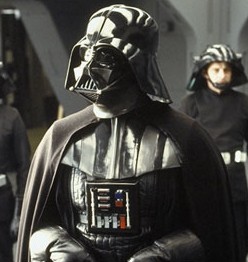
Darth Vader as depicted in The Empire Strikes ...
Darth Vader

For a fantasy story to be truly great, it needs a memorable villain.  In some cases the villain is so compelling that he or she overshadows the hero.  That’s not always a bad thing.  During my childhood every boy on the block wanted to dress as Darth Vader for Halloween.  No one wanted to be the whiny farm boy from Tatooine.

So how do you craft a villain so fascinating that he can sell a million Halloween costumes?  Looking at some of the villains whom I most admire, I have narrowed in on five common characteristics.

Read more

The Third Eye: Unleashing Creative Inspiration

Česky: Ajna. English: Ajna chakra also bears t...
Image via Wikipedia

Many spiritual traditions teach the existence of an invisible third eye, which functions as a gateway to higher realms of consciousness. It’s believed that this third eye allows us to experience visions and other mystical phenomenon. According to this belief, although each of us is born with an inner – or spiritual – eye, we must learn to open it throughout the course of our lives.

As an academic and an educator, I’m naturally skeptical of supernatural claims.  But as I experience new things in life, I have become increasingly convinced that a core of truth lies behind this belief. Call it the third eye, the ajna chakra, clairvoyance, the sixth sense or whatever you may. The fact remains that a connection does exist between our waking, conscious mind and some greater level of consciousness.

Read more