Know the Rules. Understand the Rules. Break the Rules.

When it comes to writing, I like to say that there are no rules. However, that is not entirely accurate. There is one rule:

  1. Use What Works
  2. Weren’t you listening? One rule! That’s it!

This is a pretty obvious rule, assuming your goal is to write something that other people want to read.

If that isn’t your goal, then you would want to use what didn’t work… which, remembering your goal, would work. Which means you’re still the following the rule. Hrm.

My head hurts.

In the context of creative writing, rules are – as a certain pirate captain might say – really more like guidelines. Use them when they work and ignore them when you have enough reason.

Read more

Give Up: You’ll Never Be Published

With self-publishing on the rise, you can now bypass the traditional route, but there are still some of us out there that prefer the “submit, submit, submit” method.

So why won’t you get published either way?

Well, let me tell you, young grasshopper.  It could simply be that you’re not finishing anything.

Here are five reasons why:

Read more

How to Obliterate Writer’s Block

“I’m stuck.” These two words ring in your ears.

That blank page. The blinking cursor. After three hours of hard-work, all you have is this:

The Knight of Moonberries
by John R. R. R. R. Johnson

The knight walked…

And that’s it.

That blank page is waiting for you to blow it up. Fill it full of holes. Slash it, burn it, run over it with a tank.

So here I am to tell you how to forever and ever, eliminate writer’s block from your vocabulary. These are 5 ways (maybe not the Top 5, but nevertheless 5 ways) to smash writer’s block in the face and send it spiraling out into the cosmos.

Read more

Fantasy Writing Case Study: Trindall Grove

In two previous articles, I’ve talked about ways to help authors better understand their characters, as well as techniques for using fantasy to enhance the stories those characters are a part of.
With this article, I’m going to take a departure from the style and nature of those posts to try and put my words into context. I want to talk a little about how I’ve used this advice in one of my own fantasy projects as a Case Study to help other authors consider their own work.

Today I’m going to tell you about the story of a character named Breldin and the thought process I used to create a town called Trindall Grove.

Read more

Why I Don’t Write About Evil

Completely, undoubtedly, irredeemably evil?

This article is by Martin White.

Every epic needs an opposing force, and in most high and heroic fantasy, that opposing force is evil. Sometimes, it’s literal Evil with a capital E, embodied in an army of twisted champions. Other times, it’s the sort of evil that kicks puppies and kidnaps damsels. Either way, it contains within it the author’s conception of the things that humanity would be better off without.

I don’t typically write about evil people. Many of my characters, both protagonists and antagonists, have traits that could be called evil, but I’ll never have more than one character per story who’s completely, undoubtedly, irredeemably evil. More often, the concept shows up only in first-person perspectives, and it’s called into question whenever the accuracy of those perspectives becomes questionable. In this essay, I aim to show why.

Read more

Using History as Inspiration for Fantasy

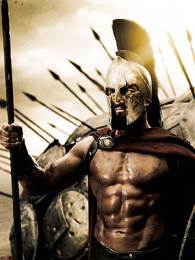
Gerard Butler in 300

When others learn I am a writer, one of the most common questions I am asked is “where do you get your ideas from?” Now the obvious answer is “everywhere,” because life is inspiration for fiction.  But one of those places where it is easiest to draw the direct correlations between what I see or learn and what I write is in history.

Some of you might, at this point, be thinking, “Oh yes, kings and knights and castles and all that. What’s new about that in fantasy?” But history encompasses so much human lived experience, and we can use it in far more intricate and interesting ways than just including an idealised image of the medieval world.

Read more

The Power of the Genre – Why Write Fantasy?

With a few rare exceptions, genre fiction is generally dismissed – even disdained – by “serious” authors and critical reviewers alike. Fantasy book sales are miniscule compared literary fiction; even the other genres outsell it. If you want to get rich, you’re better off writing “Sisterhood of the Traveling Pants” than “Bonds of Sisterhood.”

So what is it about Fantasy that motivates a writer to sacrifice broad cultural acceptance, fame, and money for the genre?

I asked editors and authors, “Why Do You Write Fantasy?” I was curious what it was about the Fantasy genre that made it the best venue for the stories they wanted to tell. Some weren’t really sure, but others had some very definitive ideas on the subject.

Read more