
Fight for What’s Right: Moral Causes in Fantasy Worlds

We all want our protagonists to be engaging and for our readers to root for them.  One way to achieve this is to give the protagonist a goal which the reader sympathises with.

For some, it is to save a life or find something of value. For others, it is to change the world, to pursue a grand cause and improve life for thousands of people.

But it isn’t always that simple.

What cause do you pick, and how do you make it relevant and believable?
Read more

Secrets of Story Structure – Interview with Hollywood Writer Eric Luke

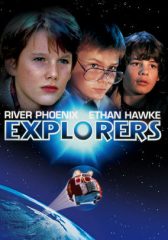
Writer and director Eric Luke has worked on films for Paramount, Disney, and Fox TV.  He’s the writer of the science-fiction cult classic Explorers, which starred Ethan Hawke and the late River Phoenix

I recently chatted with Eric about story development and narrative structure, as well as his latest project, the self-aware audiobook Interference.

How did you get into screenwriting?

I’ve wanted to make movies ever since I can remember.  I picked up the family wind-up 16mm camera, started shooting, and very quickly found out I’d need a narrative to keep people interested.  The first scripts were more like verbal storyboards, and I’ve always tried to hang onto that: just enough description to get an image into the reader’s head, then onto the next and the next: a really fast read.  

Read more

TimeCraft – Squeezing the Most Out of Your Writing Schedule

My car radio is dead.

It doesn’t bother me much yet, because I have a couple things going for me: 1) A love of exercising my mediocre singing voice, and 2) a ton of stories I don’t have enough time to write.

While there are no doubt authorial aspirants whose schedules would make my own look positively spacious, I can say without exaggeration that I am currently a very busy person. It has been roughly one year since I decided to make a go of this “independent author” thing, and I’m going to stick with it. That means making my writing a priority, and finding ways to make progress regardless of difficulty. Here’s how I go about it.

Read more

How to Write a Query Letter

Writing a query letter is akin to going to a job interview. It’s your first chance to make an impression, and often times, it’s also your last.

It’s this philosophy, coupled with my experience as a recruiter, that leads me to want to put my best foot forward, knowing that I may never get another shot.

As a person who has conducted hundreds of interviews, I can only tell you that resumes with quirky fonts, or pages of meaningless, random facts about previous jobs, didn’t impress me any more than the people who showed up in sweatpants or hoodies to be interviewed.

Read more

Finding Strengths in Your Weaknesses as a Writer

The key to finding your way as a writer is to discover what kind of writer you are.

Are you the type that talks about writing but doesn’t really do it much? Are you the kind that works diligently every day, but always ends up deleting or scrapping the whole manuscript? Are you the perfect planner, but awful at execution? Or vice versa?

Finding your strengths and weaknesses as a writer can help you navigate your way along the path to being the perfect “you.” Sound flaky? Maybe, but the sooner you can chip away at your problems the earlier you can fix them.

I’d like to preface this by saying I’ve fallen into every one of these categories before.  So if any of these describe your current writing situation, I feel your pain.

Read more

How to Market Your Self-Published Book

The reality of marketing a self-published book and finding your audience presents a challenge somewhere in-between the faint dream of online success, and the sense of screaming unheard into the web’s dark and angry void.

Traditional publishers target their marketing towards their network of book reviewers and buying agents who, in turn, bring a book to the attention of readers. As a self-publisher, not only do you probably lack this network, but you also face an image deficit when you try to piece one together.

They think you’re trying to sell a story from the slush pile of traditional publishers.

Read more

Profitable Games with Point of View (PoV)

This article is by Dr John Yeoman.

I knew I had to kill the wizard that night. Sure, I felt bad about it. Hadn’t he always been my buddy? But he shouldn’t have fooled around with my wife.

Every new story writer knows the difference between first and third person narration. Don’t we?

The first person voice ‘I’ has power and immediacy. The narrator can convey his or her innermost feelings and intentions directly to the reader. Try changing the voice in the passage above to the third person: ‘He knew he had to kill the wizard, etc’. It loses its power. It’s awkward.

The third person voice is the newbie’s choice. It’s far easier to use than the first person. There’s no constraint on the Point of View (PoV). The narrator can be privy to every secret (although omniscience is optional).

Read more

5 Tips for Writing Kick-Ass Characters

Walter White from Breaking Bad
Bryan Cranston as Walter White

Characters make the story.

They are the most difficult aspect of any work in progress, and the most crucial to its success.

There are so many elements to be considered when dealing with characters, especially when your cast is many.  And let’s face it; your characters are in need of some tender loving care.

Have no fear!  This scribe has some tips and ideas to help you write kick-ass characters that your readers will never forget.

Read more