4 Tips for Worldbuilding Success

fantasy worldThis article is by Katie Cross.

It was so hot that summer, I would have preferred vomiting barbed wire to walking outside.

The air was muggy and thick with humidity so high that a permanent haze settled in like a fog. I didn’t see my thermostat go below 80 degrees for far too long, even with air conditioning.

Living in a two-story red brick house in southern Georgia, I had a lot of great story ideas stuck in my head. I was brimming to the point it was paralyzing. There were so many ideas! I started on one tangent, just to start to explore another.

The scene was bitter cold, with snow and frosty windowpanes. Or …. was it supposed to be hot and arid? Wasn’t my character chasing a dragon? Yes, but they got lost on a trail and found a flow. Wait, that pink flower is poisonous. Or was it the one that turned into an umbrella when touched?
Read more

Confessions of a Lone Writer: A Journey Into Collaborative Creativity

Aurelia
Aurelia
Aurelia: Edge of Darkness

If there’s one quality that seems to characterize writers, it’s our need for time alone. Time to think. Time to daydream, to play with our words.

History elevates the solitary writer as a kind of legend: that elusive genius, scribbling furiously in a forgotten attic, until at long last (usually upon completion of their magnum opus) they expire, penniless and unsung.

Public gratification, it seems, always comes too late.

Today, though it’s much harder to hide in any attic long enough to write a magnum opus, we still strive for that ideal. The penniless and unsung part, too, we also to accept as a matter of course.

But what if the two are related?

Read more

Purple Prose – How to Find It and Fight It

Purple FlowersThis article is by Brendan McNulty.

Wikipedia defines purple prose as “written prose that is so extravagant, ornate, or flowery as to break the flow and draw excessive attention to itself.”

It’s one of those writing styles we’re always told to guard against. The best way to look at it is to see what is a necessary way of expressing something vs. overly flouncy and descriptive passages.

Some people think that this means that your writing has to be exclusively lean and clear, but I would disagree.

You don’t need to forsake complex or intricate writing in order to ward off purple prose.  Instead, the objective is to write in such a manner that you communicate effectively, without your word choice drawing attention to itself.

Read more

Adding Depth to a Fantasy World

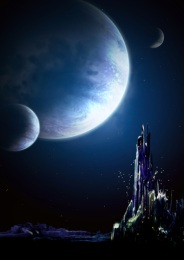
fantasy worldWhen worldbuilding, writers tend to focus on topics such as magic systems, fantasy races, kingdoms, politics, and religions. These elements form the settings, the backdrops against which our stories take place.

But consider your world. Not the world you’ve created, but the one you live in.

What is important to you?  What aspects of your life do you take for granted?

Your world consists of things like your job, your family, your education, and your friends. It also includes the places you buy food from, or visit for entertainment.

It should be the same for your characters. They’ve got to eat and have fun too, so they’ll have places where they do those things or ways to do them.

Read more

Bracketology for Story Plotting?

Tournament bracket

Tournament bracketThis article is written by Ken Hughes.

What do sports brackets have to do with writing a story?

Almost everything.

A plot depends on conflict and contrast between its characters, and on building interest in them over time.

A tournament’s system is about matching opponents together and tracking how that changes.  It’s one of the simplest, purest methods there is for managing the intricacies of a plot, while staying focused on what makes it powerful.

As we’ll see, the bracketing concept needs only a few expansions to fit any kind of plotting into it.

Read more

The Perilous and Wondrous Realm of Faërie

J.R.R. Tolkien
J.R.R. Tolkien
J.R.R. Tolkien

This article is by Anne Marie Gazzolo.

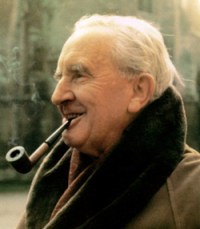
In the essay, “On Fairy-Stories,” J.R.R. Tolkien speaks of a subject close to his heart. He had a life-long interest in and love for the genre, and approaches the topic as an author.

According to Tolkien, fairy-stories allow us as readers and authors to experience what he calls recovery, escape, and consolation. In our broken world, we need all three.

Such affords us the opportunity to profoundly change the way we view ordinary things and life itself.

Read more

Writing a Great Villain

Loki
Loki
Loki

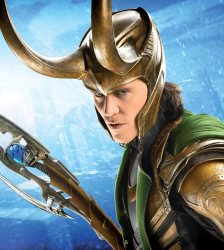
When it comes to villains, we’ve seen the clichés.  Dark lords.  Psychopaths.  Petty super villains who kill their own henchmen.

We’ve also heard the advice.  Villains need personal goals.  Villains need depth.  Villains need to be the heroes of their own stories.

In my experience, conversations about villains get overshadowed by the question of whether a story is about good and evil, or the morally grey.  But as authors, we need to understand what that thematic choice means for developing our characters.

Do your villains embrace their villainy or attempt to justify it?

Knowing the answer to that question will help you create the character’s arc.

Read more

Exploration Through Story – How Stories Teach Us About Ourselves

Albert Einstein
Albert Einstein
Albert Einstein

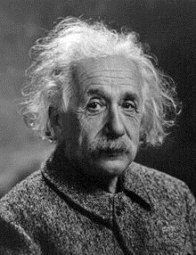
“When I examine myself and my methods of thought, I come to the conclusion that the gift of fantasy has meant more to me than my talent for absorbing positive knowledge.”

-Albert Einstein

When Albert Einstein imagined himself chasing a beam of light, he was able to conclude that the speed of time is relative to how fast one object is moving compared to another.

I’m not a physics guy, so hopefully I got that close to right.

When it comes to things like knowledge or wisdom, there are many ways to explore them.  There’s science, philosophy, and religion.  But what all of these approaches have in common is storytelling.  And, more importantly, creative storytelling.

Read more