The Forests of Fantasyland

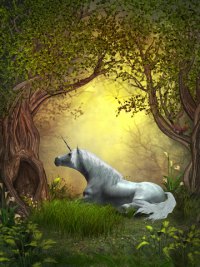
Unicorn in ForestForests are a staple of the fantasy genre. From Middle Earth to Hogwarts, or the forests of Hansel and Gretel or Red Riding Hood, the forest is a setting that crops up time and again across numerous fantasy worlds.

Sometimes these forests are magical, as in the above examples, and sometimes they are not. A forest can be home to fairies, unicorns, outlaws (of both the dashing and dangerous varieties), secret hideouts, sacred springs and lost shrines.

But why is this? What attracts authors of fantasy, more than other genres, to the forest?
Read more

Writing Secondary Characters – Interview with Scott Lynch

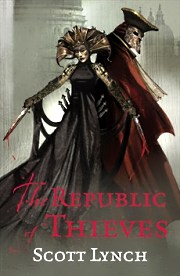
Republic of ThievesWinner of the Sydney J. Bounds Best Newcomer Award and 2007 World Fantasy Award finalist, Scott Lynch is the author of the Gentleman Bastard Sequence, several short stories and an online serial, Queen of the Iron Sands.

He has a strong following who call themselves ‘priests of the crooked author’ and many others, too, have been eagerly awaiting his next book, The Republic of Thieves, which will be out in October 2013.

We can safely say that your novels have a balance of in-depth main and secondary, then background characters, all receiving their due page (screen) time. When planning (or writing/editing), how do you get that balance humming?

The magic, I think, lies in the editing process… first I tend to ensure that I simply have the necessary secondary characters in place to serve their story functions.

Read more

The Fact and the Fantastical – 5 Tips for Creating an Urban Fantasy World

fantasy cityThis article is by Michael Cairns.

Fantasy is an expansive genre in which the reader can be transported to far-off lands. Urban fantasy does something quite different, laying the fantastical world over the one in which we live.

This can be a tricky thing to get right. Too much fantasy and the realism can be lost. Not enough fantasy, and the wonderful sense that anything can happen disappears, and the story becomes humdrum.

Following the writing and copious editing of my Urban Fantasy Trilogy, the Assembly, I’ve identified a few pointers as to what works and what doesn’t. Here are my top five tips to help you blend the real with the fantastical, and create a world your reader will become lost in.

Read more

Myths Inscribed 3 is Out

The third issue of our fantasy magazine, Myths Inscribed, is now available. This issue contains three terrific stories, as well as a piece on Babylonian mythology. FICTION: Painted Truths by Martin Spernau The Ravenous Flock by Adrian Diglio [part 2 of 2] [a Warp and Weft feature story] Paying the Troll by Karen Leigh Baxter … Read more

Using Multiple Texts to Develop Your Story World

BestiaryRecently at Mythic Scribes, we’ve enjoyed some exceptional articles on world building. I have incorporated tips from several already, with noticeable improvements in my organization and productivity in this challenging craft.

This process has also led me deeper into my worlds. In fact, lately I have been almost overwhelmed by all I have yet to discover about them—let alone communicate to my audience.

Faced with the gargantuan task of immersing readers in a whole world, one novel seems kind of, well, puny.

So I asked myself: “How can I redistribute that burden?”

Read more

Cover to Cover: From Inception to Publication

gryphonAll good books start from somewhere.

That inkling of an idea sparked by reading a great book, taking an afternoon walk, or even being walloped over the head by the muse. Time passes. Maybe months, maybe years.

You see that idea grow into a story concept, the story concept become a rough outline, the outline become a story, the story become a published novel. Sounds easy, right?

Yeah, don’t we all wish.

When I was approached with the idea of creating a series of articles that followed from that twinkling of an idea to the process of trying to publish a finished novel I thought, “Wow, this will be quite the daunting task.” However, I was up for the challenge.

Read more

A Demon Did It: Breakdowns of Consistency in Fantasy Fiction

Elric of Melniboné
Elric of Melniboné
Elric of Melniboné

This article is by Stefon Mears.

Years ago, on The Simpsons, Lucy Lawless uttered the now famous line, “A wizard did it.”

In context the line was a broad dismissal of the myriad small errors fans are famous for finding in their favorite shows.

Found an inconsistency? Blame it on a wizard. Ironic, really, because by the end of its run Xena: Warrior Princess had more gods as recurring characters than human beings, but I’m hard pressed to think of a single wizard.

But then, “a god did it” might not have gone over so well with viewers.

Read more

One Letter Every Writer Should Write

writing a letterWhether you’ve just begun your novel or are in the midst of editing it, this exercise can help answer some important questions:

  • How will readers like my characters?
  • Have I done enough foreshadowing?
  • Is there enough humor in the story?
  • Does my conclusion do the novel justice?

Of course, each writer will have many different concerns.  But rather than drive yourself crazy searching for a secret formula, try this one simple trick:

Write yourself a love letter… in the form of a review.

Read more