Dragons and the Imaginative Mind of J.R.R. Tolkien

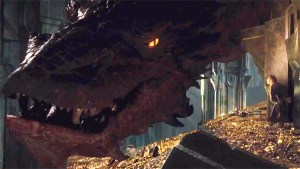
Smaug in Peter Jackson’s Hobbit Trilogy

This article is by Anne Marie Gazzolo.

J. R. R Tolkien had a life-long fascination with dragons.

In his essay “On Fairy-Stories,” he spoke of the stories he liked and disliked as a child.  “The dragon had the trade-mark Of Faërie written plain upon him. In whatever world he had his being it was an Other-world. Fantasy, the making or glimpsing of Other-worlds, was the heart of the desire of Faërie. I desired dragons with a profound desire. Of course, I in my timid body did not wish to have them in the neighborhood . . . . But the world that contained even the imagination of Fáfnir was richer and more beautiful, at whatever cost of peril.”

Read more

Case Study: Using Villains to Shape Your Hero

Trindall Grove
A Return to Trindall Grove

In a previous article some time ago, I wrote about developing a character named Breldin, and how I created his home setting, the town of Trindall Grove, based on the way I wanted to shape his personality over the life that he’s lived.

I want to take this moment to return to Trindall Grove in order to reflect on Breldin’s villains, and to discuss the way I’ve designed them to push his personality as the story goes forward. I hope this can serve as a case study for other writers developing their own characters.

Breldin is a young fruit picker fascinated with the subtle magics which ripple through the forest garden surrounding his home. But the water of a dark lake corrupts many of the region’s animals, warping their appearance and instilling them with bouts of insane frenzy.

Read more

Cover to Cover II: From Idea to Story

Monster HunterLast time on Cover to Cover, I introduced this series of articles, which follows a novel from birth to potential publication. The previous entry was all about ideas. How to grow them, nurture them, and expand them.

This time I’m going to show you how to take that idea and mold it into an actual story. This can be a daunting process.

So your idea is born. You’ve done your “What iffing,” your brainstorming, your smashing of numerous breakable objects. Now you have to go forward. The idea can percolate for a bit, but soon it needs to become an actual story. A story that has characters, a plot, a setting, and all that wonderful, wonderful magic that is going to consume your readers and give them many sleepless nights.

Read more

The Benefits of Outlining: A Layered Approach

wizard writingThis article is by Steven M. Long.

Everybody outlines. The second a writer imagines one scene following another, that writer is creating an outline, even if the outline is incomplete and only in their head.

Referring to a novel writer as an “outliner” usually indicates someone who feels more comfortable with and sees the benefits of knowing – sometimes in great detail – where their novel is headed.

As you can probably guess, I outline, and over the time I’ve been writing novels (I’ve written four, two of them pretty good) I’ve been told repeatedly that I should just “let it go” and that I’m “ruining my creative process.” As often as not, these comments come from people who’ve never finished a novel.

Read more

Playing with Story Structure – Interview with Steven Brust

Steven Brust

Steven BrustSteven Brust is the author of twenty-six novels so far, with his most popular following the assassin Vlad Taltos (starting with the novel Jhereg).  His most recent novel, The Incrementalists, is a collaboration with author Skyler White.

Steven is also a member of the Pre-Joycean Fellowship, a group of writers who value 19th-century values of storytelling. He joins us to discuss something he loves to do, playing with structure.

Speaking generally, where do your ideas start – a plot or structure idea, a character, a question you want answered – or does it change with each novel?

It changes with each novel.  With Hawk, it was plot structure.  With Athyra, it was a single image I couldn’t get out of my head.  Sometimes it’s a particular scene that grabs me, so I need to write to it, then follow up the consequences.  My favorite is when I get a sentence that makes me go, “That’d be a great first sentence for a book.  I wonder what the book is about?”

Read more

Fantasy Gaming: A Plea for the Next-Gen

dragon-age-inquisitionWith the release of the next generation of gaming consoles, namely the Xbox One and the Playstation 4, gamers of all types are amped to get their hands on a controller.

With the new capabilities of these fresh consoles, gamers can set their expectations high and have them answered. But what I’m really excited for are the next gen fantasy titles.

With all the new capabilities of these consoles, I’m looking forward to bigger worlds to explore, new adventures that I can even embark upon with my friends, and something that can really captivate me like games used to when I was a kid.

But, I have my worries.

Read more

Is Plot or Character More Important?

Structuring Your NovelThis article is by K.M. Weiland.

“Plot vs. character”—we hear it all the time, as if the two were mutually exclusive. Either your book is plot-driven or character-driven. Can’t possibly be both, right?

And anytime we run afoul of an either/or conundrum, you gotta know people are going to start believing one or the other is not only the best way, but even the only way to write a book.

Let’s consider this a little more microscopically. What would it take to make one or the other of these combatants “more important” than the other?

Read more

A Fine Line Between Love and Death – How to Write Love Scenes

kissingAs fantasy writers, we accept that certain elements are expected in our novels.  For example, the fight scene. Whether it’s an epic battle or a street duel, there’s going to be a fight somewhere. But what about love?

I recently talked with a few friends about writing romantic scenes. The general feeling that these writers shared was one of hesitancy. Hesitant to write a love scene? How could that be? Don’t we all love more than we brawl?

After a few in-depth conversations, I determined that their hesitancy was really apprehension over the execution of an intimate scene. So I tried to boost my friends’ confidence, and I think what I came up with might be useful to other people struggling with a similar conundrum.

Read more