6 Tips for Writing a Knockout Fight Scene

The Jason Statham
The Jason Statham

Hey, you. Yes, you!

Do you have doubts as to whether or not your puny fingers can punch out what happens during a fight?

Most writer-types aren’t the kind who frequent underground fighting rings, so conveying what a fight is like through writing isn’t the easiest thing to do. And I’m not going to recommend that you go out and assault someone to gain experience, because, you know, jail and stuff.

Have no fear, comrade! By the end of this article you’ll have grown a beard worthy of Valhalla, and you’ll be able to write with such brutality and carnage that you’ll make Sylvester Stallone shed a tear. I’ll turn you into a keyboard crusader, yet!

Read more

The Great Free Book Debate: The Authors

This is the second article in a two-part series by Alexandra Butcher. Part one is here.

One of the most controversial ways to promote a book is to offer it for free. The theory is that readers will take a chance on a free book by an unknown author, and that this will help the author to get her name “out there.”

Why is this controversial? Well, many authors feel offering one’s book for free devalues it, the author herself and thus all indie authors. It is also debatable whether this strategy actually works in a market already full of what some see as “substandard” books. There is also the argument that readers will madly download free books, and never actually spend any money on buying books.

So do authors really see any benefits?

Read more

J.R.R. Tolkien: Myths That Never Were and the Worlds That They Become

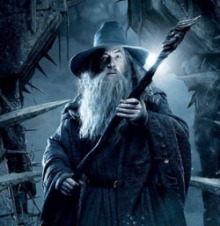
Ian McKellen as Gandalf

This article is by Dan Berger.

It’s strange to imagine today, but there was a time when the publication of J.R.R. Tolkien’s The Lord of the Rings was a matter very much in doubt.

There were two primary reasons for this near tragedy. One was the scarcity of paper that plagued the United Kingdom in the aftermath of World War II. The other was Tolkien’s initial insistence on releasing The Lord of the Rings to his publisher, Allen & Unwin, only on the condition that The Silmarilion be published in concert with it.

The price of printing the full text of a book the size of The Lord of the Rings posed significant challenges in and of itself; adding The Silmarilion to the mix, particularly given its sometimes tenuous connection to The Lord of the Rings’ narrative, was seen as potentially disastrous.

Read more

Writing Historical Fantasy – Interview with Ian Tregillis

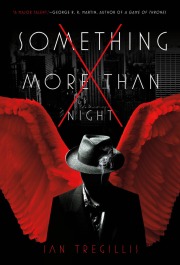
Something More Than NightIan Tregillis is the author of the Milkweed Triptych trilogy, and is a contributor to George R. R. Martin’s Wild Cards series.  His latest book is Something More Than Night, a noir urban fantasy detective story of fallen angels and nightclub stigmatics.

He joins us to answer questions on writing both historical fantasy and alternate history.

Your work is described as either historical fantasy or alternate history.  For readers who aren’t familiar with the differences between the two, could you explain how your work gains these descriptions?

I imagine that people who know me, or my background, must feel confused when they hear me described as a writer of historically influenced novels.  It surprises me, too, though I understand why it happens.

Read more

Why You Should Burn Your NaNoWriMo Novel

If you’re reading this, NaNoWriMo (National Novel Writing Month) is over and you have one of the following in your quivering, coffee-stained hands:

  1. A string of nonsensical words that closely resemble the ramblings of a mad centaur.
  2. 50,000 words that are mostly just alternations of “I hate this” or “Crap!”
  3. A pretty solid attempt at something that might be considered a novel someday, somewhere, somehow.
  4. Something ready to be published, by George!

I’m assuming none of your answers are #4. If your answer is #4, then you’re a more talented and braver soul than I could ever be. Good luck to you and your prodigious career as the most awesome writer who ever lived.

Read more

The Great Free Book Debate: The Readers

This is the first in a two-part series by Alexandra Butcher. Part two is here.

Indie authors are given an almost overwhelming amount of advice about promoting and marketing their book, a great deal of which is contradictory.

It has to be said there is NO single path to take which works for every author. One person may find a good deal of success with one way, and the next finds that it simply does not work.

One of the most controversial ways is to offer a book for free. Amazon’s KDP Select Programme allows self-published authors to do just this.  In return for exclusivity to Amazon, an author can offer his or her book for five days free promotion in every ninety day term. The theory being readers will take a chance on a free book by an unknown or little known author which they may not otherwise consider.

Read more

Embracing My Inner Fanboy – 10 Things That Fuel My Obsession With a Story

Tardis“I don’t really like Fantasy or Science Fiction, but I think I’ll write stories in those genres anyway.”

-No one

This month I decided to participate in NaNoWriMo.  It had been a while since I had written anything, and I felt like it would be a good opportunity to try.

Then life happened…a lot.  And, long story short, the only way I’m going to make 50,000 words is if I change direction and write a graphic novel where I draw 50 pictures.  Get it?  Because a picture is worth a thousand words.  Sorry, bad joke.

The good news is that I do have a story, and a mythology.  I even have some characters.  I’ve done some of the foot work.  And, one of the exercises that accomplished this for me is that I pulled from my inner-fanboy.

Read more

Mastering Multiple POV in 6 Steps

Eddard Stark
Eddard Stark

Multiple POV storytelling has a bad rap.

Sure, the practice of splitting a single narrative across multiple characters’ perspectives has a long history. And its popularity continues to expand as our society grows ever more distrustful of singular truth, in favor of individual realities.

But multiple POV writing is not without its critics—and some of them are quite loud. Many writers and readers complain about poor or confusing execution. Others cite their traditional literary tastes. Why hop between multiple character’s minds, they argue, when you could tell a story more simply through one pair of eyes?

Read more