How To Hook Your Audience

This article is by Craig W. Van Sickle & Steven Long Mitchell.

the-pretenderWhile novels, graphic novels, television or motion picture scripts each present writers with different formats, narrative challenges and audience expectations, they all have one very simple commonality at their heart: telling a great story that hooks, pulls in and holds its consumer.

Simple, right? Well, as they say in novel writing circles, if writing were easy, everyone would be Stephen King.

Truth is, no matter what medium, defining and learning how to hook your audience can actually be very simple if we just break down the elements of storytelling into small, manageable segments.
Read more

Reintroducing Myths Inscribed

We’re proud to reintroduce Myths Inscribed, an ezine dedicated to the art of fantasy in all forms.

The past three months we’ve worked hard to bring you a highly polished publication with engaging content. The first milestone is complete.

While you enjoy the reimagined site found at ezine.mythicscribes.com, know that we continue to make further refinements and expand our content offering. Some of the things we’re working on include:

  • Downloadable files of our ezine.
  • Fantasy art.
  • A feature tentatively named “Share Your World”, where artists and writers can share elements of their worlds.

Even while we’re finalizing these expansions, we’re thinking of new ways to bring you the best of fantasy. Please join us and read our current issue found at ezine.mythicscribes.com. Share it with your friends, and spread the world.

Read more

Cover to Cover III: Owning a First Draft

manuscriptThis is my third entry in my Cover to Cover series which follows a novel from inception to potential publication. It’s interesting to note since I started doing this, my novel has changed quite significantly. Most notable is that I completed a first draft last month.

If you’ve ever completed a long first draft, then you know how time-consuming and rewarding it can be to type “The End.” I was elated. It’s done, right? Well, no. The dreaded edit comes next. However, sometimes just getting the first draft down can be quite a slog for many writers.

So how do you get from inkling of an idea to a completed first draft? I’ll tell you how I did it and hopefully it will be of some help to others.

Read more

Fantasy and How the World Ought To Be

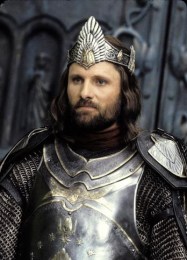
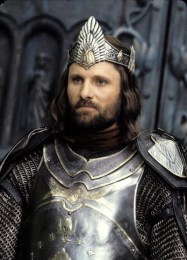
King_Aragorn
Viggo Mortensen as Aragorn

This article is by Christian Madera.

Early Fantasy literature, with its black-and-white morality, was very comfortable making statements about ethics. I’m using ‘ethics’ in a broad sense here: I don’t just mean questions about what a person should do in a difficult situation (though such questions are definitely a mainstay of Fantasy literature and merit discussion), but rather broader questions about how a person should be and how the world should be.

Recently, we’ve seen a backlash against black-and-white morality and a move towards so-called “grey” Fantasy. While I think it is very important to be cognizant of and think critically about the potential pitfalls of black-and-white Fantasy, I would argue that grey Fantasy is not without pitfalls of its own.

Read more

5 Essential Publishing Skills

This article is by T.L. Bodine.

ereader and booksSelf-publishing can certainly seem like the easier route to take when it comes to getting your words in front of readers.  After all, there are no gate-keepers – no agents to court, no publishers to approach.

With the click of a button, your book can be released into the ether for anyone to come across.  And if the traditional path to publication seems daunting, it can be comforting to think that going indie will be easy.

Unfortunately, it’s not quite that simple.  There’s a big difference between publishing a book and actually getting people to read it, and many of the things readers are looking for are exactly the things agents and acquisition editors want as well.  As it turns out, most of the key skills needed for landing an agent are very similar to those for hooking readers.

Read more

5 Reasons Why Narration Can Work in Fiction

This article is by Anne Marie Gazzolo.

BilboAuthors can use narrators in many different ways to add value to any story. Among them, they can speak directly and indirectly to their audience, inform the readers of things not even the characters inside the story know, give a look into the heart and soul of the heroes and villains, and praise or condemn them for their actions.

Here are five reasons why you should consider using one:

Read more

Navigating the Self-Publishing Fandango

get publishedThis article is by Cate Morgan.

There’s no doubt about it: there is a lot of noise out there in the crowded, Dread Interwebz when it comes to what I refer to as the Self-Publishing Fandango.

It’s like a tango in the respect that it sounds sexy at the outset, and certainly looks sexy when it’s done by trained professionals. But without full knowledge of the steps, it can turn violent in terms of tangled legs, stepped-on toes, and ballistic stilettos impaling innocent bystanders. In other words, disappointing and not pretty for all concerned.

But it doesn’t have to be that way. We all know the publishing landscape has changed dramatically with the wide acceptance of eBooks and the wild popularity of the Kindle. That’s not news. What is news is authors’ perspectives changing right along with it, and as dramatically as a sudden stiletto to the eye.

Read more

Should You Write a Fantasy Trilogy?

trilogyI recently came to a part in my Work in Progress (WIP) when I said, “Huh, this doesn’t look like it’s going to be a standalone after all.”

While I believe there are a lot of important decisions to make about your book (awesome characters, coherent plot, enough giant roach mutants, traditional vs. self-publishing), one may be the decision to write every fantasy writer’s dream: the Great (Insert Nationality Here) Fantasy Trilogy.

Many of my favorite books of all time were part of trilogies, but the thought of beginning one myself brings thoughts of both excitement and apprehension. Is it the best choice for the story I want to tell? If I don’t write a series, am I cramming too much into one book? After some writers squeak out, “I’m writing a book,” the next question from curious minds may be “Will it be a trilogy?”

Well, will it?

Read more