The Iron Pen Anthology is Now Available!

Click to View on Amazon

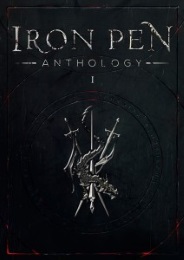
We’re excited to announce the publication of the Iron Pen Anthology: Volume 1.

This is a collection of stories written by members of Mythic Scribes.  Each of these stories was written for one of our Iron Pen contests, which challenge writers to come up with fantasy stories based on four prompts.

This anthology features eight winning entries, which have been further expanded and polished, as well as a bonus story.

The collection includes:

Read more

Names in Fantasy – 3 Ways to Invent Names for Characters and Creatures

Sirius Black
Sirius Black

This article is by Grace Robinson.

People sometimes ask me how I come up with names for my fantasy stories – names of characters, as well as names of creatures, places, and things.

I don’t have a standard formula for inventing names, but after doing some thinking, I realized that there are three main methods I use.

I believe that many authors use these methods in one way or another:

Read more

Focused Ambiguity: Using Metaphor in Fantasy Writing

This article is by Walter Rhein.

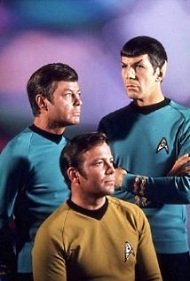
Star TrekThere is an inherent paradox in the phrase “focused ambiguity”. Yet the disconnect achieved by putting those two words together approximates the mental state necessary for writing good fantasy.
One of the big mistakes a lot of new writers make in their world building is too much of a focus on practical construction. However, unless the overall theme of your fantasy book is economics, you really don’t need to explain how your “diamond city in the desert” gets enough drinking water to support its population.

An effective novel always has a strong connective thread, and, in fantasy, every character, setting, and action can be molded to function as an integral part of the extended metaphor that supports the novel’s overall theme.

Read more

Magical Creatures for Magical Worlds: Fairies

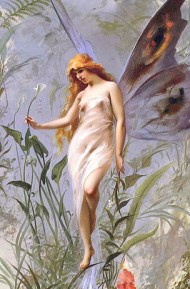
FairyFantasy is a genre where the mythical and made-up can be reality, where the fact that something is physically impossible doesn’t stop it from burning down your town or stealing your babies.

In this series, I’ll be looking at the creatures of fantasy – where they came from, how authors have used them, and what potential they have in the stories we’re writing now.

I’m starting with fairies. They are also known as the fey, the little people hiding in mystical groves, winged humanoids often thought to be pretty or playful – but not always quite so benign. Various other critters have been grouped under the fairy banner – imps, sprites, gnomes, nymphs and goblins, for example – but in this article I’ll be talking about the kind that are only ever called fairies or some variation thereof.

Read more

Critiques: A How-To Guide

By far, one of the most useful tools in a writer’s arsenal is the critique. But what is a critique? What makes a good critique? And how do I critique for a writer who wants to trade?

penWhen I began trading work, I wasn’t sure what to do or what to expect. After three years I’ve gained experience, and have settled into a sort of structure on how to best aid other writers and request the feedback that I find most useful.

While the critique relationship is best based on mutual respect and a genuine desire to help, it’s also a mostly negative undertaking. Through a balance of praise and recognition for the things that wow you as a reader, the nit-picks hurt less for the writer.

Read more

Writing Warfare in Fantasy: A Guide to the Battle Scene

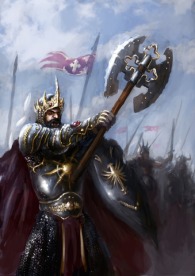
battlefieldFew words are as synonymous with mankind as War. As writers, war often influences the stories that we tell. People remember wars, people remember battles, and often these moments are when characters shine, plots reach the point of climax, and readers are drawn into a visceral experience that they won’t forget.

To write about war, to describe battle and it’s horrors, we must first have a basic grasp of this human creation. War is not a jaunt through a field of roses that leaves you smelling fresh on the other side, and should not be depicted as such. Understand war’s meaning first, and then write.

Read more

How to Hack the Habit of Creativity

creative mindWriting a good novel demands a number of skills from an author.  You need to have a strong writing voice.  You have to be able to read people and get inside a person’s head.  You should be able to let your characters provide commentary on life and the book’s themes, whether consciously or not.  And you’ve got to be well read, well researched, and reflective so that you will be equipped to think things through.

But sometimes those skills, which require experience and thoughtfulness, can feel at odds with another skill that we need as writers: creativity.

Read more

Speaking of Thorns – Interview with Mark Lawrence

prince of thornsMark Lawrence is the author of Prince of Thorns, King of Thorns, and Emperor of Thorns.

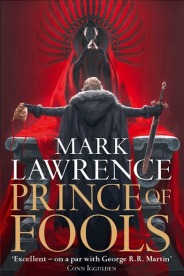
His latest novel, Prince of Fools, will be released in June 2014.

Literature has depicted violence since the earliest records. Even the “high fantasy” subgenre has heroes we physically associate with killing troves of orcs. What is it in the “grimdark” subgenre that ruffles so many feathers?

No idea! I don’t even know what “grimdark” is. People back off rapidly if you ask them to actually define it. It seems to be shorthand for ‘this thing I don’t like’ … and given that the things people don’t like are as diverse as the things people do like … it ends up pretty meaningless, generally a form of slur.

Read more