Where True Blood Went Wrong: A Cautionary Tale for Writers

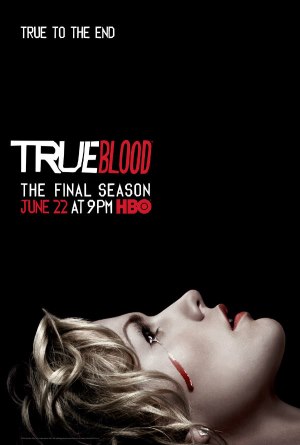
TrueBlood-PosterI am a strong believer in the power of stories.  Because of that, I look up to storytellers.  So much so, that I’m doing something very painful right now.  I’m writing about something I no longer care about… True Blood.

Why am I doing this?

I’ve taken on the job of helping writers by showing them a fan’s perspective… particularly a fan who is not an active writer.  I’m writing about True Blood because I believe that it’s the best example of how a promising series can go downhill.
Read more

Writing What You Know When There’s No Way to “Know” It

This article is by Selah Janel.

magic bookIf there’s one piece of advice I’ve heard from the time I was in high school until now, it’s “write what you know.” This used to bug me as a teen because I felt that my life hadn’t even started yet, so how was I supposed to write anything interesting?

It also seems to directly contradict the entire reality of writing genre fiction. How can you write what you know if you can’t live in impossible worlds, use magic, or go up against fantastic creatures? There’s absolutely no way this advice can be applicable if you write fantasy or any fantasy subgenre, right?

You’d be surprised.

Read more

‘Soft’ Magic Systems Still Have a Place

This article is by Ashley Capes.

soft magicThe idea that magic in fiction might possess or need a ‘system’ was nonexistent to me when I first read my favourites as a boy in the early 1990s.
Magic was but a component to the awe and wonder within the stories. I didn’t need to know how magic worked, only that magic worked. I never questioned it and certainly wouldn’t have wanted to. Gandalf, for instance, simply wouldn’t have been the same figure of mystery and power if I knew the way his magic functioned.

Read more

Surviving Grimdark Fantasy for the Squeamish

grimdarkWhile there is still some debate about whether it’s a legit sub-genre or not, grimdark has become part of the fantasy lexicon in recent years.
I actually like a lot of the authors that some label as grimdark, so I’m a bit torn on if it’s a good or bad thing. The term can be used to define fantasy with more realistic grit, where morals are gray and blood is bright red. Sounds cool to me.

However, on the flip side, it’s also used as a pejorative term for fiction that is perceived as too bleak, dark, and soul-sucking. This being the opposite of the good vs. evil type of conflicts that may be more familiar for fans of fantasy.

Well, I’m here to show you that grimdark doesn’t have to be unpleasant at all.

Read more

Absolutism vs. Ambiguity in Fantasy

This article is by Matthew R. Bishop.

good evilIn a recent article featured on Mythic Scribes, Christian Madera explored the strengths and limitations of “black and white” fantasy, while defending the rise of “grey” fantasy as something that can overcome the drawbacks of black and white.

Let me clarify that I am an author of grey fantasy myself, so I do not take issue with this defense. For the purposes of fully understanding these disparate ways of writing fantasy, however, I want to expand on the strengths and limitations of both, and on the downfall of thinking one is exclusive of another. I hope this effort will lead to a greater appreciation for fantasy of all colors.

Read more

Is Single-Genre Fiction Outdated?

This article is by Michael Cairns.

genresFor decades, the publishing industry has worked to ensure that every book that they publish can be marketed within a single genre. This is, up to a point, understandable. Publishing is a business, and the clearer the genre of a book, the easier it is to find the target audience.

However, the rise of self-publishing has changed the way in which people not only sell books, but also write them. Indie’s don’t need to have a big ‘opening weekend’, so as to avoid high returns on print copies. Self-publishers can play the long game, relying on good stories and brave readers to build an audience. They can also take more chances and write outside the long-established boxes.

Read more

Using Role-Playing to Rein in Your WIP

D&D DiceSo, you’ve been busy writing, I see. That work in progress (WIP) is coming along pretty well. But you just don’t know how your audience will feel about it. Or perhaps you’re ready to throw a new element into your story, but you’re not certain that your world is ready for it. So, you pace to and fro, sipping on a cup of coffee while you think it over. Suddenly an idea pops into your head:

“Hey, maybe I can get someone to be a beta reader!”

Suddenly, a knock sounds at your front door. But isn’t it, like, midnight? You open it, startled, and a bit confused to see a group of people clad in mail crafted from pop-can tabs and dresses woven from bedsheets. And there’s a guy in the back wearing sweats. But it’s okay, he has Cheetos.

Read more

5 Ways to Build Stronger Characters

Frodo and Sam

This article is by Anne Marie Gazzolo.

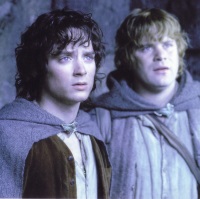
Frodo and SamIt’s possible to build characters who achieve a secondary reality, and become people who live in their own right in our hearts and minds.

It jars me every time someone says Frodo Baggins and Sam Gamgee are ‘characters.’ I want to shout, “They are not characters! They are people!”

J. R. R. Tolkien’s masterful essay “On Fairy-Stories” is must reading for anyone who wishes to practice, as he calls it, the “elvish craft” of sub-creating secondary worlds that achieve a reality of their own. I wish to add some thoughts from my own travels in Middle-earth and a galaxy far, far away, that I hope will help you to build ‘characters’ who are truly more than that.

Read more